All species › Passerines › Finches, euphonias and allies › Palila
Palila | Loxioides bailleui
Palila | Palila de Hawái
The Palila is a large, heavy-billed honeycreeper with a golden-yellow head and breast and a grey back, now confined to the western slope of Mauna Kea. It feeds almost entirely on the unripe seeds of the mamane (Sophora chrysophylla, a native Hawaiian tree with yellow pea-flowers) and shares the fate of that forest: since 1998 numbers have fallen by more than ninety per cent.

Voice
The call is a clear, bell-like whistle, often written chee-clee-o or te-cleet, carrying well across the open mamane woodland. The song is a longer series of whistling, warbling and trilling notes with the same bell notes interspersed. Birds call audibly more when rain or mist creeps up the slope. Young beg with a persistent rasping sound from the crown of a mamane.
Recording: Tim Burr — CC BY-NC-SA 3.0 · Waimea, Hawaii, Hawaii, United States · xeno-canto
Identification
Head and breast are golden yellow, the back grey, wings and tail greenish grey and the belly white. The bill is heavy, dark and swollen in shape, more that of a crossbill than of a honeycreeper. The male is brighter yellow and has a black lore between bill and eye; the female is duller and slightly smaller. With the bill it prises open a mamane pod and extracts the unripe seeds, dropping the empty pods beneath the tree, which is a usable clue. It often sits still and upright in the crown.
Confusion species
Within the mamane forest no native species combines a yellow head with a heavy bill. The introduced Yellow-fronted Canary is far smaller, with a fine bill and a yellow brow on a green head. Saffron Finch is orange-yellow over the whole body, without a grey back. Hawaiʻi ʻAmakihi is a third of the size with a thin curved bill. Confusion with House Finch is a matter of silhouette only: that bird has red rather than yellow head markings and streaked flanks.
Habitat
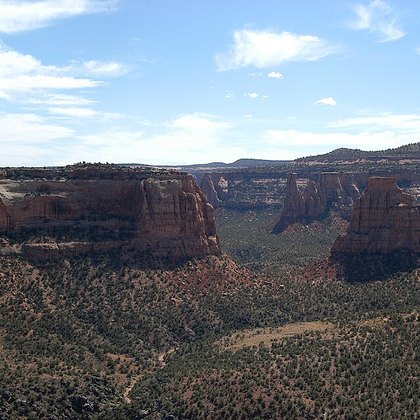
Dry montane forest of mamane, and of mamane with naio, between roughly 2000 and 2900 metres on the subalpine slope of Mauna Kea, broken by open grassland, lava fields and native shrubland. Its whole livelihood hangs on mamane: seeds, flowers and buds for food, the crown for nesting, and the caterpillars of a native moth from the same tree as the protein supply for the young. Naio berries and a few other fruits fill the gap when pods are absent.
Where the bird is most often found, arranged by the USNVC — the vegetation classification of the United States and Canada — and CMECS for sea and coast.



Range and movements
Endemic to the island of Hawaii and today restricted to a band on the western and southwestern slope of Mauna Kea, less than a tenth of the former range. Subfossil finds show the species also occurred on Oʻahu and Kauaʻi, and historically it lived on Mauna Loa and Hualalai as well. It is resident, shifting within the forest with the flowering and fruiting of mamane, which over the year amounts to a movement up and down the slope.
- Resident
Where and when to look
The Palila Forest Discovery Trail off the Mauna Kea Access Road, at about 2000 metres, is the regular site; go in the first hours after sunrise, when the birds call and the wind is still low. Search first by ear for the bell note and then by eye for a heavy, motionless bird high in a mamane. Freshly prised-open pods under a tree indicate recent presence.
Conservation
The species is listed as Critically Endangered (CR) on the Red List. The population was put at about 4,400 birds in 1997; for 2024 the point estimate is 666 birds, with a range of 412 to 970, and over 1998–2024 the decline exceeds ninety per cent, averaging more than two hundred birds a year. The core of the problem is the mamane forest itself, which does not regenerate under feral sheep, mouflon and goats; drought, wildfire, feral cats and rats add to it. In Palila v. Hawaii Department of Land and Natural Resources in the 1970s the bird itself stood as named plaintiff; the ruling required the state to remove feral sheep and goats from the habitat and established that habitat degradation falls under 'harm' in the Endangered Species Act. The ungulates have since been reduced but not removed.
Scientific name
Loxioides bailleui | Oustalet, 1877
Oustalet described the species in 1877 as Loxioïdes bailleui; because it still stands in that genus, author and year carry no parentheses. Loxioides means 'resembling Loxia', the crossbill genus, after the heavy bill shape; Loxia itself comes from Greek loxos 'slanting, crosswise'. The species name honours Pierre Étienne Théodore Ballieu, the French consul in Honolulu who collected the specimen described. Palila is an old Hawaiian bird name that also occurs as a personal name in tradition; the specimen came from the island of Hawaii.