All species › Waders, gulls and terns › Sandpipers and allies › Long-billed Curlew
Long-billed Curlew | Numenius americanus
Amerikaanse wulp | Zarapito Americano
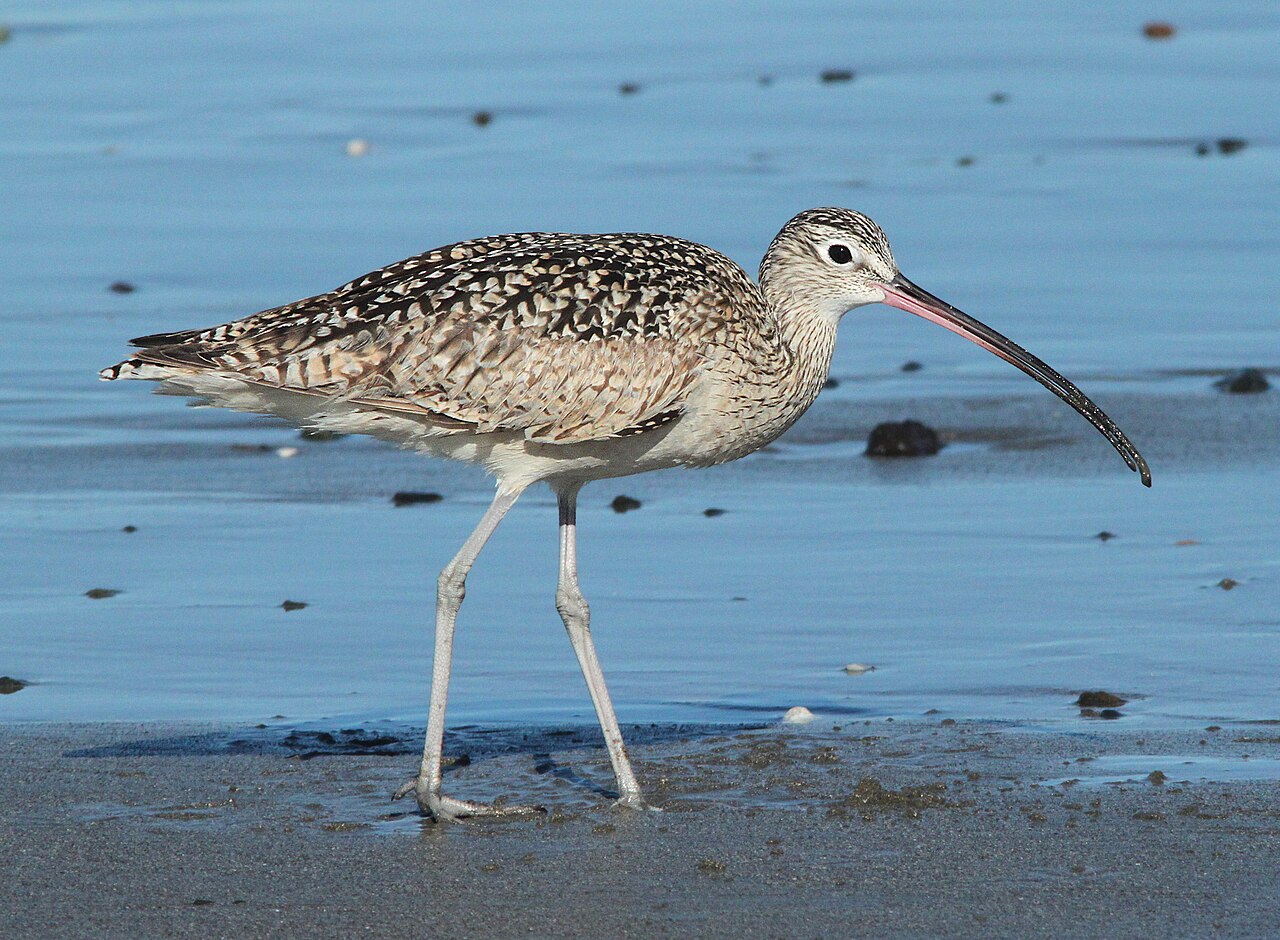
The Long-billed Curlew is the largest shorebird of the continent: a cinnamon bird on long legs, with a thin bill that reaches well over twenty centimetres in old females and curves down in an even arc. It breeds not by the sea but on the shortgrass prairie of the west, and winters on the mudflats, salt pans and fields of California, the Gulf Coast and Mexico. In the nineteenth century it still bred east to Illinois and Michigan; by 1900 it had gone from there.
Voice
The bird's name is in its call: a clear, rising cur-lee that carries far across the prairie and is usually the first sign that it is there. It also gives a fast series of short hard notes, whit-whit-whit-whit, with which it flies at an intruder near the nest. Over the breeding ground the male performs a display flight of climbing and gliding, with a long sustained, plaintive whistling that rises and falls in waves. On the winter mudflats it is far quieter; there you may hear no more than a single cur-lee as a group takes off.
Recording: Paul Marvin — CC BY-NC-SA 4.0 · Tijuana Slough NWR, trail from south end of 5th street, Imperial Beach, California, United States · xeno-canto
Identification
A large shorebird with a small round head, a long neck and a heavy, drawn-out body on blue-grey legs. The bill is the mark: thin, evenly decurved, pink at the base of the lower mandible, about thirteen centimetres in the male and up to more than twenty in an old female. The plumage is spotted and barred brown above, with a warm cinnamon wash throughout and a plain cinnamon belly without streaking. The head is pale and finely streaked and lacks the dark crown bands that the whimbrels carry. In flight the strongly cinnamon upperwing and underwing are obvious at once; juveniles have a distinctly shorter bill than their parents and are therefore often taken for a whimbrel in their first autumn.
Confusion species
Hudsonian Whimbrel (Numenius hudsonicus) is a third smaller, cooler grey-brown, much shorter-billed, and carries two dark bands across the crown with a pale stripe between them. Marbled Godwit (Limosa fedoa) is cinnamon too and also has cinnamon underwings, but its bill is straight or slightly upturned and two-toned, and it is considerably smaller. Bristle-thighed Curlew (N. tahitiensis), in Alaska and on passage down the Pacific coast, has a plain buff rump and tail. The differences are smallest in a juvenile Long-billed Curlew with a half-grown bill: then look at the crown, which is plain and pale in this species, and at the belly, which is plain cinnamon.
Compare sandpipers, snipes and allies: bill, legs, wing bar and rump
Habitat
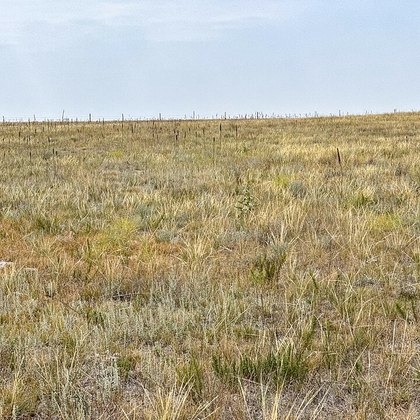
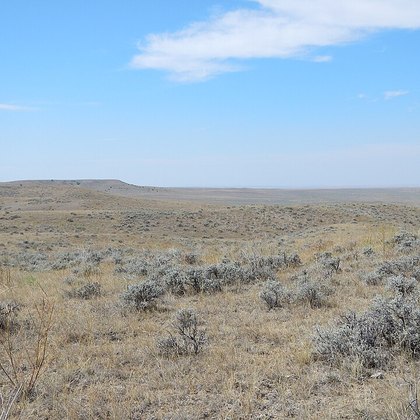
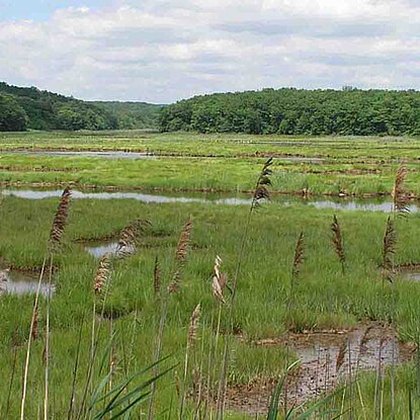
It breeds on short, open grass prairie and on sagebrush (grey-green wormwood scrub of the dry western interior) steppe, preferring flat, closely grazed land with a damp hollow here and there; it avoids tall dense grass, because it must be able to see over the vegetation. Grazed grassland and fallow fields serve as well as natural prairie, as long as the sward stays short. In winter it shifts to the coast: tidal flats, salt marsh, salt pans and river mouths, and in California and Mexico also irrigated fields, rice paddies and pasture far from the sea. It uses wooded country and dense scrub in no season.
Where the bird is most often found, arranged by the USNVC — the vegetation classification of the United States and Canada — and CMECS for sea and coast.


Range and movements
It breeds in the west of the continent, from southern British Columbia, Alberta and southwestern Saskatchewan south through the Great Basin and the northern prairies to northeastern California, northern New Mexico and the panhandles of Texas and Oklahoma. It winters along the coast and in the Central Valley of California, along the Gulf Coast from Texas to Florida, and in large numbers in Mexico: on both coasts and on the grasslands of the Chihuahuan highlands. A small part travels further south, into Central America and Panama; those countries lie outside the area covered by this guide. In the nineteenth century it bred much further east, into Wisconsin, Illinois and Michigan, but hunting and the ploughing of the prairie had removed it from there before 1900. Since the 1960s the counts have held about level.
- Resident
- Breeding (summer)
- Winter
- Passage
- dark = core range, pale = thinly spread
Where and when to look
Drive a gravel road through closely grazed prairie in Montana, Idaho or southeastern Oregon in May or June and stop at the first rising cur-lee: breeding birds come to a car and circle over the road calling. In winter, low water on the Gulf Coast flats or in the bays of California is the best moment, because the birds then walk far out from the dyke and their sheer size lifts them above every other shorebird. Watch the bill length on each bird: males, females and young stand side by side in one flock, and the difference can be seen with the naked eye.
Conservation
The world population is put at about 140,000 birds, and the surveys show no clear decline between 1966 and 2015. The loss lies further back: the eastern part of the breeding range was given up before 1900, and more than three quarters of the grasslands of the Canadian prairie provinces have been turned into cropland. In California ninety per cent of the wetlands in which it wintered have gone. The species is on no watch list, but it depends entirely on grassland that stays short and open; conversion to arable farming and drying out are the threats that count.
Scientific name
Numenius americanus | Bechstein, 1812
Bechstein described the species in 1812 and placed it at once in Numenius, the genus Brisson had introduced in 1760; because it has not moved since, author and year stand without parentheses. The genus name is formed from Greek neos 'new' and mene 'moon', after the sickle shape of the bill. americanus simply means 'American'. The description appeared in Bechstein's German edition of Latham's survey of the birds; the type locality is given as New York.