All species › Waders, gulls and terns › Sandpipers and allies › Marsh Sandpiper
Marsh Sandpiper | Tringa stagnatilis
Poelruiter | Archibebe fino
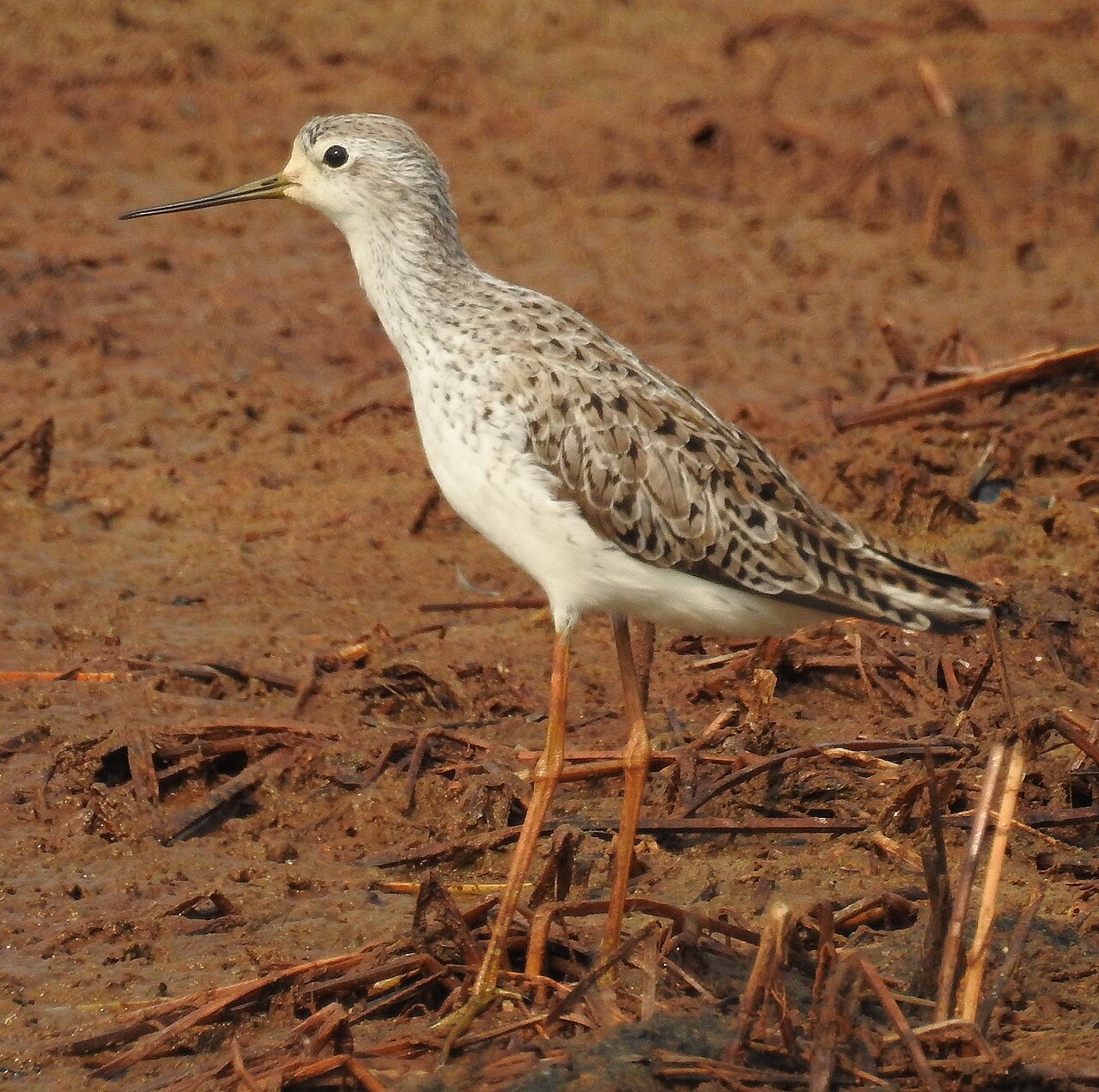
The Marsh Sandpiper is a wader of the steppe marshes of eastern Europe and Asia and does not belong in North America: here it is a vagrant, with a few dozen records in more than a century. It is the most finely built of all the shanks, with a needle-straight black bill and legs longer in proportion to the body than in any of its relatives. Anyone who finds one in North America will usually find it alone: a single pale bird among Lesser Yellowlegs on a muddy edge.
Voice
The call is a short, sharp kyup or chew, often in series of two to four, higher and drier than the triple note of Common Greenshank. A bird flushed from a pool usually gives one note and then falls silent. In alarm on the breeding grounds there is a persistent kek-kek-kek, and the male delivers a run of yodelling notes there in an undulating display flight. In North America this species is normally heard not at all, and a record rests on what was seen rather than on what was heard.
Recording: Julien Birard — CC BY-NC-SA 4.0 · Orko, Ndjamena Bilala, Fitri, Batha, Chad · xeno-canto
Identification
A slight shank with a needle-fine, perfectly straight black bill and long yellowish-green legs that project well beyond the tail in flight. In winter plumage it is pale grey above with white feather edges and clean white from head to belly, the white forehead and face making it look pale at a distance. In breeding plumage black spots and chevrons mark the mantle and black streaks run down neck and flanks. In flight a white wedge runs from the rump far up the back, as in Common Greenshank, and the wing stays plain dark without a bar. Male and female look alike; juveniles are warmer brown with crisp pale fringes on the back feathers. Wading in shallow water it picks quickly and lightly at the surface, standing tall and upright on those long legs.
Confusion species
Lesser Yellowlegs has brighter yellow legs, a thicker and slightly longer bill, a greyer face, and in flight only a square white rump patch without a wedge up the back. Common Greenshank (Tringa nebularia) shows that same white wedge but is far bigger, with a heavy, slightly upturned bill and grey-green legs. Wilson's Phalarope in winter plumage is the most similar: as pale, with a needle-fine bill, but shorter in the leg, with a white rump and no wedge, and given to spinning as it swims. In doubt the bill decides: in Marsh Sandpiper it is thin, straight and no longer than about one and a half times the head.
Habitat
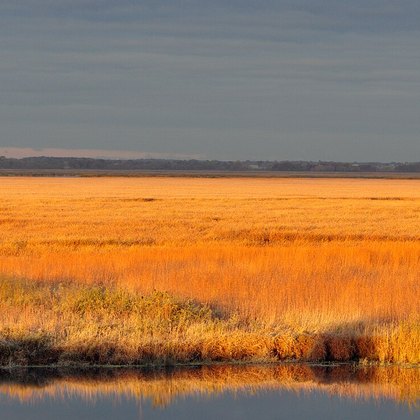
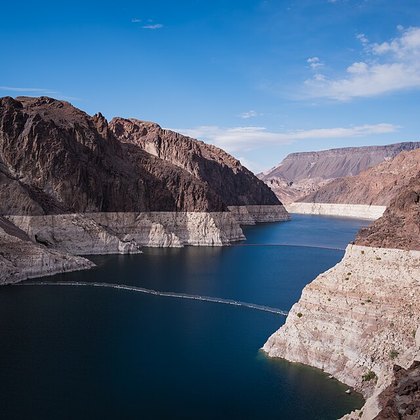
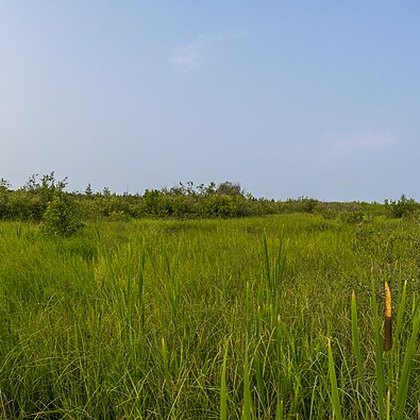
On the breeding grounds it stands at shallow fresh or slightly brackish steppe lakes with low, open shore vegetation, and in the wet grassland around them. On migration and in winter it uses shallow inland waters: rice fields, saltpans, fish ponds, sewage lagoons and the edges of lakes and lagoons. It avoids deep water, closed reedbed and bare sandy beach; what it wants is a hand's depth of water over a soft bottom. The few North American birds have been found in exactly such places, mostly at a settling pond or a shallow flood.
Where the bird is most often found, arranged by the USNVC — the vegetation classification of the United States and Canada — and CMECS for sea and coast.


Range and movements
The breeding range runs from eastern Poland and the Baltic states through southern Russia and northern Kazakhstan to the Amur region and north-eastern China. It winters in Africa and from southern Asia to southern Japan, the Marianas and Australia. In North America it is a vagrant without a settled pattern: most records come from western Alaska, chiefly the Aleutians and the Pribilofs, with further sightings in California and one from Baja California in October 2011. The most remarked-on record on the continent was a bird in southern Ontario at the end of April 2022, which drew more than a thousand observers. There is no breeding and no regular migration route through North America.
Where and when to look
Do not expect it, but know it when it stands there: when working shallow floods and settling ponds, check every party of Lesser Yellowlegs for one paler, finer, longer-legged bird. Look first at the bill — thin as a needle and dead straight — then put the bird up to see the white wedge up the back and the toes projecting well past the tail. The season is the season of the other Asian strays: late May to early June in western Alaska, and inland mainly the late spring passage. Photograph the bird standing and in flight, because a record of this species is judged on both.
Conservation
The world population is put at a few hundred thousand birds and the species is assessed as Least Concern (LC), though numbers in the west of the range have fallen as steppe marshes were drained. Because there are no breeding birds and no regular passage in North America, there is no management task here either. What the records do show is that the species crosses the Bering Sea with some regularity. The shallow freshwater edges where the strays turn up are the same ones that matter to the continent's own waders.
Scientific name
Tringa stagnatilis | (Bechstein, 1803)
Bechstein described the species in 1803 as Totanus stagnatilis; because it was later placed in another genus, author and year stand in parentheses. The description appeared in the second volume of his Ornithologisches Taschenbuch von und für Deutschland, on page 292 with plate 29, and Germany is the type locality. stagnatilis is Latin for 'of the pools', from stagnum 'standing water', after the shallow water in which it feeds. The genus Tringa goes back to Linnaeus and is the Latin form of a Greek word for a thrush-sized waterside bird. The Dutch name follows the scientific one: the bird of the pools.