All species › Waterfowl › Ducks, swans and geese › Mottled Duck
Mottled Duck | Anas fulvigula
Gevlekte eend | Pato Tejano
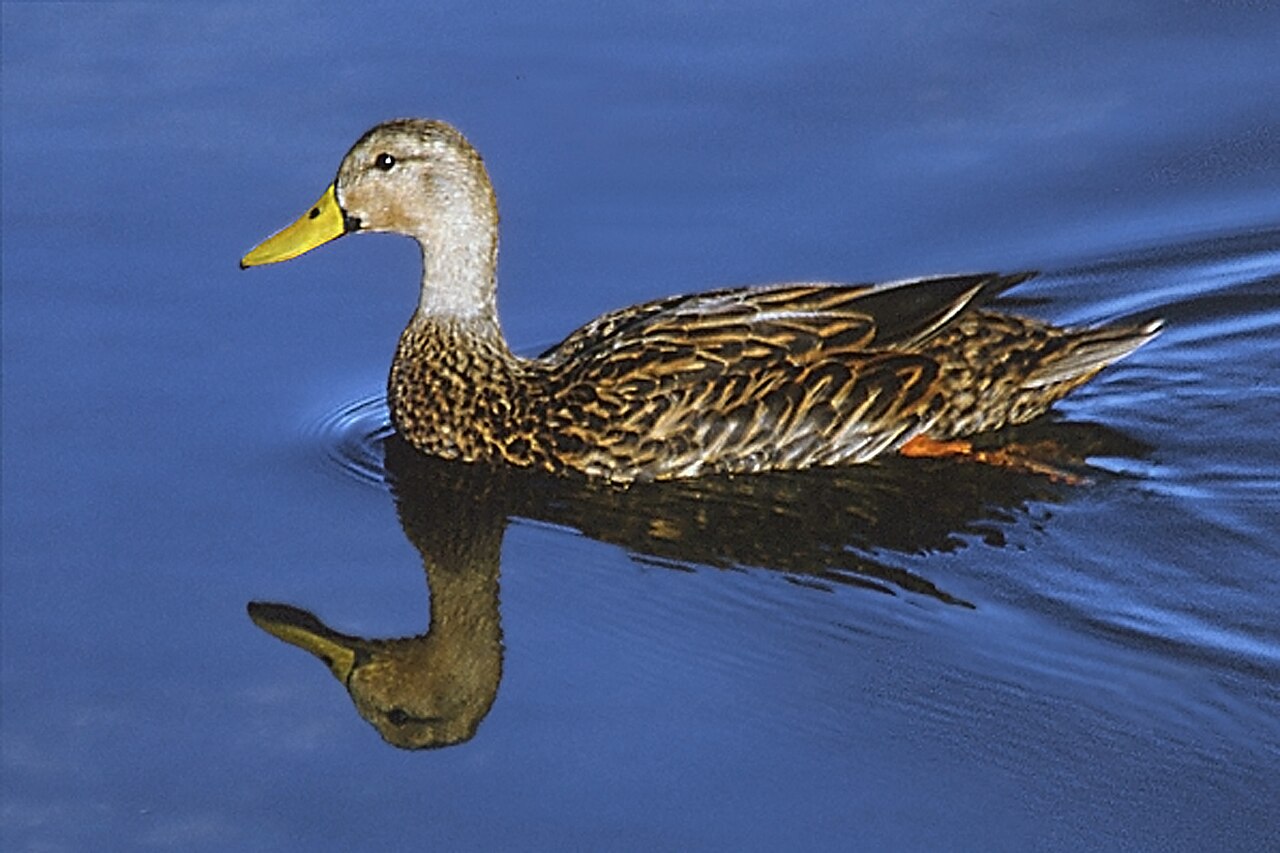
Mottled Duck is the duck of the marshes along the Gulf coast and the Florida peninsula: like American Black Duck and Mexican Duck, male and female are coloured almost alike, warm brown with a yellow bill and a black spot at the corner of the mouth. Two subspecies divide its small range, one around Florida and one along the western Gulf coast into Mexico, and in both areas numbers have fallen sharply in recent decades.
Voice
The female gives a loud, harsh series of about six quacks that fall in strength and pitch, similar to the Mallard but somewhat sharper. While feeding or in flight she also gives a soft, ticking tickety-tickety-tickety. The male gives a low, hoarse reab, often repeated, and during courtship a sharp whistle followed by a grunt. Through the courtship period, which begins as early as November, the female also gives a repeated gagg.
Recording: Paul Marvin — CC BY-NC-SA 4.0 · River Lakes Conservation Area near Viera, Brevard Co, Florida, United States · xeno-canto
Identification
Both sexes are rich brown with a paler, buff-coloured face and a dark crown, and a clear black spot at the base of the bill, at the corner of the mouth. The male has a plain, bright yellow bill, the female a duller one mottled orange and black. The speculum is blue but lacks the broad white border shown by the Mallard. The tail and undertail coverts are dark and uniform, without the white of a female Mallard's. In flight the bird is hard to tell from American Black Duck and Mexican Duck without a good view of the spot at the base of the bill.
Confusion species
The female Mallard has a broad white border to the speculum that Mottled Duck lacks, an orange rather than yellow bill and a white tail; where the two meet, especially in Florida, they interbreed freely and the hybrids weaken the pure population. Mexican Duck (Anas diazi), with which Mottled Duck overlaps only in extreme southeastern Texas, has a darker crown, a more sharply defined eyestripe and lacks the pale, buff-coloured cheek; Mottled Duck also has pale, V-shaped markings on the flank feathers that Mexican Duck lacks. American Black Duck is darker and more evenly brown and lacks the black spot at the base of the bill; the ranges of the two species barely overlap. A female Northern Shoveler has a much larger, broader bill and a paler belly, and so can be ruled out when in doubt.
Habitat
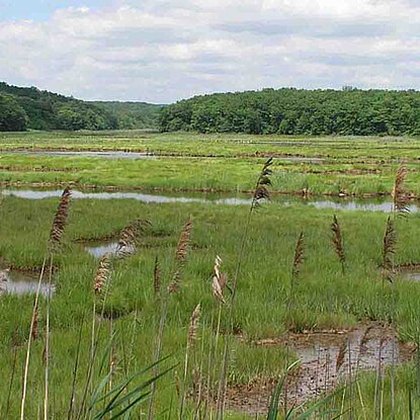
Almost any shallow freshwater marsh can serve as breeding habitat — ditches, small marshes, flooded rice fields and temporary water after rain — as long as dense upright vegetation stands in it. In Florida the species also uses urban and suburban marshes and ponds, while in the west it favours rice fields, tidal marsh and coastal prairie ponds instead. Outside the breeding season the bird is less particular and also turns up on brackish coastal water and flooded farmland. It avoids open water with no bankside vegetation and heavily polluted marsh.
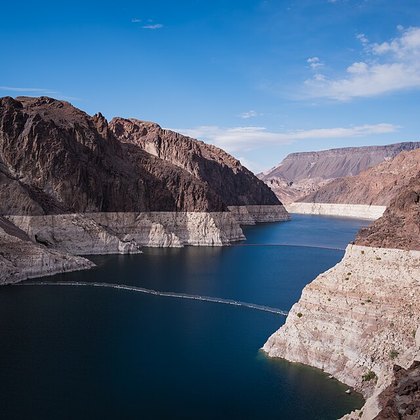
Where the bird is most often found, arranged by the USNVC — the vegetation classification of the United States and Canada — and CMECS for sea and coast.



Range and movements
Two subspecies, with a small gap between them: the Florida Mottled Duck lives as a resident on the peninsula, roughly south of Tampa, and occasionally strays north to Georgia; the western subspecies occupies the Gulf coast from Alabama to the Mexican state of Tamaulipas, with occasional birds reaching Veracruz outside the breeding season. In the 1970s and 1980s birds of both subspecies were released in South Carolina; their descendants, of mixed ancestry, have since spread through the coastal plain of Georgia into northeastern Florida. The species does not migrate: wherever it lives, it stays year-round. Its total range is small compared with other North American ducks, and the two main populations never meet naturally.
- Resident
- Breeding (summer)
- Winter
- Passage
- dark = core range, pale = thinly spread
Where and when to look
Look for the Florida subspecies in a marsh or pond, even in the middle of a city — it is one of the few ducks that pays no attention to development. Along the western Gulf coast, a rice field in late summer, once the harvest is in, is a reliable spot. When in doubt with a Mallard, check for the yellow rather than orange bill and the black spot at the corner of the mouth, clearly visible at close range.
Conservation
Although the IUCN still rates Mottled Duck as Least Concern (LC), it has declined by more than seventy per cent since 1966, one of the steepest drops among North American ducks, and now counts as a species in urgent need of conservation action. Drainage of marsh for farming and urban growth, and the degradation of coastal marsh, lie behind the fall. The greater long-term concern, though, is hybridization with the released and feral Mallard: in parts of Florida already around one bird in ten carries Mallard genes, and without action the species risks disappearing as a recognisable form.
Scientific name
Anas fulvigula | Ridgway, 1874
Ridgway described the bird in 1874 as a variety, Anas obscura var. fulvigula, of the 'dusky duck' (Anas obscura, now American Black Duck), in the genus Anas the species still stands in today, so author and year do not stand in parentheses. fulvigula is built from Latin fulvus, 'tawny' or 'buff-coloured', and gula, 'throat', after the warm colour of the throat and face. The type locality lies on the St. John's River in Florida.