All species › Birds of prey › Kites, Old World vultures, eagles and hawks › Northern Harrier
Northern Harrier | Circus hudsonius
Amerikaanse blauwe kiekendief | Aguilucho norteamericano
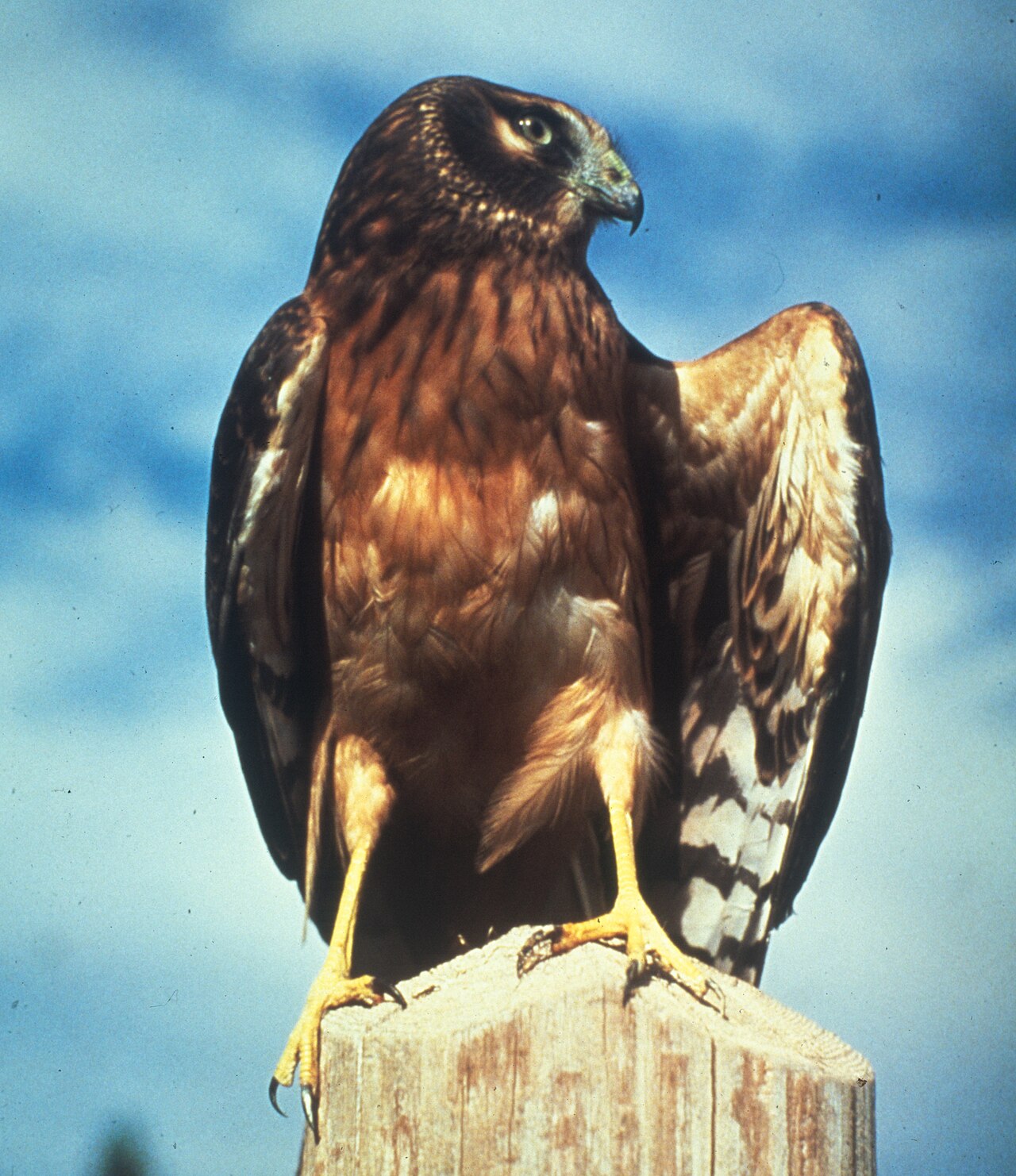
Northern Harrier can be named by its way of hunting before any colour shows: low and buoyant over marsh and grassland, back and forth, with the wings held in a shallow V. In flight a sharply defined white rump patch stands out in every plumage. It is the only North American day-flying raptor with an owl-like ruff of stiff feathers around the face, with which it locates prey by ear.
Click a thumbnail to switch the photo above.
Voice
It is not a noisy bird and is nearly silent outside the breeding season. In display flights both sexes give a fast series of kek-kek-kek notes lasting one or two seconds. The same notes come higher and sharper when a fox or a crow approaches the nest, or when small birds mob it. The female adds a piercing, drawn-out scream that prompts the male either to mate with her or to bring food.
Recording: Stanislas Wroza — CC BY-NC-SA 4.0 · La Haute-Côte-Nord (near L'Anse-Creuse), Côte-Nord, Québec, Canada · xeno-canto
Identification
The male is pale grey on head, back and wings and white below, with black wingtips and a black trailing edge to the wing. The female is considerably larger, brown above and white below with brown streaks; both have banded tails. Juveniles resemble the female but have an unstreaked cinnamon belly and a darker head. In all three the white rump is the constant mark. The silhouette is long and narrow — long wings, long tail, small head — and the flight is light and tilting, the bird seeming to hang on the wind.
Confusion species
Rough-legged Hawk also hunts low over open country and shows a white tail base, but it is broader built, often hovers on one spot, and has black wrist patches and a dark belly band. Short-eared Owl uses the same ground at the same hour with a similar rocking flight, but has a big round head, a short tail and orange wing patches. At a distance the raised-wing profile can also suggest Turkey Vulture, which is far larger, black, and has no white rump. The brown female is sometimes taken for a buteo, but the narrow wings and long tail rule that out.
Habitat
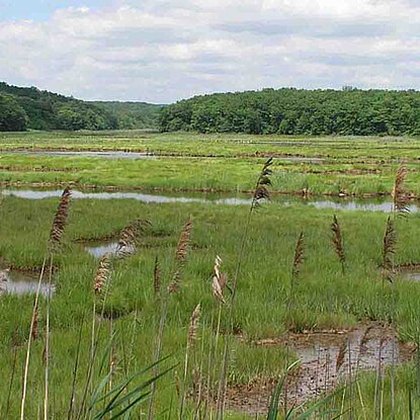
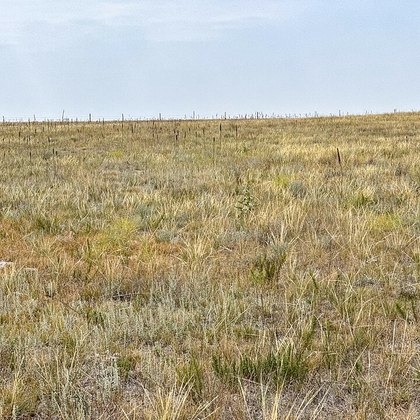
Large, undisturbed stretches of marsh and grassland with a low, thick layer of vegetation: fresh and brackish marsh, wet meadow, old fields, tundra and prairie. It nests on the ground, which ties it to land that is not mown or grazed during the breeding season. In winter it uses a wider range: salt marsh, floodplain, pasture, cropland, dunes and even desert flats, as long as the cover stays low. It avoids closed forest and steep ground.
Where the bird is most often found, arranged by the USNVC — the vegetation classification of the United States and Canada — and CMECS for sea and coast.



Range and movements
Breeds from Alaska and northern Canada south into the northern half of the United States, and winters from the central states south through Mexico, Central America and the Caribbean islands to northern South America. Across a broad band of the central and northern states it is present all year, though the summer and winter birds are not the same individuals. Migrants follow ridges and coastlines in autumn and are recognisable at hawk watches by their low, hesitant flight. The range has contracted in the south and east as marsh was drained and abandoned farmland grew back to scrub and wood.
- Resident
- Breeding (summer)
- Winter
- Passage
- dark = core range, pale = thinly spread
Where and when to look
Go to a large open marsh or a winter grassland in late afternoon and wait: harriers work a hunting beat systematically and will pass again within half an hour. When a bird turns away, look at the rump — that white patch stays visible against the light and at long range. Towards dusk they sometimes share a ground roost with dozens of others.
Conservation
Partners in Flight puts the world population at 820,000 breeding birds. The Breeding Bird Survey shows a steady decline since 1966 of more than one per cent a year, about a third in total. The causes are the loss of marsh and grassland, fewer small mammals through overgrazing and pesticides, and local shooting at communal winter roosts in Texas and the southeast. DDT depressed breeding success in the middle of the twentieth century; that recovered after the restrictions of the 1970s.
Scientific name
Circus hudsonius | (Linnaeus, 1766)
Linnaeus described the species in 1766 as Falco hudsonius, from a bird from Hudson Bay, and hudsonius accordingly means 'of Hudson Bay'. Because it was later placed in another genus, author and year stand in parentheses. The genus Circus was introduced by Lacépède in 1799, from Ancient Greek kirkos, a bird of prey that the old writers said flew in circles. Until 2016 it was treated as the American subspecies of the Hen Harrier (Circus cyaneus) of Europe and Asia, and the Dutch name (literally 'American Hen Harrier') still points back to that arrangement.