All species › Birds of prey › Kites, Old World vultures, eagles and hawks › Steller's Sea-Eagle
Steller's Sea-Eagle | Haliaeetus pelagicus
Stellers zeearend | Pigargo gigante
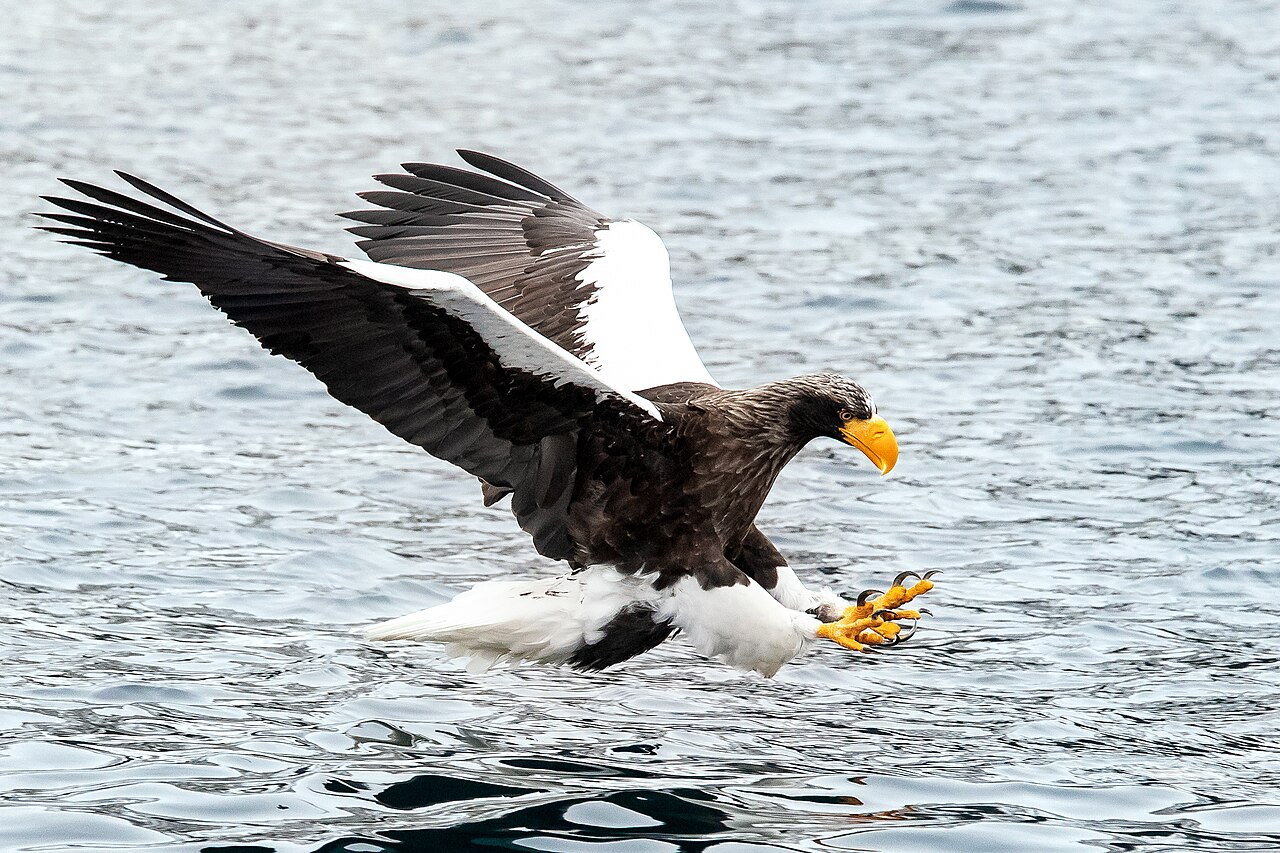
Steller's Sea-Eagle breeds on the coasts of eastern Siberia and winters on Hokkaido and around the Sea of Okhotsk; in North America it is an exception, with a handful of records, almost all from the Aleutians. At six to nine kilograms and with an outsized yellow bill, it is the heaviest sea eagle in the world. A few birds have stayed on in Alaska for years at a time.
Voice
Calling away from the breeding grounds is rare, and what is heard is usually a squabble over fish. The ordinary call is a deep barking ra-ra-ra-rau-rau, lower than that of the White-tailed Eagle and, in the words of observers on Kamchatka, best compared to loud, deep-voiced gulls. At the nest and at winter feeding places several birds call at once, so that the barking runs on continuously. Almost nothing has been recorded from the North American vagrants.
Recording: Albert Lastukhin — CC BY-NC-SA 4.0 · Noglikskiy Rayon, Sakhalin Oblast, Russian Federation · xeno-canto
Identification
The adult is dark brown to black with a sharp pattern of white: white shoulder panels along the leading edge of the wing, white thighs and a white tail tapering to a wedge or diamond. Bill, feet and iris are yellow, and the bill is large, deep and arched — the main feature of the species. Juveniles are uniformly sooty brown with pale mottling in the tail, a dark bill and brown eyes; full adult plumage takes years. The female is larger and considerably heavier than the male. In flight the wings are broad with a distinct bulge in the trailing edge.
Confusion species
In Alaska, Bald Eagle is the bird it is most readily confused with, especially in immature plumage: those are brown as well, but smaller, with a far lighter bill and no white on the shoulder. The adult Bald Eagle has a white head and an evenly white, square-cut tail rather than a wedge. The White-tailed Eagle of Greenland and Eurasia also has a white wedge-shaped tail, but is brown without white shoulder panels and has a much slimmer bill. A rare dark form of Steller's Sea-Eagle lacks the white on wing and thighs, and then the tail is the only white part.
Habitat
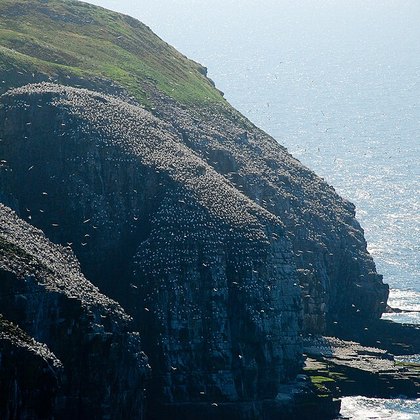
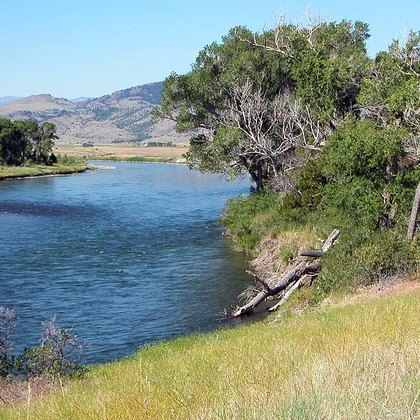
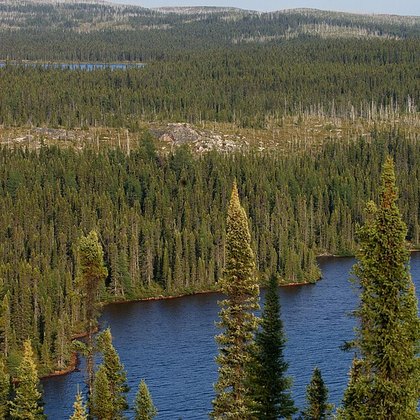
Rocky coasts, sea cliffs, river mouths and the lower reaches of large rivers, where it takes salmon and other fish and searches for carrion. It nests in tall trees or on cliff ledges along the coast and on islands, with conifer and birch forest close to the water. In winter the birds gather along the edge of the drift ice and at fishing harbours, where the supply is predictable. It makes no use of inland country without open water.
Where the bird is most often found, arranged by the USNVC — the vegetation classification of the United States and Canada — and CMECS for sea and coast.


Range and movements
The breeding range lies on Kamchatka, along the coast of the Sea of Okhotsk, on the lower Amur, in northern Sakhalin and on the Shantar Islands; the winter is spent chiefly in the southern Kurils, on Hokkaido and on into Korea and China. For North America it counts as a vagrant: most records come from the Aleutians, with a few as far east as southeastern Alaska. Some of these birds stay for a long time — three cases are known of individuals that remained in Alaska for years. One young bird seen near Denali in 2020 afterwards appeared in Texas, Quebec, New England, Nova Scotia and Newfoundland; that is the track of a single individual, not a range.
Where and when to look
Do not count on finding one. If a report comes in, look at the bill first: no other eagle of the continent has so deep, arched and bright yellow a bill, and the mark works on a young bird with no white at all. On a perched bird the white shoulder only shows when the wings are allowed to droop.
Conservation
The world population is put at about 5,000 birds, with some 3,200 breeding pairs, and the trend is downward; the Red List rates the species as Vulnerable (VU). The threats are loss and alteration of coastal forest, industrial pollution, overfishing, flooding of nests, persecution and lead poisoning from shot in carcasses and fish waste. On Hokkaido a large share of the population winters in a small area, which leaves the species exposed to local changes in the fishery.
Scientific name
Haliaeetus pelagicus | (Pallas, 1811)
Peter Simon Pallas described the species in 1811 as Aquila pelagica, among the eagles of the genus Aquila, from birds of the islands between Kamchatka and America. Because it was later moved to Haliaeetus, author and year stand in parentheses. Haliaeetus is formed from Greek hals, 'sea', and aetos, 'eagle'; pelagicus goes back to pelagos, 'the open sea'. The Dutch and English names honour Georg Wilhelm Steller, the naturalist who sailed these coasts with Bering in 1741.