All species › Passerines › Swallows › Northern Rough-winged Swallow
Northern Rough-winged Swallow | Stelgidopteryx serripennis
Noord-Amerikaanse ruwvleugelzwaluw | Golondrina aserrada norteña
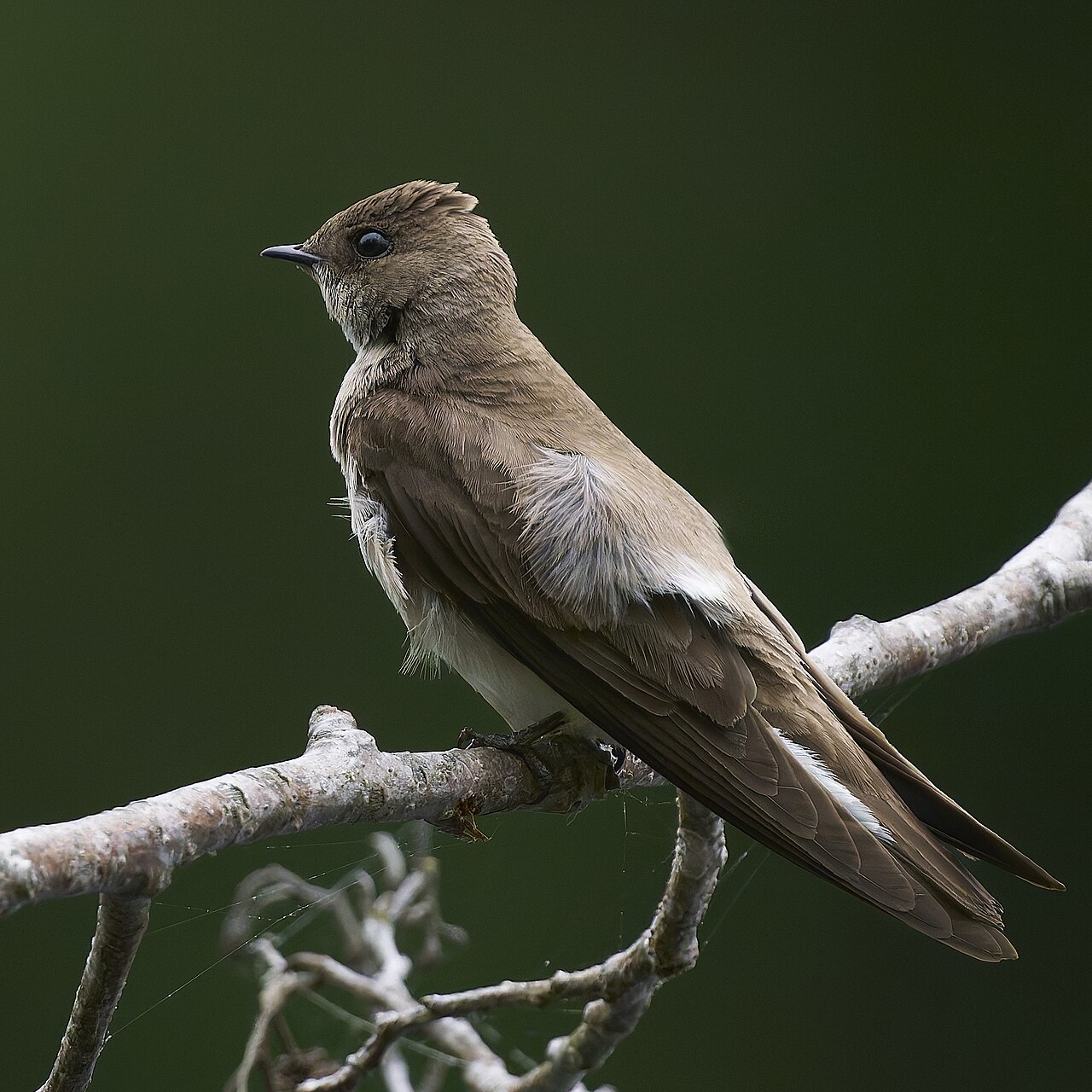
The Northern Rough-winged Swallow is the plain brown swallow with a dingy throat and no breast band. It nests not in colonies but in single pairs, in an existing cavity: an old Bank Swallow tunnel, a crack in a bridge pier, a drainpipe or a hole in a quay wall.
Voice
The voice is a short, harsh brzzt, low in pitch and often repeated in pairs or short series — lower and slower than the rattle of Bank Swallow, which it most resembles. At the nest and during chases a faster series of the same notes is given. Song in the sense of a fixed phrase is absent.
Recording: Manuel Grosselet — CC BY-NC-SA 4.0 · San Pablo Etla, San Pablo Etla, Oaxaca, Mexico · xeno-canto
Identification
Plain grey-brown above, with a grey-brown throat and upper breast that fade gradually into the dirty white of belly and undertail; there is no sharp edge and no band. The tail is short and nearly square with at most a faint notch, the wings are broad, and the flight is slow and undulating, with long glides and few sharp turns. The name refers to the hooked barbs on the outer web of the outermost primary, visible only on a bird in the hand; they are longer and broader in the male than the female.
Confusion species
Bank Swallow is the only real lookalike: smaller, colder brown, with a white throat and below it a crisply defined brown breast band, and flying with faster, more fluttering strokes. On Rough-winged the throat itself is brown and the brown blends diffusely into the white. Juvenile Tree Swallows are brown above too, but have a white throat and a more deeply forked tail, and juvenile Rough-wings give themselves away by rusty edges to the wing coverts. Barn Swallow is far longer with a deeply forked tail.
Habitat
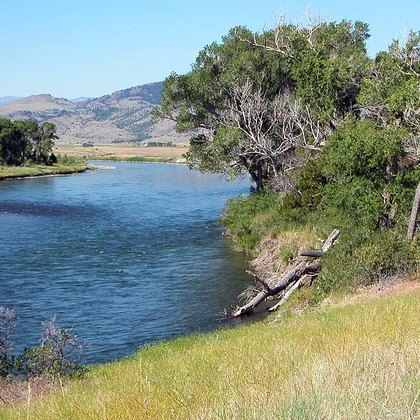
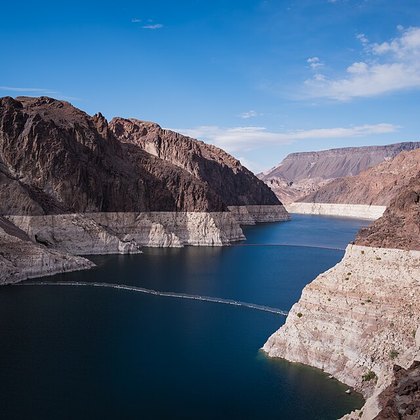
Open country along running water and in man-made faces: river banks, stream valleys, quarries, road cuts, bridges, culverts, quay walls and dams. The nest cavity is usually an existing tunnel, hole or crack, running 20 to 200 centimetres deep, from just above the ground to thirty metres up. Foraging is low over water, cropland and irrigation canals; the species avoids closed forest.
Where the bird is most often found, arranged by the USNVC — the vegetation classification of the United States and Canada — and CMECS for sea and coast.




Range and movements
It breeds from southern Alaska and southern Canada through nearly all of the United States. In Mexico, Belize and northern Central America other subspecies are present in the same areas year-round. Northern breeders winter along the Gulf Coast of the United States and south into Central America; in southern Texas and southern Arizona part of the population stays through the winter, so the line between breeding and wintering range is not sharp there.
- Resident
- Breeding (summer)
- Winter
- Passage
- dark = core range, pale = thinly spread
Where and when to look
Look for it at a bridge or culvert over a creek in April and May: one or two pairs per structure is normal, unlike the dense colonies of the other bank nesters. If a brown swallow works back and forth over the water on slow, broad beats and shows no breast band, this is the species.
Conservation
The world population is put at about 27 million mature birds; the species is listed as Least Concern (LC) and is common, with a slightly declining trend. Its readiness to nest in bridges, culverts and drainpipes keeps nest sites available where natural bank faces disappear. As an aerial insectivore its numbers do track the fall in flying insects; restoring rivers that are allowed to erode fresh banks benefits it along with Bank Swallow.
Scientific name
Stelgidopteryx serripennis | (Audubon, 1838)
Audubon described the species in 1838 as Hirundo serripennis; because it was later moved to another genus, author and year stand in parentheses. The genus Stelgidopteryx was introduced by Baird in 1858, from Greek stelgis 'scraper' and pterux 'wing'. The species name serripennis is Latin, from serra 'saw' and penna 'feather'; both names refer to the hooked outer web of the outermost primary. The specimen described came from Charleston, South Carolina.