All species › Birds of prey › Kites, Old World vultures, eagles and hawks › Red-shouldered Hawk
Red-shouldered Hawk | Buteo lineatus
Roodschouderbuizerd | Busardo de hombro rojo
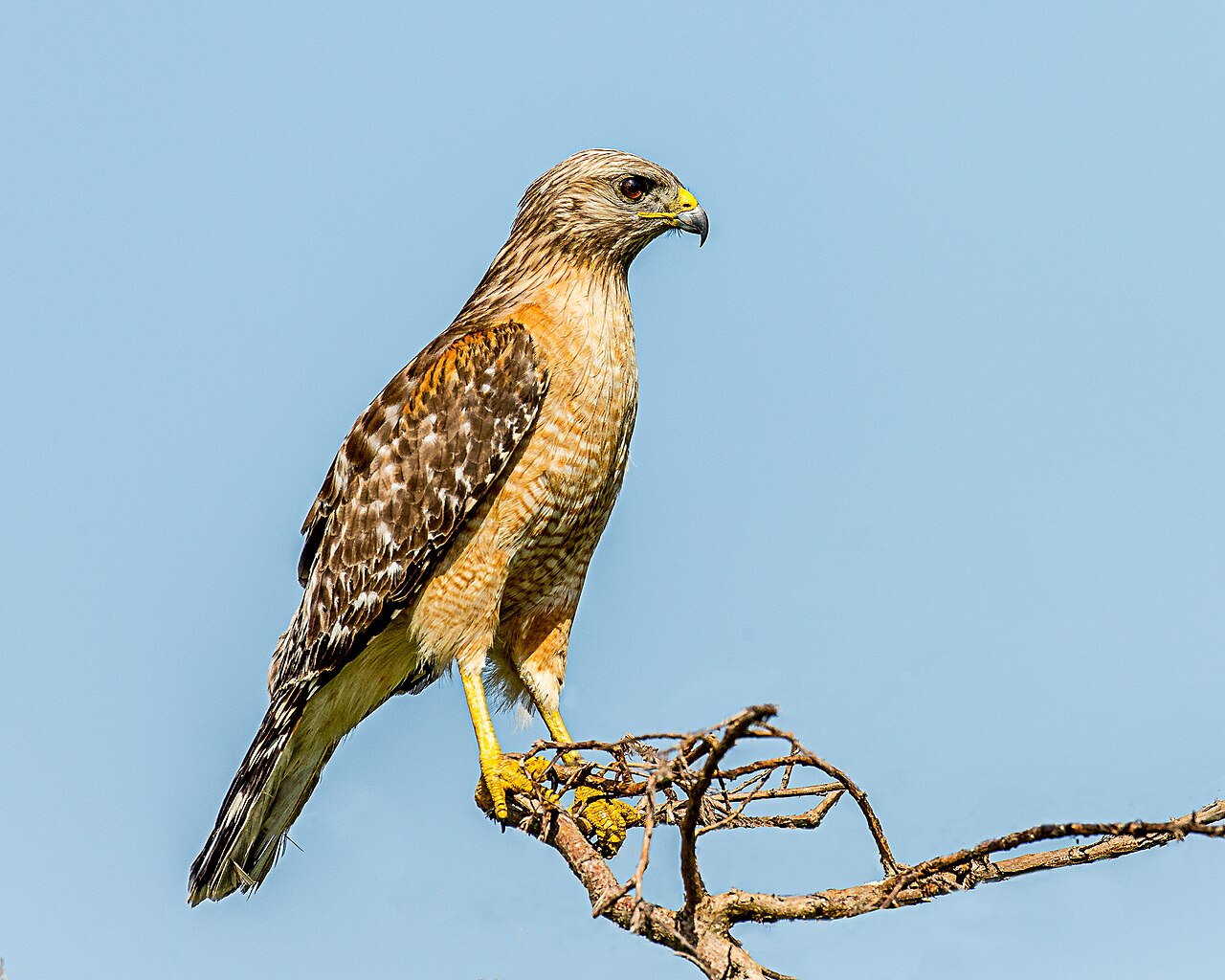
The Red-shouldered Hawk is the buteo of wet deciduous woodland: reddish-barred below, with rufous shoulders and a black tail crossed by narrow white bars. It is the noisiest buteo of the east, and its call is imitated so exactly by the Blue Jay that the two can hardly be separated by ear.
Click a thumbnail to switch the photo above.
Voice
The call is a loud, shrill kee-aah, the second syllable dropping in pitch, repeated five, ten or more times in a row. It serves to claim territory and as an alarm, and is heard most in late winter and early spring, when pairs circle above their wood. The female also gives a soft kee at the nest, over eggs or small young. The Blue Jay copies the kee-aah so accurately that the two cannot be told apart on voice alone; when in doubt the bird itself has to be seen.
Recording: Jim Berry — CC BY-NC-SA 4.0 · Meigs Township (near Peebles), Adams County, Ohio, United States · xeno-canto
Identification
The adult has warm reddish barring across the underparts, a rufous patch on the shoulder, and a black tail with three or four narrow white bars. The upperwing is checkered black and white, and at all ages a narrow pale crescent sits just inside the wingtip and glows translucent against the light — the most reliable mark in flight. The wings are broad and rounded, the tail medium-length, and when soaring the bird pushes its wings noticeably forward, so that the hands seem to reach ahead of the head. Juveniles are brown above with brown streaking on white underparts, but already show the pale crescents. Five subspecies are recognised: south Florida birds are the palest, with a grey head and faint breast barring, Californian birds the reddest. The female is the larger sex.
Confusion species
Broad-winged Hawk is smaller and more compact, with one broad white tail band instead of three or four narrow ones, wings that taper to a point, and never a pale crescent inside the wingtip. Red-tailed Hawk is considerably larger, with a dark belly band across otherwise white underparts, a dark patagial bar on the leading edge of the underwing, and an unbanded tail. Juvenile Cooper's Hawks show similar brown streaking but have short rounded wings, a long broadly banded tail and a flapping flight. In California the Red-shouldered Hawk is so red that at a distance it is taken for a Red-tailed Hawk; the narrow white tail bars settle the question at once.
Habitat
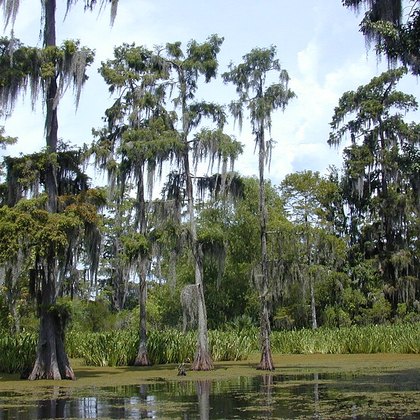
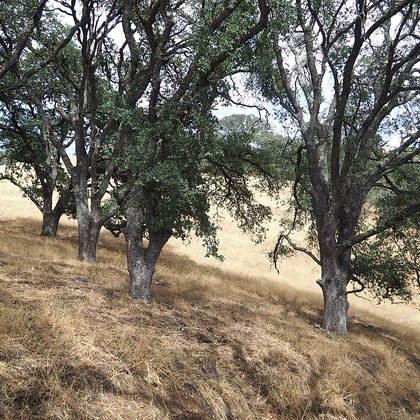
Damp lowland deciduous woodland: bottomland hardwoods, flooded swamp forest and riparian strips along rivers and ponds. It needs tall trees to nest in and an open understorey to hunt through, dropping from a perch onto mice, lizards, snakes, frogs, toads and crayfish. In the west it uses oak woodland along streams and planted eucalyptus groves. Unlike most buteos it tolerates settlement well as long as big trees remain: in leafy suburbs it nests close to houses.
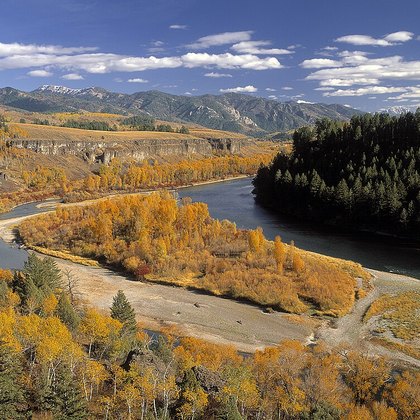
Where the bird is most often found, arranged by the USNVC — the vegetation classification of the United States and Canada — and CMECS for sea and coast.


Range and movements
Resident across most of the eastern United States, from the eastern edge of the Great Plains to the Atlantic coast, with breeders north into southern Ontario, southern Quebec and the Maritimes. A second, entirely separate population lives west of the Sierra Nevada from northern California to Baja California; more than a thousand kilometres without the species separate the two. Birds from the northern half of the eastern range move south in winter, while western birds are almost all sedentary. Between 1966 and 2019 numbers rose by more than two per cent a year over most of the range, and the western population has spread north into Oregon and Washington.
- Resident
- Breeding (summer)
- Winter
- Passage
- dark = core range, pale = thinly spread
Where and when to look
Look for it in February and March, when a pair circles above its wood calling kee-aah without stopping. Always look up before writing it down: the Blue Jay gives the same call from within the canopy, and only the bird in the air settles it. In flight, watch for the narrow pale crescent just inside each wingtip; against a clear sky those two windows light up.
Conservation
The species is listed as Least Concern (LC). Partners in Flight puts the breeding population at about 1.9 million birds and scores the species 8 out of 20 on the Continental Concern Score. Numbers rose by more than two per cent a year across most of the range between 1966 and 2019. The main threat remains the clearing of woodland, particularly the wet lowland and bottomland hardwoods on which the species depends.
Scientific name
Buteo lineatus | (Gmelin, 1788)
Gmelin described the species in 1788 as Falco lineatus, among the falcons; because it was later moved to another genus, author and year stand in parentheses. The species name lineatus is Latin for 'lined' or 'striped', after the barring on the underparts and in the tail. Buteo is the ordinary Latin word for a buzzard. The specimen described came from Long Island in the state of New York.