All species › Birds of prey › Kites, Old World vultures, eagles and hawks › Rough-legged Hawk
Rough-legged Hawk | Buteo lagopus
Ruigpootbuizerd | Busardo calzado
The Rough-legged Hawk nests on cliffs in the arctic tundra and is, across the rest of North America, mainly a winter bird of open country. It is one of the few large raptors that hunts regularly by hovering, and its legs are feathered right down to the toes — the feature both its English and its scientific name point to.

Voice
In winter it is all but silent. On the breeding grounds the adults give a loud, catlike mew of about a second when threatened, repeated every fifteen to thirty seconds, perched as well as in flight. In courtship there is in addition a whistle that tapers off into a hiss. Anyone who hears it calling on the tundra is usually already too close to the nest.
Recording: Stanislas Wroza — CC BY-NC-SA 4.0 · Ekkeroy, Finland · xeno-canto
Identification
A large buteo, long and narrow in the wing for the genus, with a long tail; in soaring flight the wingtips are broad and swept back slightly from the wrist, so that the silhouette forms a shallow M. In the light form the underwing is pale with a black patch at the bend of the wing and the tail has a white base with a dark terminal band; the female has a pale head and a solid black belly patch, the male a darker head and a more streaked breast. Juveniles show a white panel in the primaries. The dark form is almost entirely dark brown but keeps pale flight feathers with a dark trailing edge below and narrow white tail bands. In every plumage the feathering runs down to the toes, unlike most other buteos, and the female is larger than the male.
Confusion species
Red-tailed Hawk is shorter and broader in the wing, lacks the white tail base and has a belly band of loose streaks rather than a solid black patch; its legs are yellow and bare. Ferruginous Hawk is larger, whiter below, with rusty feathered legs forming a V, and has no black carpal patches. Over the same winter landscape Northern Harrier also quarters low, but is far slimmer, shows a white rump patch and holds its wings in a clear V. Dark Rough-legged Hawks are taken for dark Swainson's Hawks; the pale flight feathers with a dark trailing edge and the narrow white tail bands then remain the difference.
Habitat
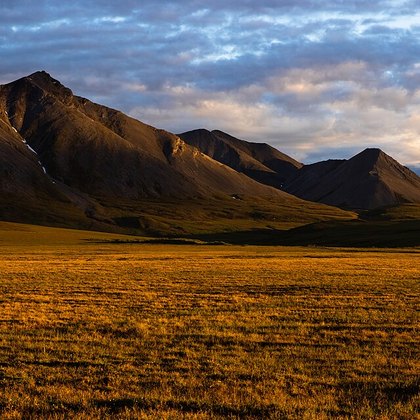
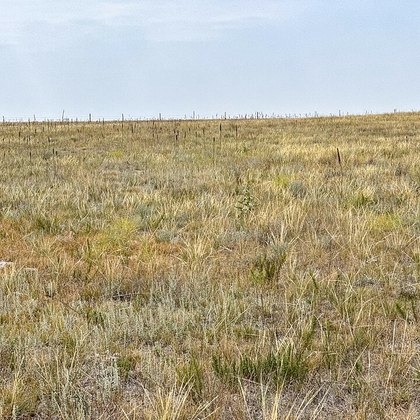
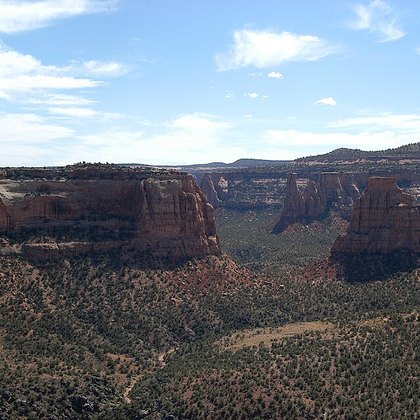
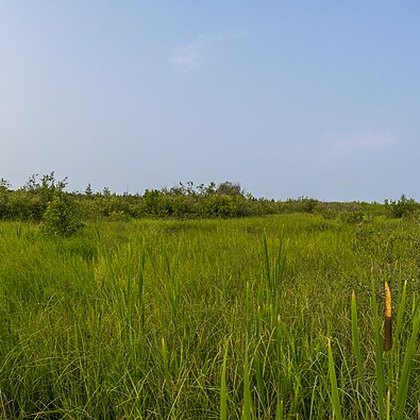
In the breeding season tundra, bare upland and the upper edge of the boreal forest, with a cliff, rock face or steep bank to nest on; in wooded country it hunts over open bogs. In winter it is open land: prairie, sagebrush (grey-green wormwood scrub of the dry western interior), semi-desert, fields, marshes, wet meadows and dunes. What all these share is a clear view over low vegetation rich in voles, and a pole, fence or lone tree to watch from. It avoids closed forest and built-up ground.
Where the bird is most often found, arranged by the USNVC — the vegetation classification of the United States and Canada — and CMECS for sea and coast.

Range and movements
A breeding bird of the north in both North America and Eurasia; in this region from Alaska east through the tundra of Yukon, the Northwest Territories and Nunavut to northern Quebec and Labrador. It leaves the breeding grounds in late September and winters in southern Canada and the northern and central United States, south to roughly a line through northern California, Kansas and Virginia. The move south is not steady migration but irruption: in years when lemming and vole numbers in the north collapse, far more birds come far further south than in good years, so that a district may be full one winter and empty the next. The breeding range itself shifts with that rodent cycle too, and when prey is scarce a pair may not breed at all.
- Breeding (summer)
- Winter
- Passage
- dark = core range, pale = thinly spread
Where and when to look
In winter, look over flat open ground — a block of fields, an airfield, a salt marsh — for a large raptor holding still into the wind on fast-beating wings: of all the big raptors here it hovers the most. Perched, it often picks the thinnest top of a tree or pole, which would not hold a Red-tailed Hawk. When it turns away, the white tail base with its dark terminal band is the first thing visible at long range.
Conservation
The global breeding population is put at about 590,000 birds and appears stable; the species is listed as Least Concern (LC). Regional numbers swing widely with the food supply, so a count from a single winter says little about the trend. One identifiable cause of death in winter is traffic: birds feeding on carrion on the verge of a road are struck by vehicles.
Scientific name
Buteo lagopus | (Pontoppidan, 1763)
Erik Pontoppidan described the species in 1763 as Falco Lagopus, among the falcons; because it was later placed in another genus, author and year stand in parentheses. The genus Buteo was introduced by Lacépède in 1799, after Latin buteo, the classical name for a buzzard-like bird of prey. lagopus is Greek, from lagos 'hare' and pous 'foot': hare-foot, after the legs feathered to the toes. No place was named in the description; the type locality is taken to be Denmark.