All species › Passerines › New World sparrows › Savannah Sparrow
Savannah Sparrow | Passerculus sandwichensis
Savannahgors | Chingolo sabanero
The Savannah Sparrow is the most numerous sparrow of open grassland in North America, breeding from the tundra of Alaska to the hayfields of New England and the salt marshes of California. Seventeen subspecies hide behind the name, differing widely in size, colour and bill shape, from the pale Ipswich Sparrow of the dunes to the large-billed form of the Gulf of California.
Voice
The song opens with two or three short, high tsip notes, followed by a long thin buzz and a second, lower buzz: about two seconds in all. It is delivered from a fence, a thistle or a grass stem and carries far over open pasture. The call is a thin, sharp tsit, also heard at night from migrating birds.
Recording: Greg Irving — CC BY-NC-SA 4.0 · Schmuck Road, Sequim, Clallam County, Washington, United States · xeno-canto
Identification
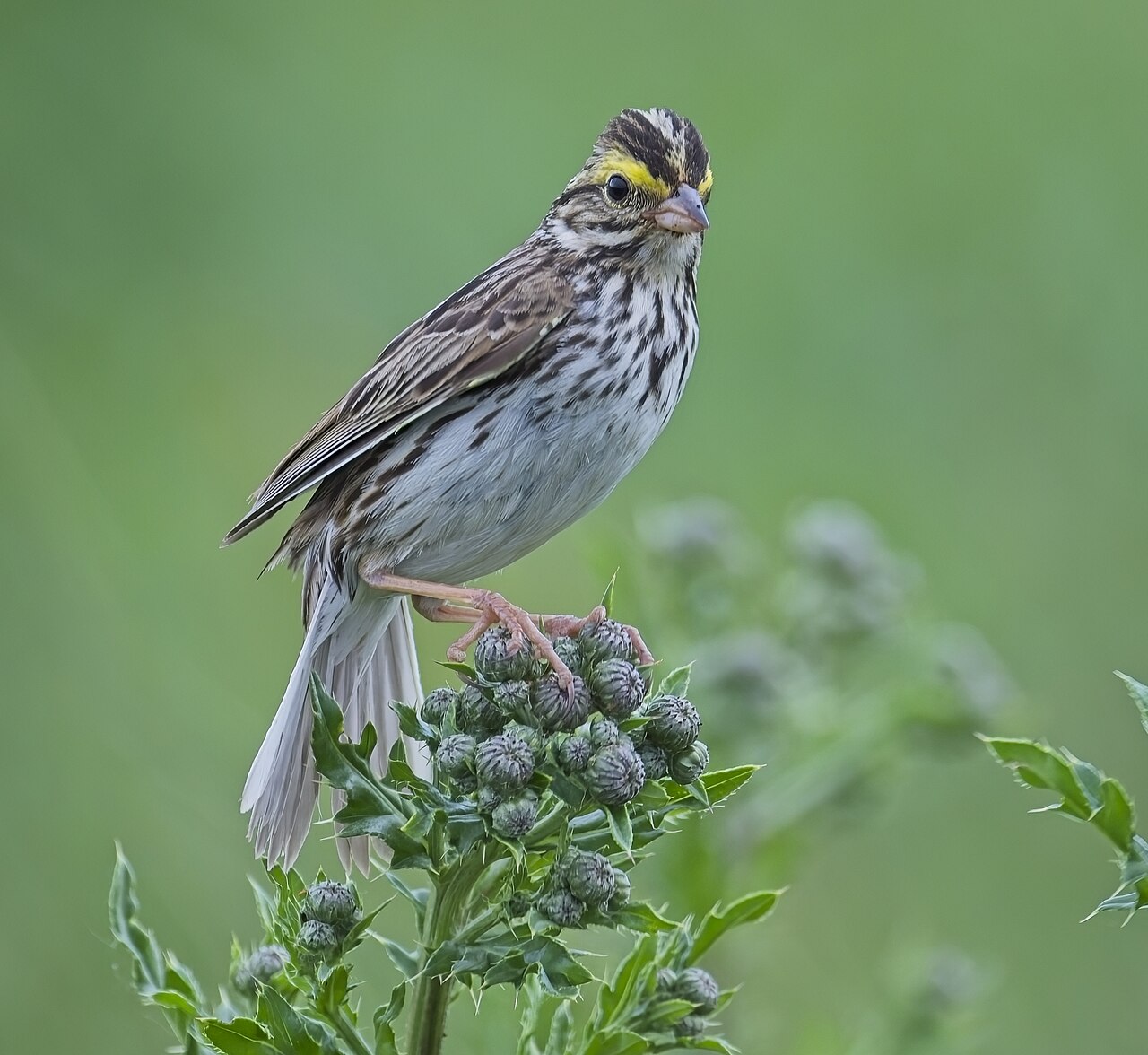
A medium-sized, short-tailed sparrow with a notched tail, pink legs and a short conical bill. The upperparts are brown with black streaking, the underparts white with fine dark streaks that often run together into a central breast spot. The mark to go on is the yellow or yellowish eyebrow in front of the eye, together with a pale central crown stripe. The amount of yellow varies strongly: on some birds the stripe is bright yellow, on others barely warmer than the rest of the head.
Confusion species
Song Sparrow is larger, has a long rounded tail, broader breast streaking and no yellow on the face. Grasshopper Sparrow has a flat head, an unstreaked buff breast and a larger bill. Lincoln's Sparrow has a buff breast band over the fine streaking and a grey eyebrow. In salt marsh, confusion with Saltmarsh and Seaside Sparrows is possible: those have a short pointed tail without a notch and an orange or grey, not yellow, face pattern.
Habitat
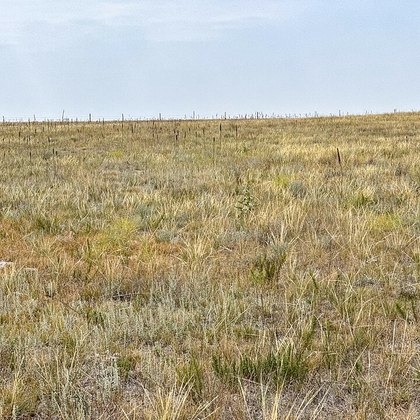
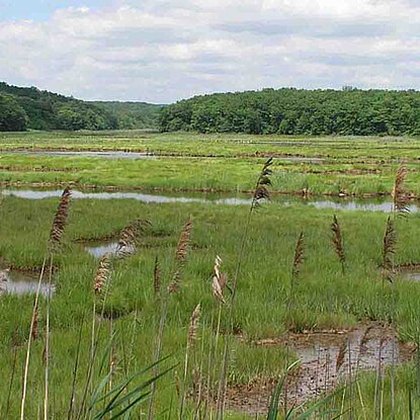
Open, herb-rich grassland with few or no trees: hayfield, pasture, prairie, field margins, bog and Arctic tundra. Along the coast, separate subspecies breed in salt marsh, on dunes and in estuaries. In winter it uses stubble fields, waste ground, low scrub at the desert edge and coastal marsh. The species is not tied to a particular grass, but to low, dense vegetation it can forage in on foot.
Where the bird is most often found, arranged by the USNVC — the vegetation classification of the United States and Canada — and CMECS for sea and coast.





Range and movements
The breeding range covers nearly all of Alaska and Canada to the Arctic coast and the northern United States, south to California, Nevada, Utah, Colorado and, in the east, to Maryland. It winters across the southern United States and virtually all of Mexico, as far as Oaxaca and Chiapas. It is resident along the coast of California and Baja California, around the Gulf of California and in the highlands of central Mexico. In Europe it is a rare vagrant.
- Resident
- Breeding (summer)
- Winter
- Passage
- dark = core range, pale = thinly spread
Where and when to look
Walk a fence line beside a hayfield in May or June and wait for a singing male; from a post the yellow eyebrow usually shows at a glance. In winter the species is found in flocks on stubble — as the birds flush, watch the short notched tail, the quickest distinction in a mixed sparrow flock.
Conservation
The IUCN lists the species, also within its current taxonomic limits, as Least Concern (LC). Partners in Flight puts the world population at about 170 million birds. Even so, the Breeding Bird Survey records a fall of roughly 45 per cent between 1966 and 2019. Agricultural intensification, early and repeated mowing during the breeding season, conversion of hayfield to arable and exposure to pesticides are the identified causes. Some coastal forms carry their own status: the Belding's subspecies of the Californian salt marshes is listed as endangered in California.
Scientific name
Passerculus sandwichensis | (Gmelin, 1789)
Johann Friedrich Gmelin described the species in 1789 as Emberiza sandwichensis, from a specimen from Unalaska in the Aleutians; the species name refers to Sandwich Sound, the name James Cook gave to what is now Prince William Sound, Alaska. Because the species was later moved to another genus, author and year stand in parentheses. The genus Passerculus is the Latin diminutive of passer 'sparrow', so 'little sparrow'. The English name goes back to the city of Savannah, Georgia, where Alexander Wilson collected a specimen.