All species › Passerines › Tyrant flycatchers and allies › Say's Phoebe
Say's Phoebe | Sayornis saya
Say's phoebe | Mosquero Llanero
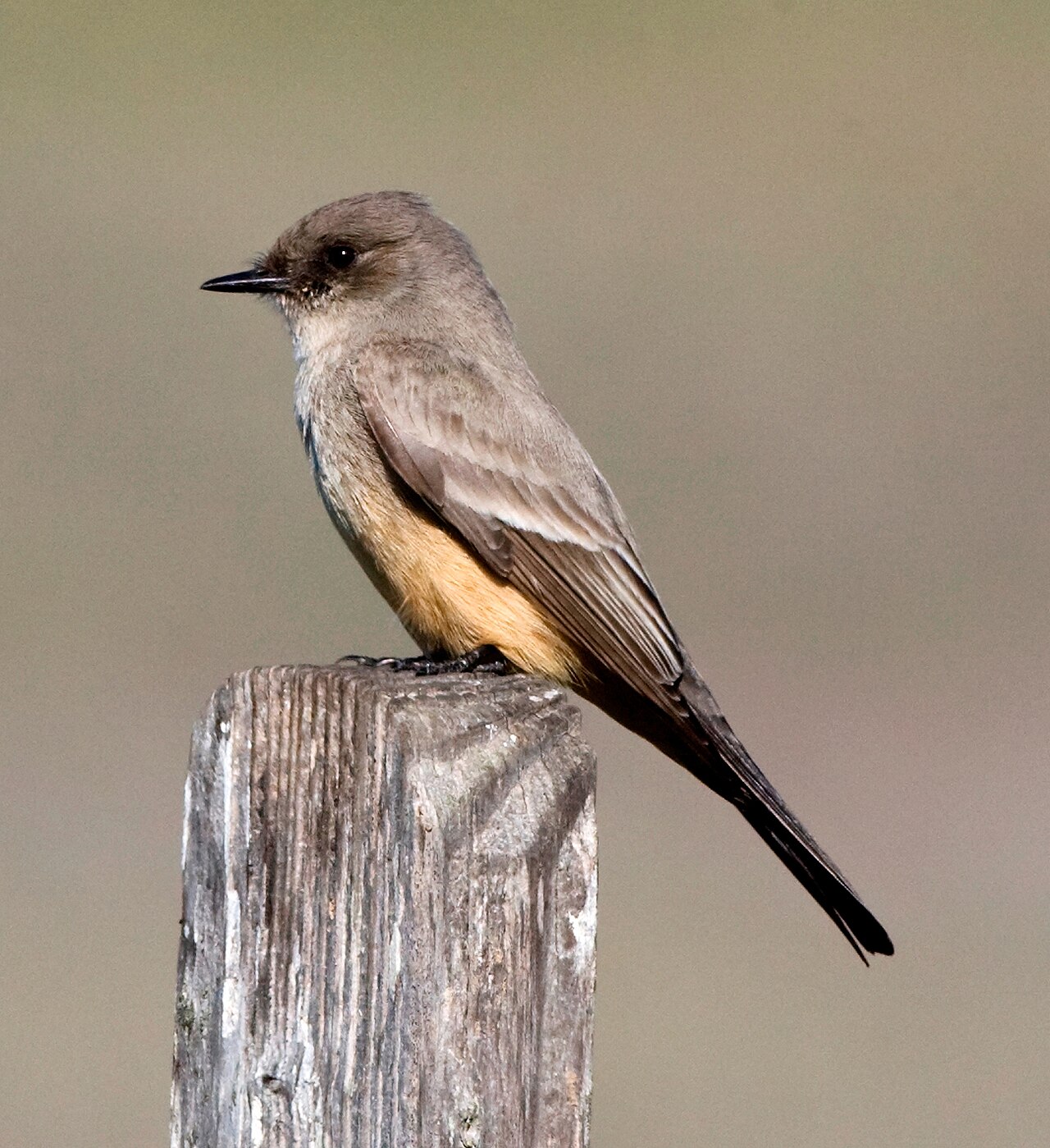
Say's Phoebe is the flycatcher of dry, bare country: grey-brown above, with a grey breast, a cinnamon belly and a black tail it pumps downward while perched. It breeds farther north than any other tyrant flycatcher — into Alaska — and readily nests on ledges of barns, bridges and cut banks.
Voice
The call is a thin, downslurred, plaintive pee-ur that carries far over open ground. The song consists of two alternating phrases: a rising pit-tsee-ar and a shorter, quick pit-tsee-choo, given at first light often in a short hovering flight above the nest site. The male sings most, but females sing too.
Recording: Patrick J. Blake — CC BY-NC-SA 4.0 · Calico Basin, Red Rock Canyon NCA, Las Vegas, Clark County, Nevada, United States · xeno-canto
Identification
The upperparts are plain grey-brown, the head slightly darker and squared off in profile; throat and breast are grey and grade without a sharp border into a cinnamon to buff-orange belly and undertail coverts. The tail is black, fairly long and square-tipped; the bird pumps it downward while perched and fans it. There is no eye-ring and no obvious wingbars. The sexes are alike. It hunts from low perches and regularly hovers over the ground.
Confusion species
Black Phoebe shares the tail pumping but is black with a sharply cut-off white belly and no cinnamon. Eastern Phoebe has a white rather than cinnamon belly and an all-black bill without a pale base, and calls a clear fee-bee. A female Vermilion Flycatcher is smaller, has a streaked white breast and a finer bill. Ash-throated Flycatcher has two clear wingbars, a pale eye-ring and a crest; Say's Phoebe has none of the three. Mountain and Western Bluebirds show blue in wing and tail and have a much shorter bill.
Habitat
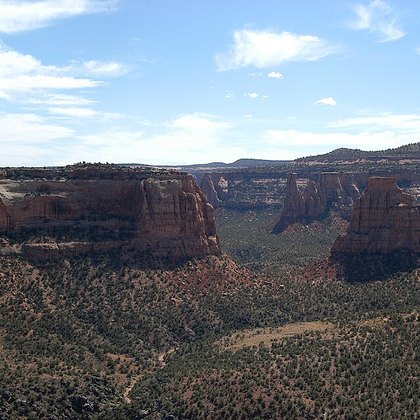
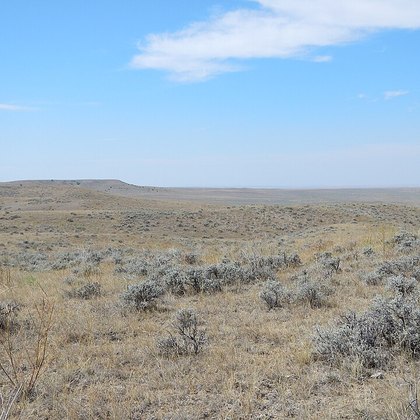
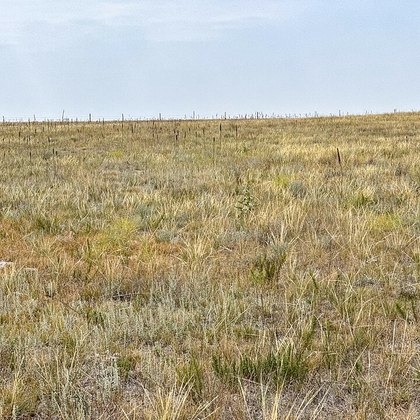
Dry, sparsely vegetated open country: sagebrush (grey-green wormwood scrub of the dry western interior) flats, badlands (heavily eroded, barren hill country of clay rock), bare foothills, canyons, desert edges, alkali flats, grazed pasture and the outskirts of towns. Unlike the other phoebes it is not tied to water. For the nest it needs a sheltered ledge or pocket: a cave, a cliff shelf, a steep cut bank, a bridge, a barn, an abandoned building or a mine shaft. It avoids forest.
Where the bird is most often found, arranged by the USNVC — the vegetation classification of the United States and Canada — and CMECS for sea and coast.




Range and movements
It breeds from central and western Alaska and Yukon through British Columbia, Alberta and Saskatchewan south across the western United States into northern Mexico, east into the Dakotas, Nebraska, Kansas and western Oklahoma. Northern breeders leave; in the south-western United States and northern Mexico it stays all year. The winter range also covers interior Mexico up to roughly the central highlands. Outside the range it is a regular vagrant in eastern North America.
- Resident
- Breeding (summer)
- Winter
- Passage
- dark = core range, pale = thinly spread
Where and when to look
Drive through dry country in March or April and stop at abandoned farms, barns and culverts: the bird nests on ledges inside and then perches on a fence or roof edge close by. The downward tail pumping together with the cinnamon belly makes it recognisable even against the light.
Conservation
Partners in Flight puts the breeding population at about 4 million birds, roughly 85 per cent of which spend part of the year in the United States. The Breeding Bird Survey shows a slight increase between 1966 and 2015. Structures in arid regions — barns, bridges, culverts, abandoned mines — have added nest sites. The species is listed as Least Concern (LC) and is on no watch list.
Scientific name
Sayornis saya | (Bonaparte, 1825)
Bonaparte described the species in 1825 as Muscicapa saya, from a specimen on the Arkansas River about thirty kilometres from the Rocky Mountains, near present-day Pueblo, Colorado; because it was later placed in Sayornis, author and year stand in parentheses. Both genus and species name refer to the American naturalist Thomas Say, who collected the bird on Long's expedition: Sayornis is 'Say's bird', from Greek ornis 'bird'. The name phoebe is carried over from the Eastern Phoebe and goes back to that bird's call.