All species › Passerines › Tits, chickadees and titmice › Tufted Titmouse
Tufted Titmouse | Baeolophus bicolor
Tweekleurige Mees | Herrerillo bicolor
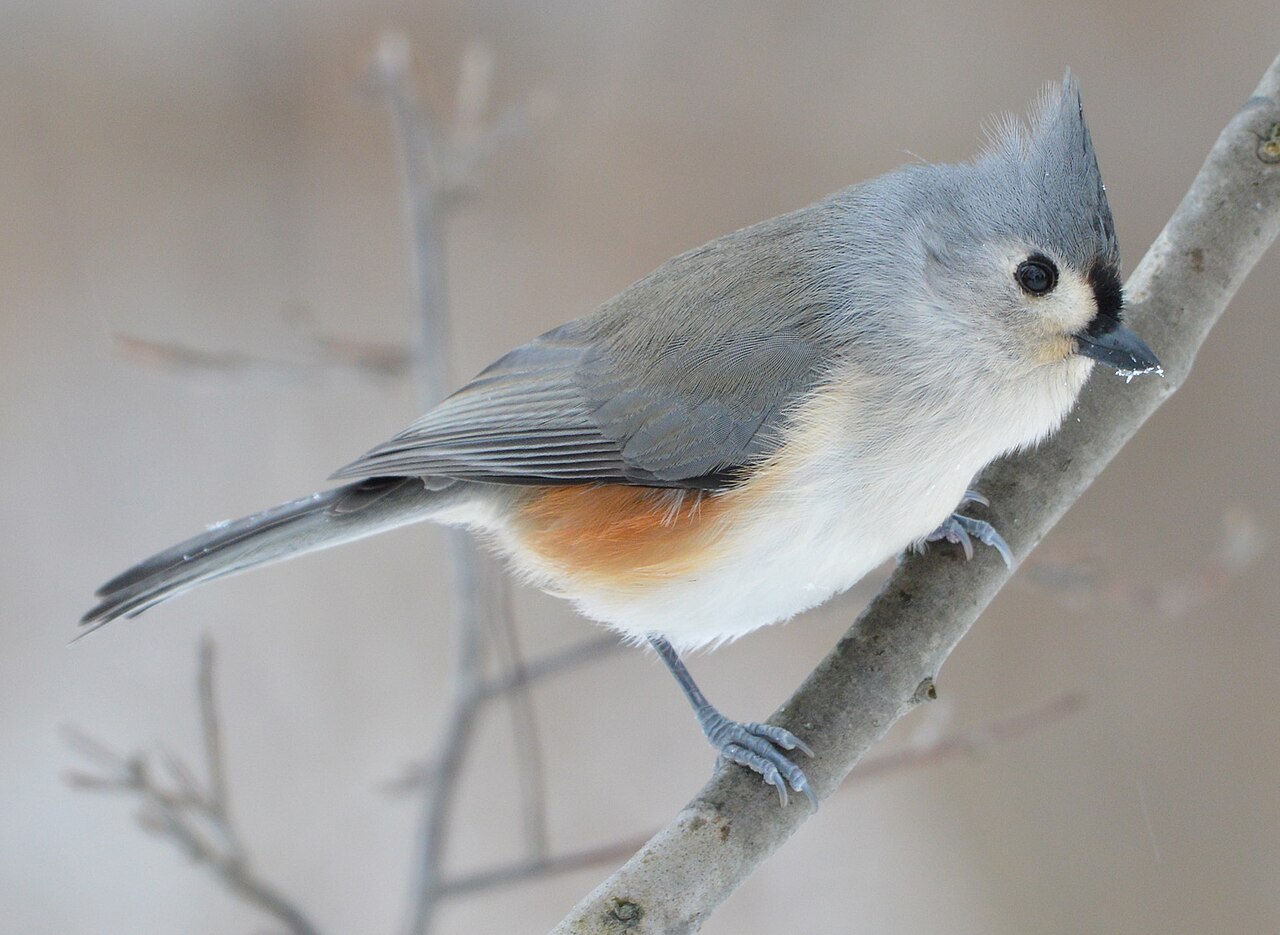
The Tufted Titmouse is the largest titmouse of eastern North America: silvery grey above, white below, with a pointed grey crest, a black patch above the bill and a rusty wash along the flanks. Since the mid-twentieth century it has extended its range northward, into southern Ontario and southern Quebec.
Voice
The characteristic sound is a clear whistled peter-peter-peter, usually in three to six repetitions and carrying far through bare winter woodland. About twenty variants of that whistle have been described, in pitch and in the number of syllables. Alongside it comes a raspy, nasal tschick-a-dee-like scolding, which swells sharply at an owl or a cat. The species calls all year.
Recording: steve — CC BY-SA 4.0 · Chapel Hill, Orange County, North Carolina, United States · xeno-canto
Identification
At 14 to 16 cm and 18 to 26 grams, clearly larger than a chickadee. Soft silvery grey above and white below, with a peach to rusty wash along the flanks that is often the first thing to show at a distance. The crest is grey and pointed and is raised and lowered; above the thick, blunt bill sits a black forehead patch. The eye is large and dark and lies in a plain white face. Juveniles have that forehead patch barely developed.
Confusion species
Black-crested Titmouse has exactly the reverse head pattern: a black crest above a white forehead, where Tufted Titmouse carries a grey crest above a black forehead. In a narrow strip through central Texas and southwestern Oklahoma the two interbreed and intermediates occur, with a dull grey or half-black crest and a dingy forehead; those birds cannot be named. Carolina and Black-capped Chickadees are smaller, lack the crest and have a black cap and bib. Oak and Juniper Titmice lack the rusty flanks and the black forehead patch and occur only in the West.
Habitat
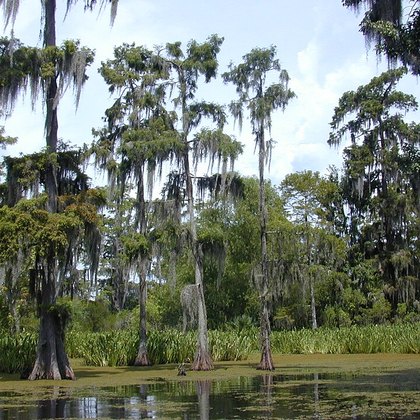
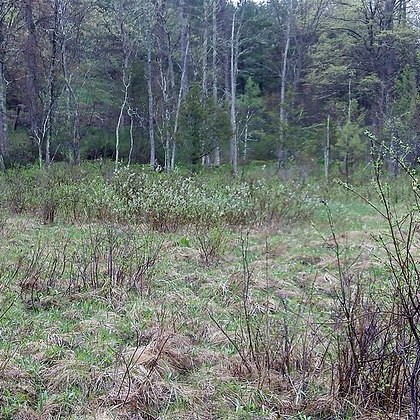
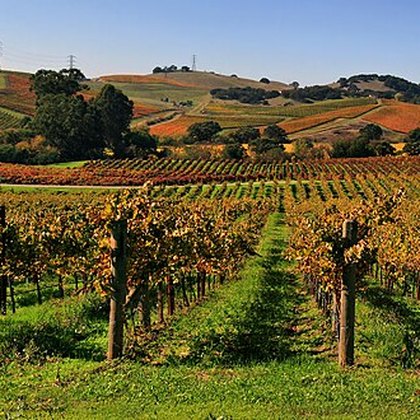
Deciduous and mixed woodland below about 600 metres, favouring tall stands with plenty of dead limbs and cavities, including swamp forest and streamside woodland. Also gardens, parks, orchards and wooded edges in built-up land; feeders are visited year-round. Nearly two-thirds of the annual diet is insects, with caterpillars the main summer food; beyond that nuts, seeds and berries.
Where the bird is most often found, arranged by the USNVC — the vegetation classification of the United States and Canada — and CMECS for sea and coast.



Range and movements
Resident in eastern North America. The original core lay in the Ohio and Mississippi basins; the range has since shifted north into New England, southern Ontario and the extreme south of Quebec, with bird feeders among the causes given. The western edge runs roughly along the prairie margin, from eastern Nebraska and eastern Kansas to eastern Texas. In Florida it is absent from the extreme south. There is no migration.
- Resident
- Winter
- dark = core range, pale = thinly spread
Where and when to look
In winter, whistle the peter-peter back along a woodland trail: the bird often comes to look within a minute, and usually brings the whole mixed flock of chickadees, nuthatches and kinglets with it. At a feeder the pattern is recognisable: it takes a single seed, flies to cover and hacks it open there with the bill; surplus seed is cached nearby.
Conservation
The breeding population is estimated at about eight million birds and grew by more than one and a half percent a year between 1966 and 2015. The IUCN status is Least Concern. The expansion goes with the maturing of eastern woodland and with winter feeding; hard winters at the northern edge cause local setbacks. The nest is in a tree cavity or nest box, and in managed woodland the supply of cavity trees sets the density.
Scientific name
Baeolophus bicolor | (Linnaeus, 1766)
Linnaeus described the species in 1766 as Parus bicolor; because it was later moved to another genus, author and year stand in parentheses. The genus Baeolophus is from Greek baios 'small' and lophos 'crest'; the species name bicolor is Latin for 'two-coloured', after the grey above and white below. For the origin Linnaeus gave only 'in America septentrionali'; that statement was later restricted to South Carolina.