All species › Passerines › Thrushes and allies › Western Bluebird
Western Bluebird | Sialia mexicana
Blauwkeelsialia | Azulejo garganta azul
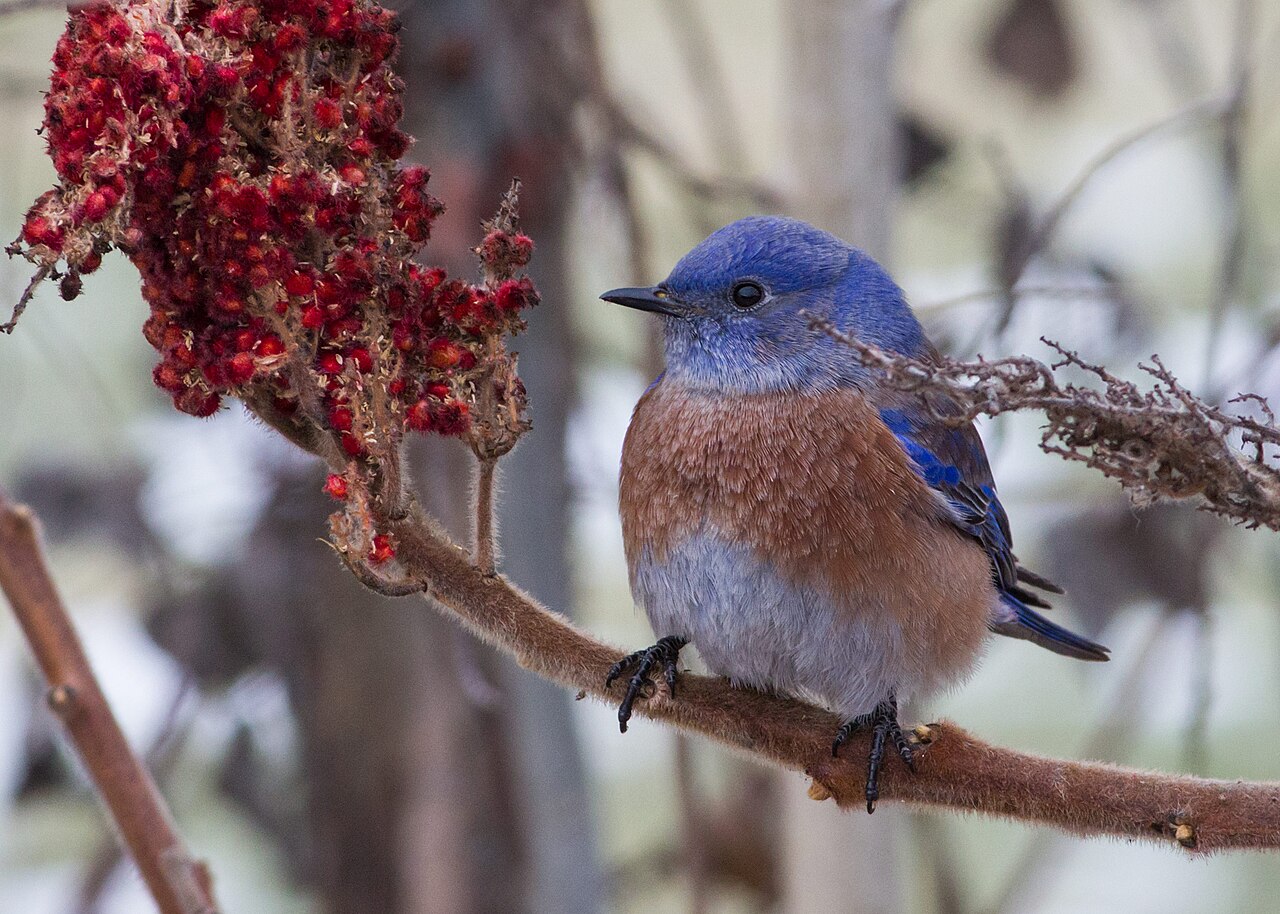
The Western Bluebird is the bluebird of the open pine and oak woodland of the West: a small, compact thrush that drops from a low perch onto the ground. Unlike the other two bluebirds, the male's blue extends across the throat; the rust-brown breast continues onto the flanks and often also as a patch on the back.
Voice
The call is a soft, descending few or kew, kept up between birds in a loose flock and the usual way they give themselves away above the canopy. Alarm adds a hard chek. The song is a short, thin series of the same notes, kew-kew-kewee, mostly at first light and so quiet that it fades out within a few tens of metres. Begging young give a dry rattle at the nest hole.
Recording: Paul Driver — CC BY-NC-SA 4.0 · Glen Ellen, Sonoma County, California, United States · xeno-canto
Identification
The male is deep blue on head, throat, wings and tail, with a rust-brown breast and flanks and a grey-white belly; the mantle usually carries a brown patch. Because the throat is blue rather than orange, the blue hood runs unbroken down onto the breast. The female is dull grey-brown with a blue wash on wings and tail, a grey throat and a faded rusty breast. Juveniles are heavily spotted on breast and back, with blue already showing in the wing. The posture on a perch is upright with the neck drawn in.
Confusion species
Eastern Bluebird has an orange throat sharply cut off from the blue of the head, and a white belly with no brown on the back; the two overlap only in the Southwest. Mountain Bluebird is longer-winged and slimmer and shows no rust at all: the male is wholly sky-blue, the female grey with blue wings and tail. Female Western and Mountain are the hard pair — look for the warm rusty breast and the shorter wing of Western, and at the hunting method: Western drops from a perch, Mountain hovers over grass.
Habitat
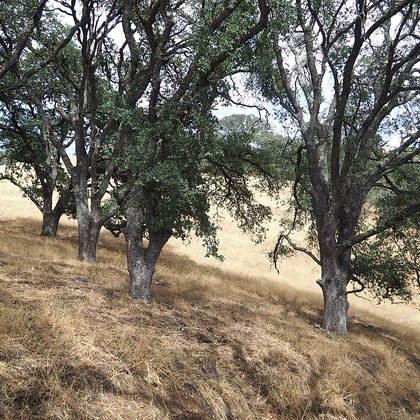
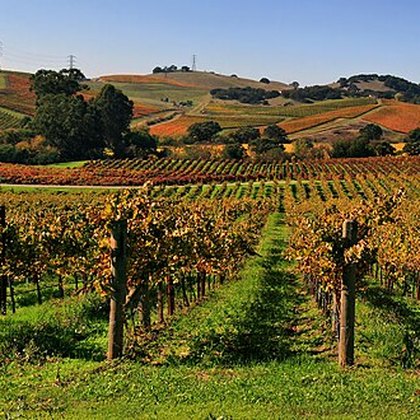
Open conifer forest with ponderosa pine, oak woodland, pine-oak forest and woodland edge, from sea level to about 2400 metres. It depends on cavities: woodpecker holes, natural rot holes and nest boxes. Burns and clearcuts with standing dead timber supply holes and perches at once and are occupied quickly. In winter it shifts to lower oak woodland, orchards, vineyards and juniper, living on mistletoe and elderberry fruit.
Where the bird is most often found, arranged by the USNVC — the vegetation classification of the United States and Canada — and CMECS for sea and coast.





Range and movements
The range runs from southern British Columbia south along the Pacific coast and the mountains through California, the Great Basin ranges and the Rockies into Arizona, New Mexico and West Texas, and on through the Sierra Madre Occidental and Oriental to Oaxaca and Veracruz. Over most of that area it is resident; only the northernmost and highest breeders leave, usually no further than the nearest lower valleys. In winter they form flocks of ten to fifty around fruiting mistletoe.
- Resident
- Breeding (summer)
- Winter
- Passage
- dark = core range, pale = thinly spread
Where and when to look
Drive a ponderosa woodland edge with nest boxes or dead timber in April or May and listen for the soft descending few: the birds sit almost always on the topmost dead branches and are heard before they are seen. In winter it pays to work through mistletoe-laden groves — where a party of bluebirds settles, it often stays all day.
Conservation
Partners in Flight puts the breeding population at about 7.1 million birds; the trend has been roughly stable since 1966 and the species is listed as Least Concern (LC). Loss of standing dead timber to logging and fire suppression limits the number of cavities, and European Starlings and House Sparrows take holes that would otherwise be available. Nest-box trails through oak woodland and vineyards make up part of that shortfall; in parts of California and Oregon the species has increased locally as a result.
Scientific name
Sialia mexicana | Swainson, 1832
Swainson described the species in 1832 as Sialia Mexicana; author and year stand without parentheses because it is still in the same genus. The genus Sialia was introduced by the same Swainson in 1827, from Greek sialis, the name of an unidentified bird. The species name mexicana means 'Mexican', after the type locality: the tableland of Mexico. The Dutch name refers to the blue throat, the character that separates it from Eastern Bluebird.