All species › Passerines › Tyrant flycatchers and allies › Western Kingbird
Western Kingbird | Tyrannus verticalis
Arkansaskoningstiran | Tirano Pálido
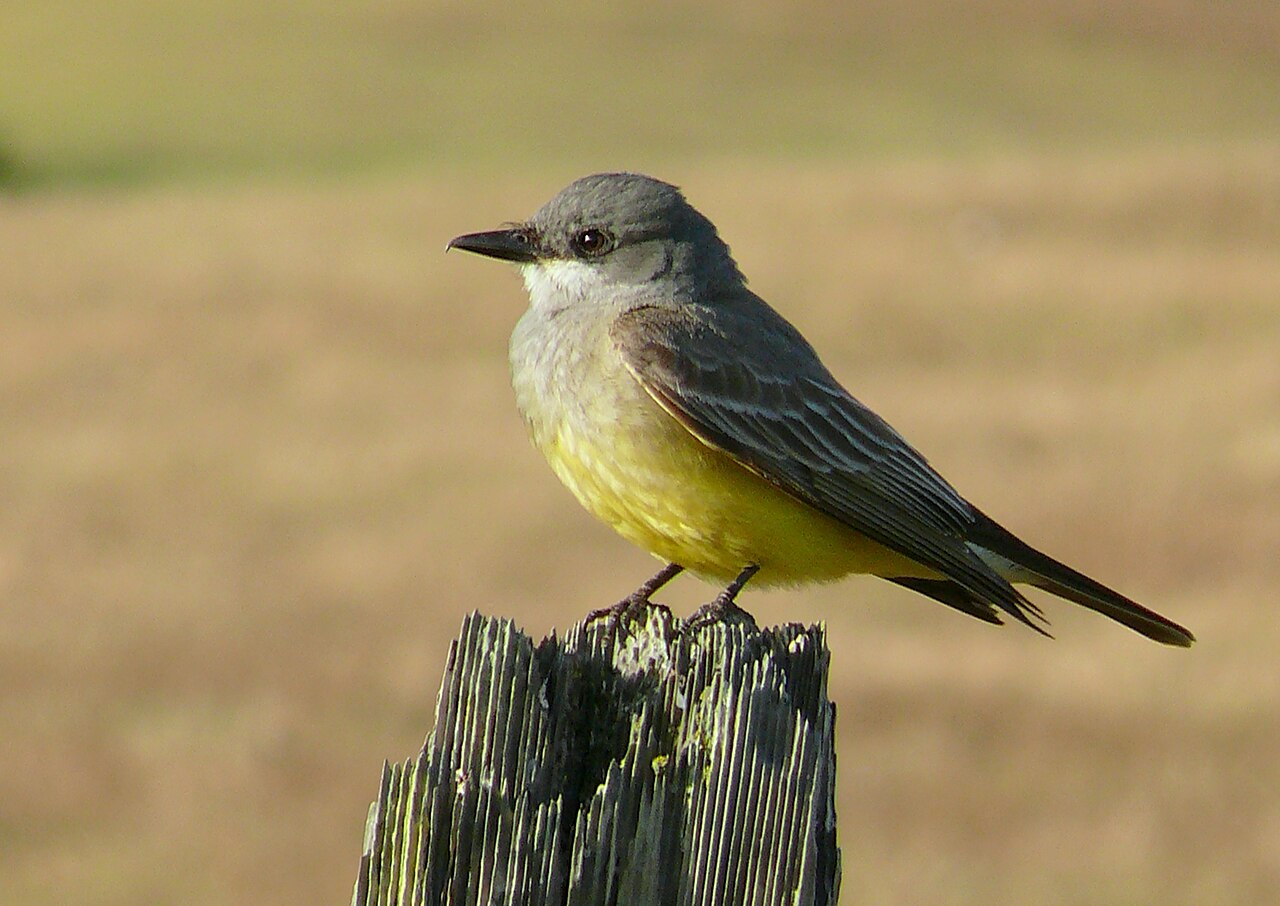
The Western Kingbird is the common kingbird of the open West: pale grey head and breast, yellow belly, and a black tail with a white outer edge. It perches on wires, fences and isolated trees along roads and fields, and defends its territory with loud, wing-fluttering attacks on much larger birds.
Voice
The call is a short, sharp whit. From it the bird builds a squeaky chatter that swells into a series of fast twittering notes; at first light the male sings a longer version, often before sunrise and sometimes in a short song flight. Disputes with a crow, a hawk or another kingbird bring on a sustained rattling chatter.
Recording: Richard E. Webster — CC BY-NC-SA 4.0 · San Bernardino National Wildlife Refuge, Cochise County, Arizona, United States · xeno-canto
Identification
Head and breast are pale grey, the throat whitish, the belly and undertail coverts clear yellow. The back is grey with an olive cast, the wings dark brownish grey. The best mark is the black, square-cut tail with a narrow white edge along the outermost feather. The head is large, the bill short, straight and heavy. A concealed orange-red crown patch shows only in aggression or display. The sexes look alike.
Confusion species
Cassin's Kingbird has a darker grey head and breast, a sharply contrasting white chin and an olive-brown tail without a white outer edge but with a faint pale tip; its call is a low, short chi-beer. Tropical and Couch's Kingbirds have a heavier bill, a notched tail without a white edge and far more yellow on the breast. Scissor-tailed Flycatcher has the same white-edged black tail but is white and salmon below rather than yellow, with a much longer forked tail.
Habitat
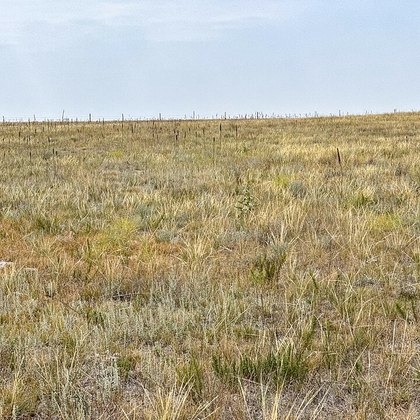
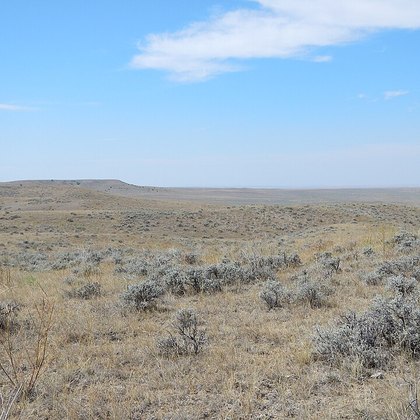
Open country with a few high perches: shortgrass prairie, sagebrush (grey-green wormwood scrub of the dry western interior) steppe, desert edge, pasture, cropland, farmyards and town edges, usually below about 2100 metres. It nests in cottonwood, sycamore, juniper and mesquite (a thorny pod-bearing shrub of the Southwest that forms dense thickets), and just as readily on utility poles, transformer boxes and roof edges. It avoids closed forest; a single tree in a wide open field is enough.
Where the bird is most often found, arranged by the USNVC — the vegetation classification of the United States and Canada — and CMECS for sea and coast.



Range and movements
It breeds across western North America, from southern British Columbia, Alberta, Saskatchewan and southern Manitoba to northern Mexico, east into the Dakotas, Nebraska, Kansas and Oklahoma. Since the late nineteenth century the range has spread eastward with tree planting on the Great Plains and with the arrival of power and telephone lines. The winter range lies in south-western Mexico and Central America; small numbers winter along the Gulf coast and in Florida.
- Resident
- Breeding (summer)
- Winter
- Passage
- dark = core range, pale = thinly spread
Where and when to look
Drive a prairie road in June and check every pole: a grey-and-yellow bird sitting bolt upright that flies off at your approach and returns is almost always this species. The white outer edge of the tail shows quickest in flight from the side; on a perched bird it often disappears.
Conservation
Partners in Flight puts the breeding population at about 30 million birds. The Breeding Bird Survey shows a fairly steady picture between 1966 and 2019, and the range has grown eastward over the same period. Because it often hunts over cropland it is exposed to pesticides. Poles and masts supply nest sites where trees are absent.
Scientific name
Tyrannus verticalis | Say, 1822
Thomas Say described the species in 1822 under the name it still carries, Tyrannus verticalis, from a specimen taken near La Junta, Colorado. Tyrannus is Latin for 'absolute ruler', after the driving of larger birds from the territory; verticalis means 'of the crown' and refers to the concealed crown patch. The Dutch name and the older English name Arkansas Kingbird go back to the early specimens along the Arkansas River.