All species › Gamebirds › Partridges, pheasants, grouse and allies › Willow Ptarmigan
Willow Ptarmigan | Lagopus lagopus
Moerassneeuwhoen | Lagópodo común
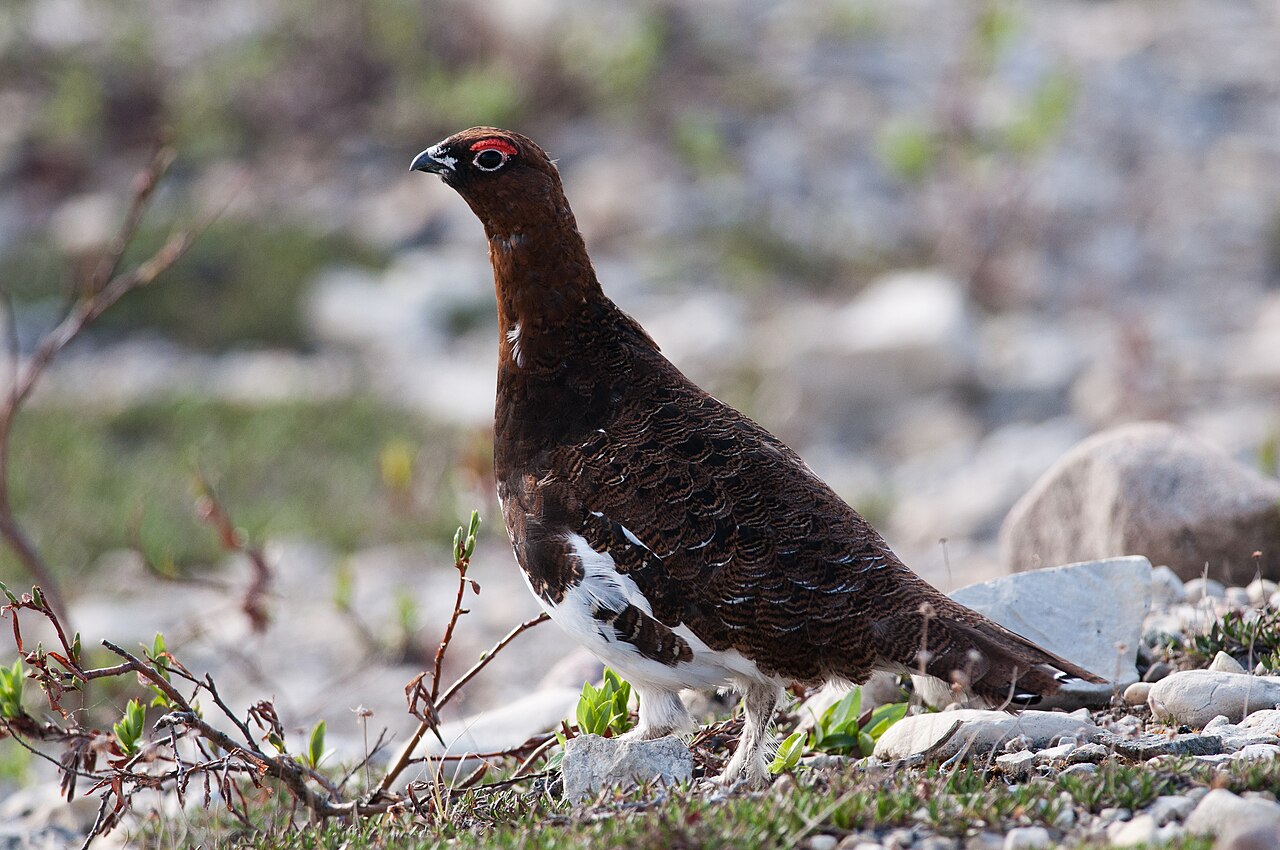
Willow Ptarmigan is the largest and most numerous ptarmigan in North America, and the only one in which the male grows a rusty red head and neck in early spring while the rest of the body is still white. Where the other two ptarmigans seek the highest, barest ground, this species stays lower, in willow scrub and wet tundra, rarely on bare rock. It is the state bird of Alaska and the most widely hunted grouse of the far north.
Voice
The male displays with a loud, rattling go-back go-back-back-back, often given during a short display flight in which he drops on stiff wings. The alarm call is a harsh, loud cackle, far louder and more far-carrying than in the other two ptarmigans. Females confronted at the nest give a plaintive bleating call while fluttering off as if injured. In the pale light of an Arctic dawn this species' display can often be heard from kilometres away.
Recording: Stanislas Wroza — CC BY-NC-SA 4.0 · Soppavann, Finland · xeno-canto
Identification
In winter it is entirely white with a black tail, stockier and heavier-billed than the other two ptarmigans. Early in spring the male is first to acquire a rusty red head and neck while the rest of the body is still white — a plumage no other ptarmigan shows. In full summer plumage it is more coarsely patterned in rusty brown, black and white than the finer Rock Ptarmigan, and the male lacks the black eye-stripe. The female is more evenly brown-mottled year-round and harder to tell from the male than in the other two species.
Confusion species
Rock Ptarmigan (Lagopus muta) is smaller and more finely patterned, the male has a black eye-stripe in winter, and it lives higher up, on bare rock rather than scrub; in Alaska and northern Canada the two species breed in the same landscape, Willow Ptarmigan in the lower willow scrub and Rock Ptarmigan on the bare heights above. White-tailed Ptarmigan (Lagopus leucura) is clearly smaller and keeps a white rather than black tail in every plumage; it occupies a range much further south in the Rocky Mountains, with little overlap. The male's rusty red head in early spring is shown by neither of the other two species and is then the surest field mark.
Habitat
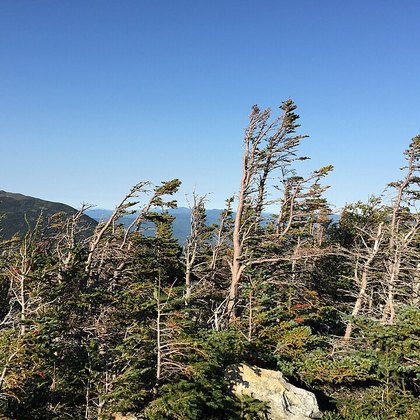
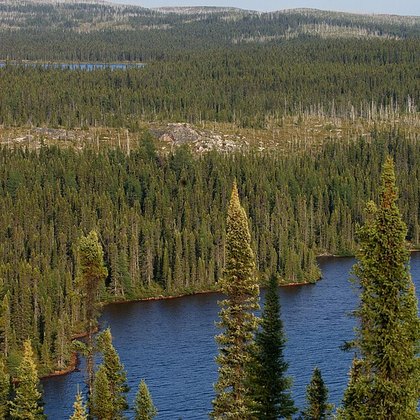
Willow Ptarmigan breeds in wet tundra with willow and birch scrub, along streams and in hollows where the snow melts first and food for chicks is abundant. In winter it moves into denser, taller willow, which then supplies almost its entire diet of buds and twigs. It avoids the bare, rocky slopes that are the domain of the other two ptarmigans; what it seeks is a dense low layer for cover and nesting.
Where the bird is most often found, arranged by the USNVC — the vegetation classification of the United States and Canada — and CMECS for sea and coast.


Range and movements
Resident with limited movement: birds from the northernmost parts of the range shift south and into lower scrub in winter, but there is no true long-distance migration. The range covers almost all of Alaska and northern Canada, from Yukon and the Northwest Territories through British Columbia, Alberta, Saskatchewan, Manitoba and northern Ontario and Quebec to Newfoundland and Labrador, where it is a popular game bird. The species does not breed in the lower 48 United States.
- Resident
- Breeding (summer)
- Winter
- Passage
- dark = core range, pale = thinly spread
Where and when to look
Walk through willow scrub on the Alaskan or northern Canadian tundra in June and listen for the loud 'go-back' call — it is often heard well before the bird is seen. Early in spring, right after snowmelt, the male's rusty head stands out at a great distance against the still-white ground.
Conservation
Abundant and listed as Least Concern (LC), with one of the largest populations of any North American grouse; numbers fluctuate year to year with the rodent-and-predator cycle that shapes the tundra. The species is traditionally hunted across parts of Alaska and Canada, at levels that do not appear to threaten the population.
Scientific name
Lagopus lagopus | (Linnaeus, 1758)
Linnaeus described the species in 1758 as Tetrao Lagopus, among the grouse of the genus Tetrao; since it was placed in the genus Lagopus, author and year stand in parentheses, and the species name happens to repeat the genus name. Lagopus is Greek for 'hare-foot', after the densely feathered legs. The type locality was vaguely given in 1758 as 'the European Alps' but later restricted to Swedish Lapland, where Linnaeus's specimens had come from.