All species › Waterfowl › Ducks, geese and swans › Common Shelduck
Common Shelduck | Tadorna tadorna
Bergeend | Tarro blanco | Brandgans | טדורנה | Tadorne de Belon
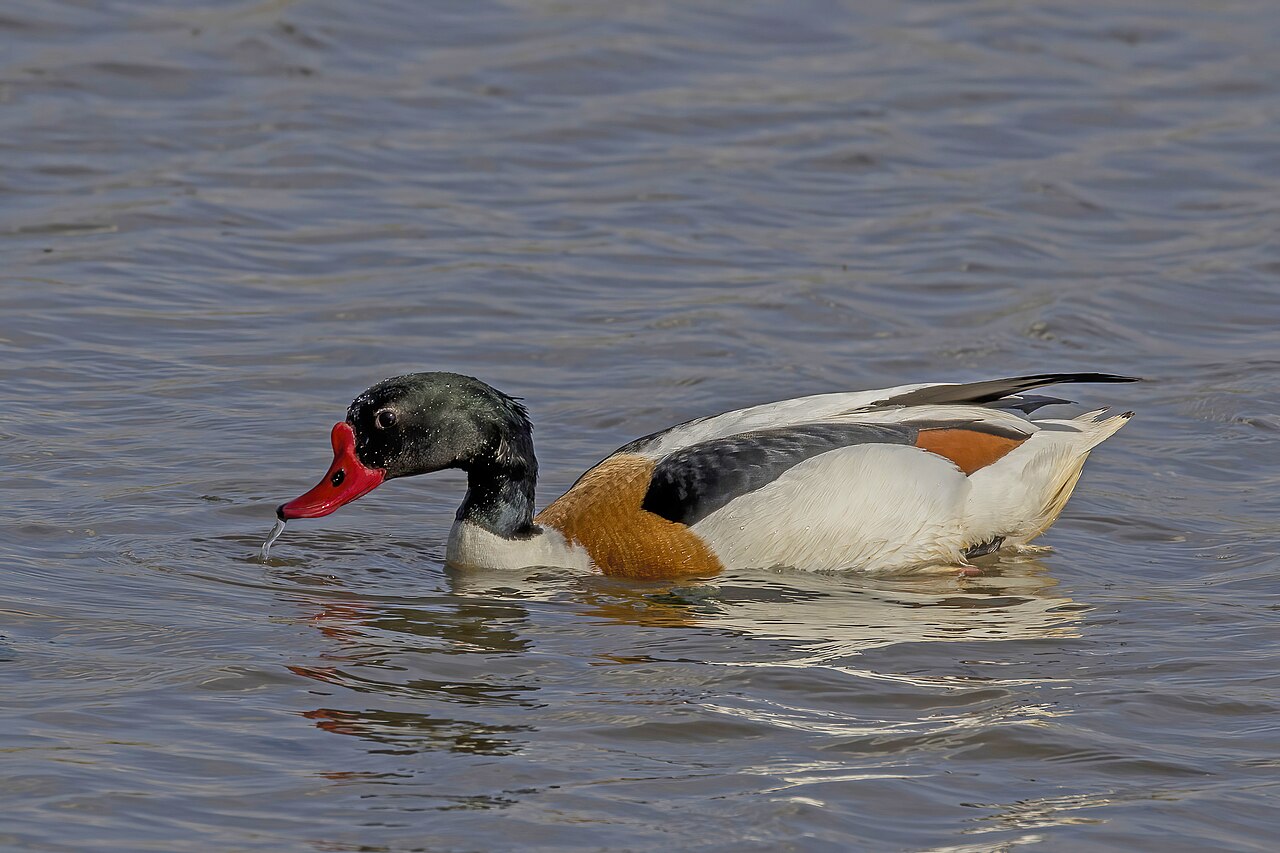
Big, boldly pied and almost goose-like, the Shelduck stands out on any mudflat with its white body and broad chestnut breast band. Outside the breeding season nearly all north-west European birds gather in the Wadden Sea to moult.
Click a thumbnail to switch the photo above.
Voice
The male gives a soft whistling swee-swee-swee, the female a fast, nasal rattling ak-ak-ak-ak that sounds like laughter. Heard mostly from displaying parties on the flats between February and April, and during the chases that follow over the breeding grounds.
Recording: Pascal Christe — CC BY-SA 4.0 · Wikimedia Commons
Identification
Bottle-green head and neck with a strong gloss, a white body, a broad chestnut band around breast and mantle, and a black belly stripe. The legs are pink and the bill red; in spring the male carries a knob at the bill base. Juveniles lack the breast band and show a white face with a dark crown.
Confusion species
Confusion is mainly with Ruddy Shelduck, which is uniformly rusty orange with a pale head, no gloss and no band. Juvenile Shelducks, with their white faces and dark caps, are regularly claimed as sawbills, but they swim high and broad in goose-like fashion and lack the thin hooked bill.
Habitat
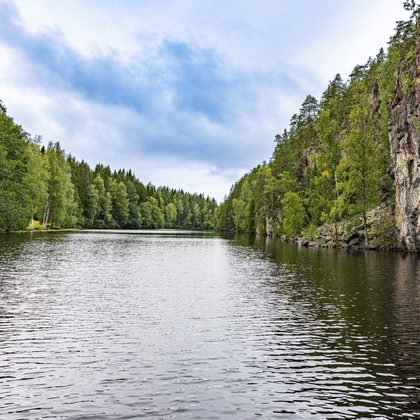
Sandy and muddy coasts, saltmarsh, brackish creeks and saline lagoons, but also sand pits and industrial land far inland. Nests in rabbit burrows, under dense scrub, in straw stacks or in boxes on dunes and dykes. Feeds by scything the wet mud for snails, crustaceans and worms.
Where the bird is most at home, classified with EUNIS — the European standard for habitats.



Range and movements
Breeds along almost all north-west European coasts, with the largest numbers around the Wadden Sea and the Delta region; inland colonisation continues. Around the Mediterranean it breeds more locally, among other places in the Ebro delta, the Manchegan salt lakes and Doñana, where many birds also winter.
- Resident
- Breeding (summer)
- Winter
- Passage
- dark = core range, pale = thinly spread
How and when to look
Visit a high saltmarsh along the Wadden Sea in July or August, when tens of thousands assemble to moult and come close at high tide. In April and May, first light on the dykes shows how noisily paired birds hold their territories.
Conservation status
Not globally threatened (IUCN: Least Concern). Numbers on the flats have slipped with a poorer food supply and disturbance at the moulting grounds. Trampling of nests, fox predation and the loss of rabbit burrows matter locally, while inland populations elsewhere in Europe are still increasing.
Scientific name
Tadorna tadorna | (Linnaeus, 1758)
Linnaeus described the species in 1758 as Anas tadorna; because it was later moved to another genus, the author and year stand in brackets. The genus Tadorna was introduced in 1822 by Boie. Tadorna comes through French tadorne from an older, probably Celtic name for a pied waterfowl. The specific name repeats the genus name. The specimen the first description was based on came from Sweden.