All species › Waterfowl › Ducks, geese and swans › Egyptian Goose
Egyptian Goose | Alopochen aegyptiaca
Nijlgans | Ganso del Nilo | Nilgans | יאורית | Ouette d'Égypte
An African shelduck-goose that has spread across north-west Europe in half a century. It stands on pastures, river banks and town parks all year, and defends its territory with a great deal of racket.
Click a thumbnail to switch the photo above.
Voice
Extremely vocal. The female gives a hoarse, rattling trumpet, heh-heh-heh-heh, the male a rasping hissing hzzh with the breast puffed out. Territorial disputes involve minutes of continuous calling, audible all year but loudest from February to May, including after dark and over housing.
Recording: Kolmkolm — CC BY-SA 4.0 · Wikimedia Commons
Identification
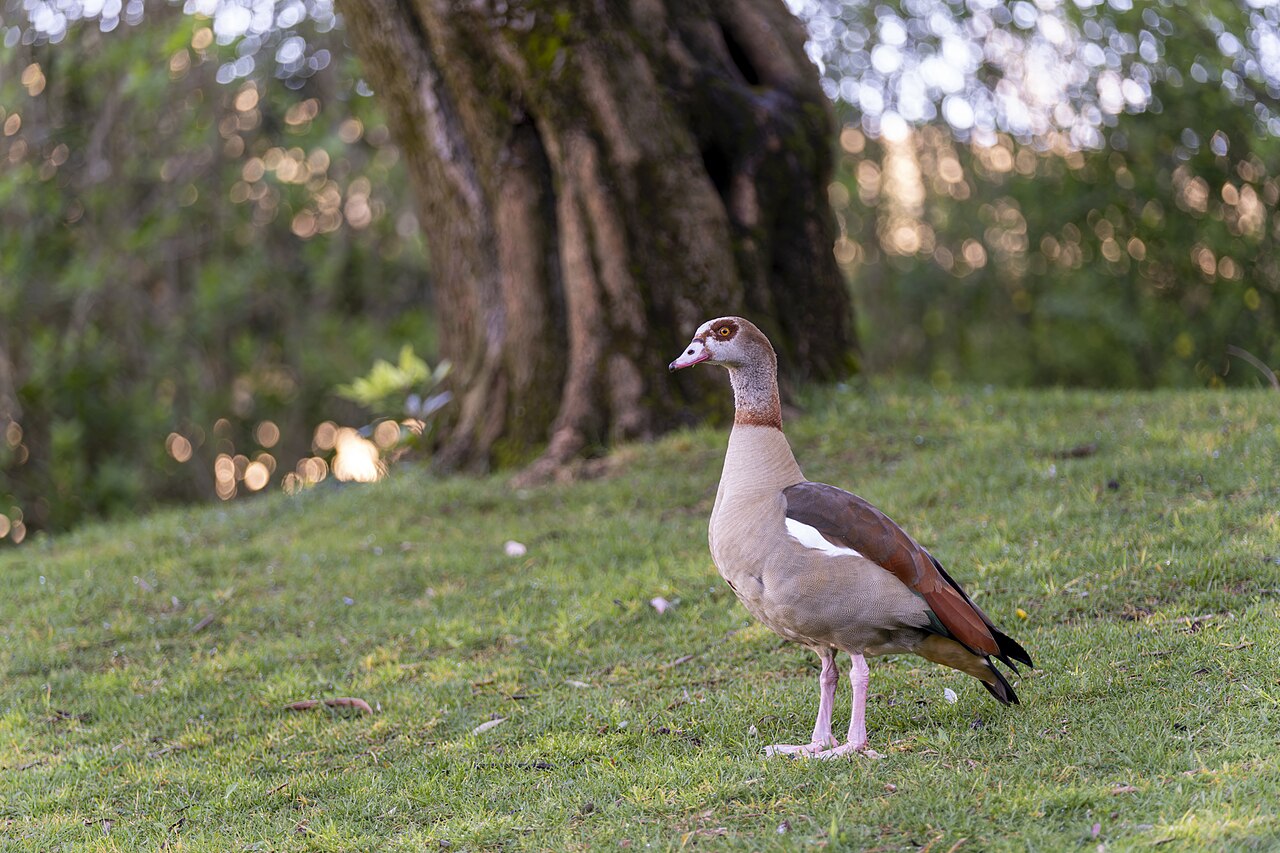
Long-legged and standing tall, with a pale buff neck, a dark patch around the eye and a round brown blotch in the centre of the breast. In flight it shows a large white forewing with black primaries and a green speculum. Sexes look alike; juveniles lack the eye and breast patches and look duller and greyer.
Confusion species
Ruddy Shelduck is more compact and uniformly rusty orange, without eye or breast patch, with a black bill and a thin black neck ring on the male. Both flash the same white forewing, so decide on the head. Juvenile Egyptian Geese recall young Ruddy Shelduck, but the long pink legs and pale face settle it.
Habitat
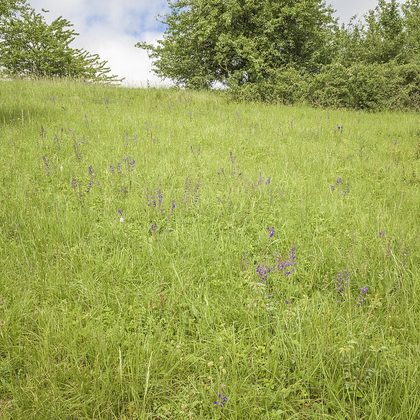
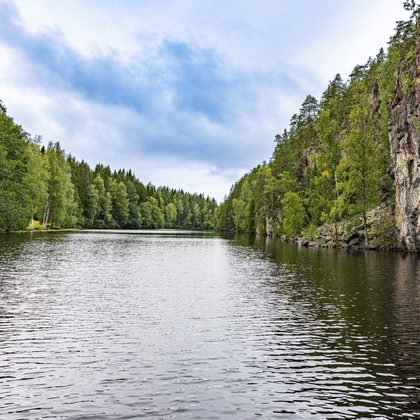
Grassland and arable beside open water: floodplain meadows, lakes and ponds, canals, golf courses and town parks. Nests in old raptor nests, tree holes, on flat roofs and in nest boxes, often hundreds of metres from water. Outside the breeding season in family parties or loose flocks at moulting sites along the big rivers.
Where the bird is most at home, classified with EUNIS — the European standard for habitats.


Range and movements
Native to sub-Saharan Africa and the Nile valley. The European population stems from escaped collection birds: from the Low Countries it spread into central and western Europe; across the North Sea lives a much older, separate feral population. In Iberia small feral populations hold on in Catalonia and Andalusia.
- Resident
- Breeding (summer)
- Winter
- Passage
- dark = core range, pale = thinly spread
How and when to look
Easy all year; in March territorial fights peak and the first pairs walk about with small goslings. Work floodplain meadows and town lakes early in the morning. On goose counts watch for the tall, upright stance, which picks the species out among Greylags at long range.
Conservation status
Not globally threatened (IUCN: Least Concern). The species is still increasing in north-west Europe. It appears on the European list of invasive alien species, mainly for aggression towards other waterbirds and for occupying raptor nest sites. Management focuses on egg treatment and shooting; in Africa it remains common and unthreatened.
Scientific name
Alopochen aegyptiaca | (Linnaeus, 1766)
Linnaeus described the species in 1766 as Anas aegyptiaca; because it was later moved to another genus, the author and year stand in brackets. The genus Alopochen was introduced in 1885 by Stejneger. Alopochen is Greek, from alōpēx 'fox' and chēn 'goose': the fox-goose, after the ruddy back. aegyptiaca is Latin for 'Egyptian', after the country on the Nile where the bird is common. The specimen the first description was based on came from Egypt.