All species › Waterfowl › Ducks, geese and swans › Red-breasted merganser
Red-breasted merganser | Mergus serrator
Middelste zaagbek | Serreta mediana
A slim, punk-crested sawbill of coasts and tidal inlets. Outside the breeding season it swims in the surf and on salt channels, peering underwater with its head submerged in search of fish.

Click a thumbnail to switch the photo above.
Voice
Silent away from display. Displaying males stretch the neck and give a soft, cat-like dje-djuu, females a harsh krrok-krrok. Given in April and May on estuaries and the Wadden Sea, and usually audible only in calm weather at close range.
Recording: Jonathon Jongsma — CC BY-SA 3.0 · Wikimedia Commons
Identification
Both sexes show a thin red hooked bill and a shaggy double crest that sticks out in all directions. The male has a green-black head, a white collar, a spotted rusty breast and grey flanks. The female is grey with a rufous head that fades gradually into the whitish throat, with no clean border.
Confusion species
Females are the classic pitfall against Goosander. On Red-breasted the rufous head blends softly into a dingy white throat and neck, while Goosander shows a sharp border and a well-defined white chin patch. Red-breasted is also slighter, with a thinner bill and a messier crest.
Habitat
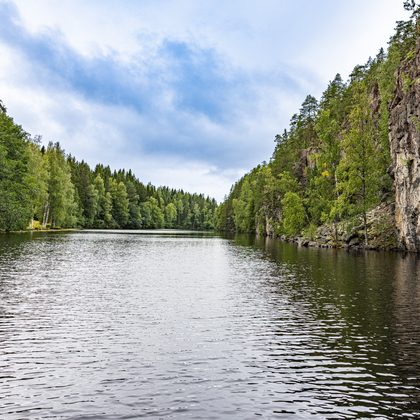
Shallow salt and brackish water: tidal inlets, estuaries, harbours, lagoons and sheltered bays. Breeds on saltmarsh, dune islands and along clear northern rivers and lakes. The nest is tucked under bushes, driftwood or dense marram grass, often near tern colonies.
Where the bird is most at home, classified with EUNIS — the European standard for habitats.



Range and movements
Breeds around the northern hemisphere from Iceland and Scotland to northern Russia, with a small Dutch population on the Wadden islands. Winters along most of the Atlantic seaboard. In Spain it winters sparsely in the Cantabrian rías, Galician bays and occasionally the Ebro delta.
- Resident
- Breeding (summer)
- Winter
- Passage
- dark = core range, pale = thinly spread
How and when to look
Watch from a sea wall or pier at a Wadden Sea inlet in November and December, two hours after high water when the current picks up. Birds fish actively in the channel then; look for diving ducks with a thin red bill and a flapping crest.
Conservation status
The European population is declining slightly. The main pressures are bycatch in set gill nets, oil pollution at sea, recreational disturbance of nesting islands and predation by fox and mustelids. The Dutch breeding population is small and fluctuating, while winter numbers are fairly stable.
Scientific name
Mergus serrator | Linnaeus, 1758
Linnaeus described the species in 1758 and placed it straight away in the genus where it still stands. He introduced the genus Mergus in that same work. Mergus is the Latin word for an unidentified waterbird mentioned by Pliny the Elder and other authors; some have taken it to be a cormorant or Scopoli's shearwater. serrator is Latin for 'sawyer', from serra 'saw', after the saw-like teeth along the bill with which the bird grips slippery fish. The specimen the first description was based on came from Sweden.