All species › Waders, gulls and terns › Sandpipers and snipes › Semipalmated sandpiper
Semipalmated sandpiper | Calidris pusilla
Grijze strandloper | Correlimos semipalmeado
The classic September peep, and the Nearctic stint that British and Irish birders actually stand a chance with. Numbers found there have crept up year on year as observers have learned to read bill shape and toe webbing; the Netherlands has fifteen accepted records, almost all adults, with the first juvenile only in 2024; in Spain the Galician coast dominates, with most of the accepted records.

Voice
A low, short, slightly hoarse chert or chirrup, sometimes given twice, fuller and lower than the dry tit of little stint and without the piercing quality of western sandpiper's jeet. In a mixed flock lifting off a pool that low note is often the first thing that stops you. On the breeding grounds displaying males give a pulsing, motorboat-like vurra-vurra-vurra followed by twittering phrases that sound like sped-up call notes; in Europe only the flight call is on offer.
Recording: Tony Phillips — CC BY 3.0 · Wikimedia Commons
Identification
Small and compact, with a short, straight, deep-based bill ending in a distinctly blunt tip; eastern females are longer-billed and can show a slight droop. Legs black, with small webs between the front toes. Breeding adults are dull grey-brown with dark feather centres and at most a hint of rust on crown and ear-coverts, lacking the warm tones of the other peeps. Juveniles look evenly grey-brown and scaly with pale buff fringes, a dark cap, a dark loral line and only a faint mantle line. Winter birds are plain grey with a greyish breast-side patch. The wing tips reach the tail tip, and the tertials cloak most of the primaries.
Confusion species
Against western sandpiper the bill decides: short, straight and blunt-tipped rather than long, deep-based and drooping at the tip, and no rufous scapulars in any plumage. Both species show the toe webs the bird is named for, best seen on a bird wading a shallow film of water or in the moment before it lifts; least sandpiper and red-necked stint lack them. Least sandpiper also has yellow-green legs, a finer and slightly decurved bill, browner and more heavily streaked plumage and a complete streaked breast band. Red-necked stint is shorter-billed and longer-winged, with primaries projecting beyond the tail and an attenuated rear end, and in summer shows a clean brick-red throat bordered by a necklace of streaks where Semipalmated keeps a densely streaked breast band. The real work, though, is against little stint, the species you are combing through on every east coast pool: Little stint is finer-billed with a pointed tip, has no toe webs, shows bright white mantle braces and a split supercilium as a juvenile, and carries black-centred scapulars with rufous fringes where Semipalmated has paler buff fringes and a capped, plainer face. Temminck's stint barely enters the argument with its yellow-olive legs, even grey breast cut sharply against white and white outer tail feathers. Dunlin is settled on size and the longer, decurved bill.
Habitat
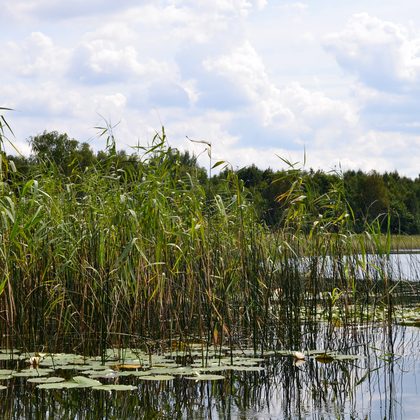
Along the coast: tidal flats, estuary edges and sandy beaches, usually among Sanderling and Dunlin, and also coastal lagoons, salt pans, saline pools and the drying margins of reservoirs and sewage works — mainly on the Wadden coast and the Delta in the Netherlands, and in the rías of Galicia in Iberia. Feeds by pecking and shallow probing in the top few millimetres of mud. Breeds on wet sedge tundra and boggy coastal plains across arctic North America from Alaska to Labrador.
Where the bird is most at home, classified with EUNIS — the European standard for habitats.



Range and movements
Breeds across arctic North America and winters on the coasts of Central and South America, with the Guianas holding the bulk of the population. Most regular in the British Isles, where it is the commonest Nearctic peep and is found in increasing numbers each autumn, western Ireland and the Outer Hebrides taking the largest share; arrivals begin around 20 August, peaking in mid to late September. Along the southern North Sea it is much thinner, in May and from July to September and nearly all adults — birds that crossed in an earlier year and now shuttle between Europe and Africa. In Iberia a handful of records, most of them in Galicia.
How and when to look
Mid to late September is the moment, on a brackish pool, a sea-wall lagoon or an estuary edge that already holds a party of stints or Sanderlings: the south-west Irish coast from Tacumshin to the Shannon, the Outer Hebrides, the rias of Galicia and the Cantabrian coast, the saltmarshes and lagoons along the North Sea. Sit low so the flock feeds towards you and take every peep in turn on bill tip and leg colour; the toe webs show only on a bird walking through a thin film of water. A worn adult in July and August is as likely as a fresh juvenile, so do not filter for fresh-plumaged birds.
Conservation status
Near Threatened. The eastern population has fallen sharply, most clearly documented by counts on the wintering grounds in the Guianas, which recorded large declines. Shorebird hunting in the coastal wetlands of Surinam, disturbance and loss of staging sites along the Atlantic seaboard, and shifting food supplies on intertidal flats are the main pressures. In the Bay of Fundy the autumn passage of nearly the whole population passes through a handful of mudflats, which leaves little margin.
Scientific name
Calidris pusilla | (Linnaeus, 1766)
Linnaeus described the species in 1766 as Tringa pusilla; because it was later moved to another genus, the author and year stand in brackets. The genus Calidris was introduced in 1804 by Merrem. Calidris goes back to Ancient Greek kalidris or skalidris, a name Aristotle used for an unidentified grey waterside bird. pusilla is Latin for 'very small'. The specimen the first description was based on came from Santo Domingo.