All species › Waders, gulls and terns › Sandpipers and snipes › Pectoral sandpiper
Pectoral sandpiper | Calidris melanotos
Gestreepte strandloper | Correlimos pectoral
A big, upright Calidris whose densely streaked bib stops as if cut with a knife against a clean white belly. It is by far the commonest Nearctic wader in Europe. In Britain and Ireland it is recorded every year, peaking in the extraordinary autumn of 2003 with some one hundred and fifty birds in Britain and forty in Ireland. The Netherlands assessed the species up to and including 1999, by when it had ninety-six records, and has recorded it annually since. Spain had already passed one hundred and sixty records by 2004 and has seen it every year since 1980.

Voice
A low, hard, reedy krrrt or trrrp, often repeated two or three times as the bird flushes; heavier and drier than anything else in a wader flock and never to be confused with the thin squeak of white-rumped sandpiper. Displaying males on the tundra deliver a hollow booming oomp-oomp-oomp from an inflated breast sac, a sound Europe does not get to hear.
Recording: Niels Krabbe — CC BY-SA 4.0 · Wikimedia Commons
Identification
Clearly larger than Dunlin, with a longer neck, small head and a fairly long, slightly decurved bill with a pale yellowish-brown base. The legs are olive to dull yellow. The mark is the breast: densely brown-streaked, darkest at the sides, and cut off sharply and squarely across the full width against clean white underparts. The upperparts are dark with rufous and white feather fringes and bright pale mantle lines. Males are markedly larger than females, which can mislead on size alone. In flight the wing bar is weak, the rump dark-centred with white sides.
Confusion species
The bird that really matters is sharp-tailed sandpiper. On Pectoral the breast streaking ends abruptly and horizontally against white; on Sharp-tailed the markings fade out and run down the flanks as arrowheads and chevrons. Sharp-tailed also has a warm rufous crown standing out against a broad white supercilium and a conspicuous white eye-ring, whereas Pectoral's crown is grey-brown and finely streaked and the supercilium shorter and duller. Juvenile Sharp-tailed shows a plain orange-buff breast streaked only at the sides; juvenile Pectoral keeps the complete streaked bib. Bill and legs separate them poorly, since both have a pale bill base and yellow to olive legs, though Sharp-tailed's bill is shorter, straighter and blunter. Against Baird's and white-rumped sandpiper, Pectoral is larger and taller, has yellow rather than black legs and lacks the long primary projection beyond the tail. A small female Pectoral can approach Dunlin in size, so check leg colour and the cut-off bib. A large male suggests a small Ruff, but Ruff has a smaller head on a longer neck, scaled upperparts without mantle lines, and two oval white flashes either side of the tail in flight.
Habitat
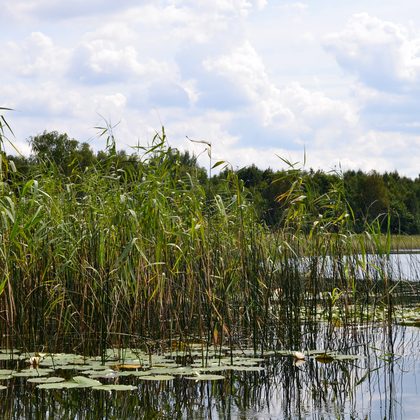
Emphatically not open tidal flats. Look on wet grassland and flooded field corners, along the vegetated edges of coastal scrapes and pools, on drawn-down reservoir shorelines and in sewage-works settling beds. Birds feed half concealed among short vegetation and walk with an upright, deliberate gait, often with Snipe and Ruff rather than with Dunlin. It breeds on wet coastal tundra in north-east Siberia and North America.
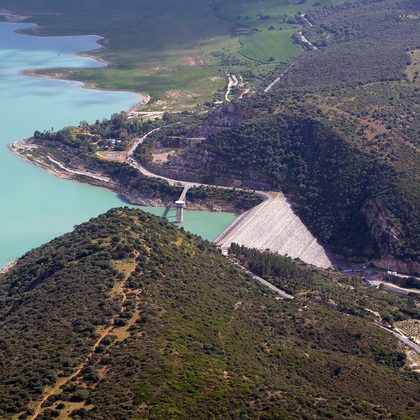
Where the bird is most at home, classified with EUNIS — the European standard for habitats.


Range and movements
Breeds from Taimyr eastwards across Siberia and Arctic North America, wintering in South America and, for part of the Siberian population, in Australasia. In the map area an annual vagrant centred on the British Isles, typically some tens of birds a year, most numerous in September on the western seaboard and the Northern Isles. Along the North Sea coast of the Low Countries annual in varying numbers, with peaks in May, July – August and September – early October and an emphasis on the Wadden coast; further south chiefly on the Atlantic coast of Iberia, in Catalonia and in the Canaries, in September mostly juveniles.
How and when to look
September, after a prolonged run of Atlantic westerlies, on the landward edge of coastal scrapes and on flooded grassland. Work the line where grass meets mud, not the open shore; the bird keeps company with snipe and ruff more often than with dunlin. Once a yellow-legged, sharply bibbed Calidris is in the scope, go straight to the crown and the flanks, because those are the only characters that eliminate sharp-tailed sandpiper.
Conservation status
Assessed as Least Concern with a very large world population, but Alaskan breeding counts and South American winter surveys both point to a decline. Loss of wet grassland and shallow freshwater marsh along the mid-continental flyway weighs heavily, as does the conversion of pampas grassland to arable in Argentina and Uruguay. In Europe the species is far too scarce to be a management concern in its own right.
Scientific name
Calidris melanotos | (Vieillot, 1819)
Vieillot described the species in 1819 as Tringa melanotos; because it was later moved to another genus, the author and year stand in brackets. The genus Calidris was introduced in 1804 by Merrem. Calidris goes back to Ancient Greek kalidris or skalidris, a name Aristotle used for an unidentified grey waterside bird. melanotos is from Greek melas 'black' and notos 'back', so 'black-backed'. The specimen the first description was based on came from Paraguay.