All species › Sandgrouse › Sandgrouse
Sandgrouse | Pteroclidae
Zandhoenders | Gangas
The most striking feature lies in the male's belly feathers: their barbules coil up when wetted and hold water like a sponge. He soaks his underparts at the drinking place until the plumage is saturated, flies back to the brood and lets the chicks strip the water out of his feathers with their bills — nowhere else in the bird world is water carried this way. The female is more finely and densely barred than the male and vanishes completely on the nest; the nest is no more than an unlined shallow scrape holding usually three elongated eggs, equally blunt at both ends. The pair take turns incubating, with the male sitting through the night. The species of this region divide the day between them: one flock comes to drink soon after sunrise, another in the late afternoon or in the last light, and each species has its own call in flight. The downy chicks leave the scrape within a day, pick up their own seed from the start, and press themselves motionless to the ground when danger appears.
Native species 4 species
Species that occur here by nature: breeding birds, winter visitors and passage migrants. They are arranged by genus, in the sequence of the list.
Pterocles 4 species
-
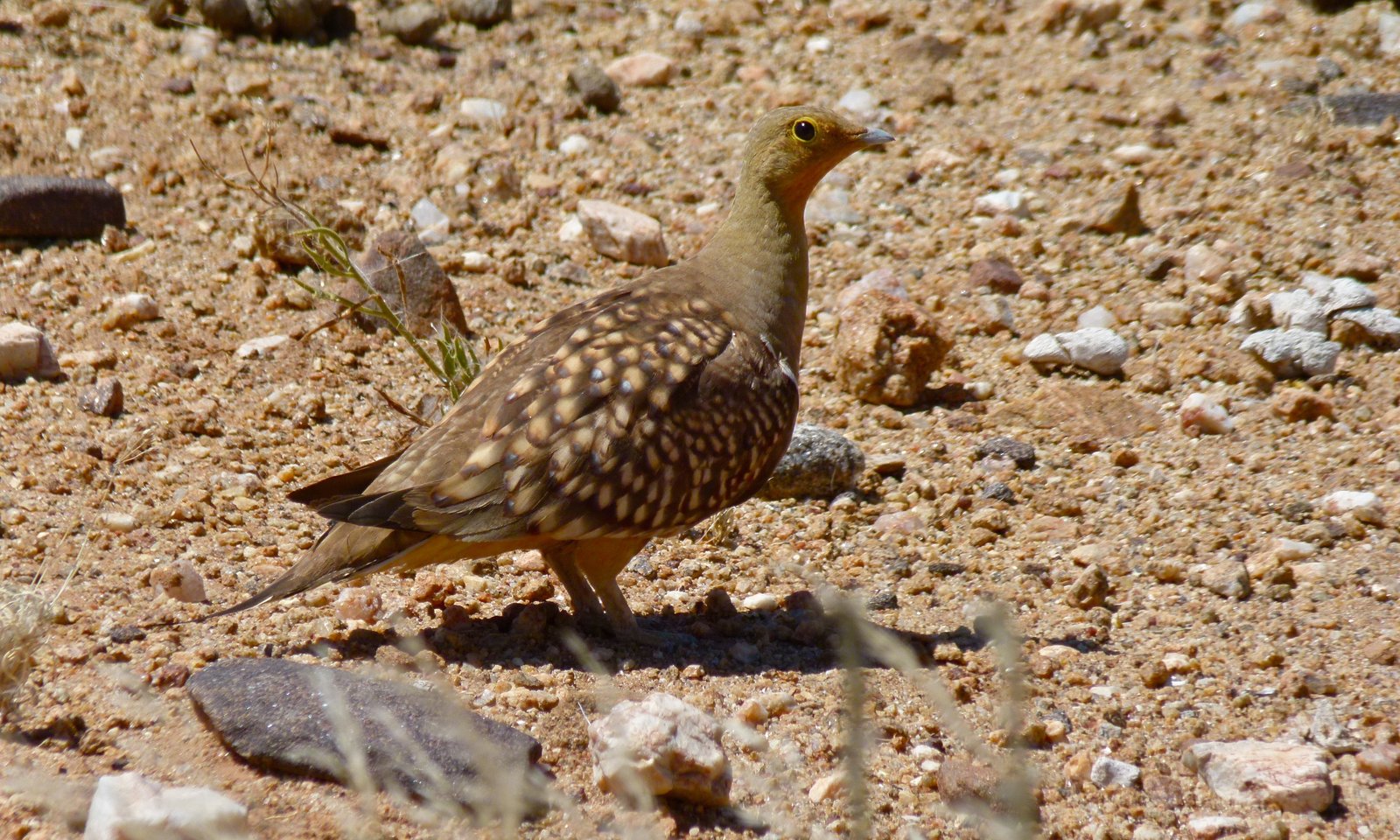
Namaqua Sandgrouse
Pterocles namaqua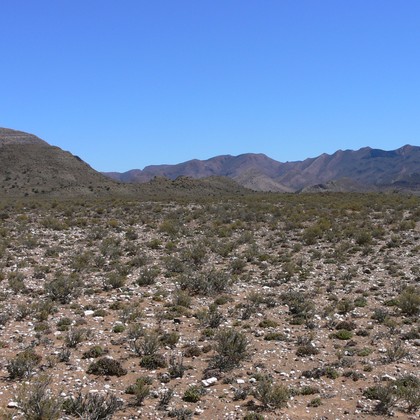 Nama Karoo
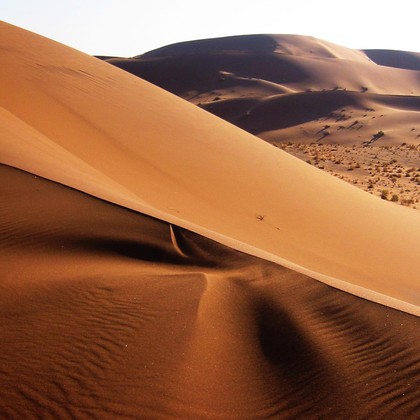 Namib Desert
-
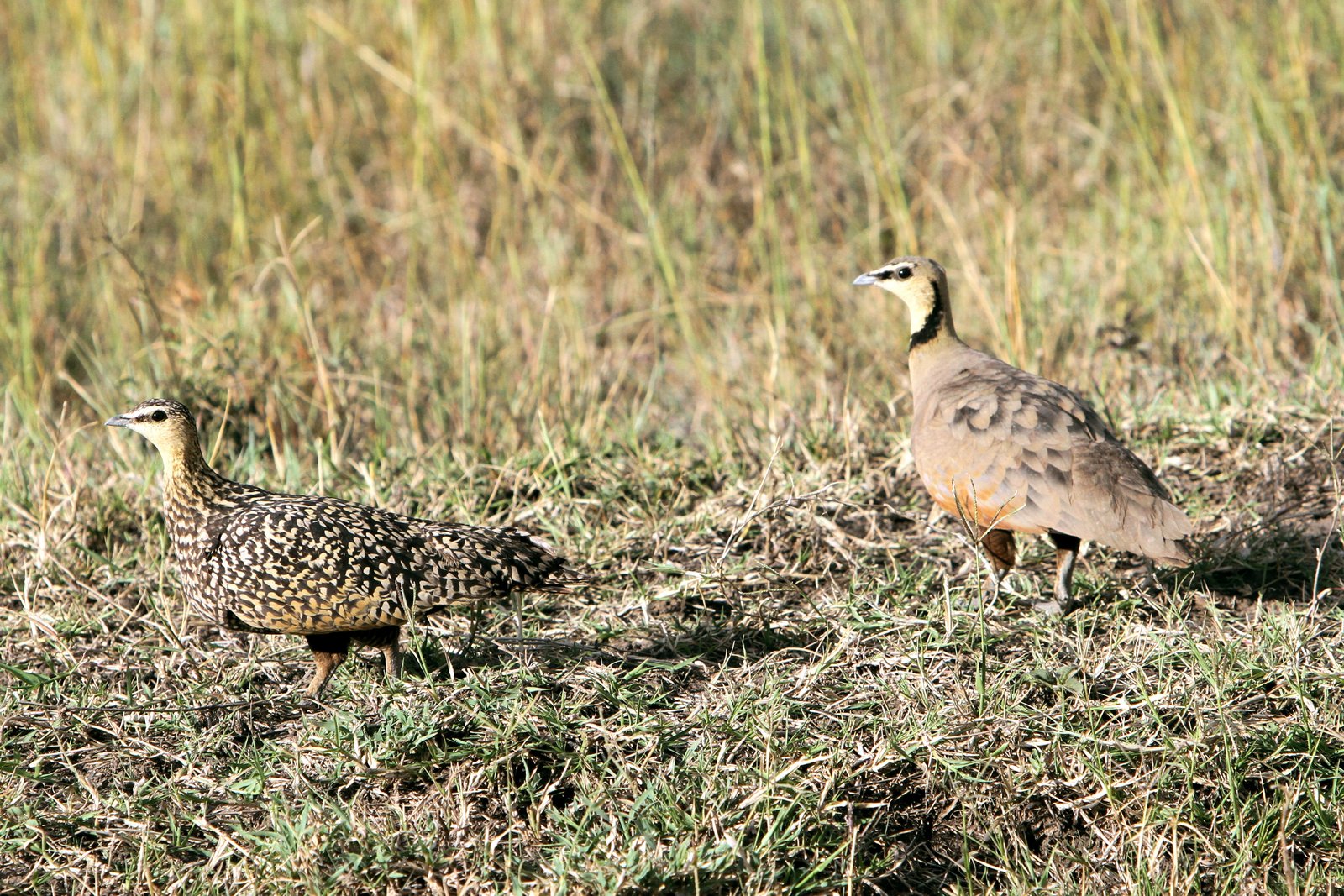
Yellow-Throated Sandgrouse
Pterocles gutturalis Rivers, marshes and vleis
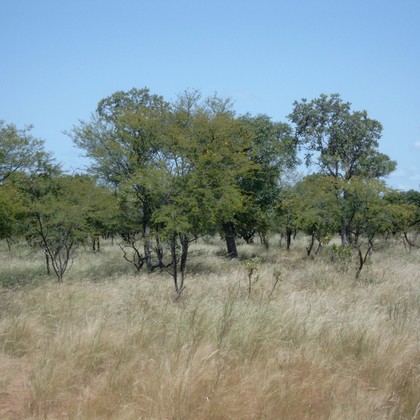 Acacia savanna and thornveld
-

Double-Banded Sandgrouse
Pterocles bicinctus Mopane woodland
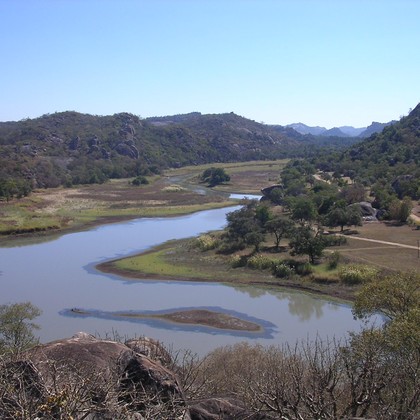 Mixed broadleaf woodland
- Acacia savanna and thornveld
-

Burchell's Sandgrouse
Pterocles burchelli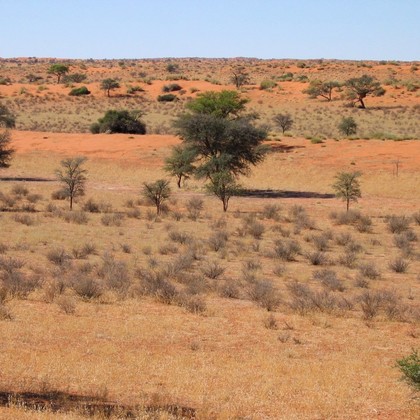 Kalahari thornveld
- Nama Karoo