All species › Birds of prey › Hawks, eagles and kites › Common Buzzard
Common Buzzard | Buteo buteo
Buizerd | Busardo Ratonero
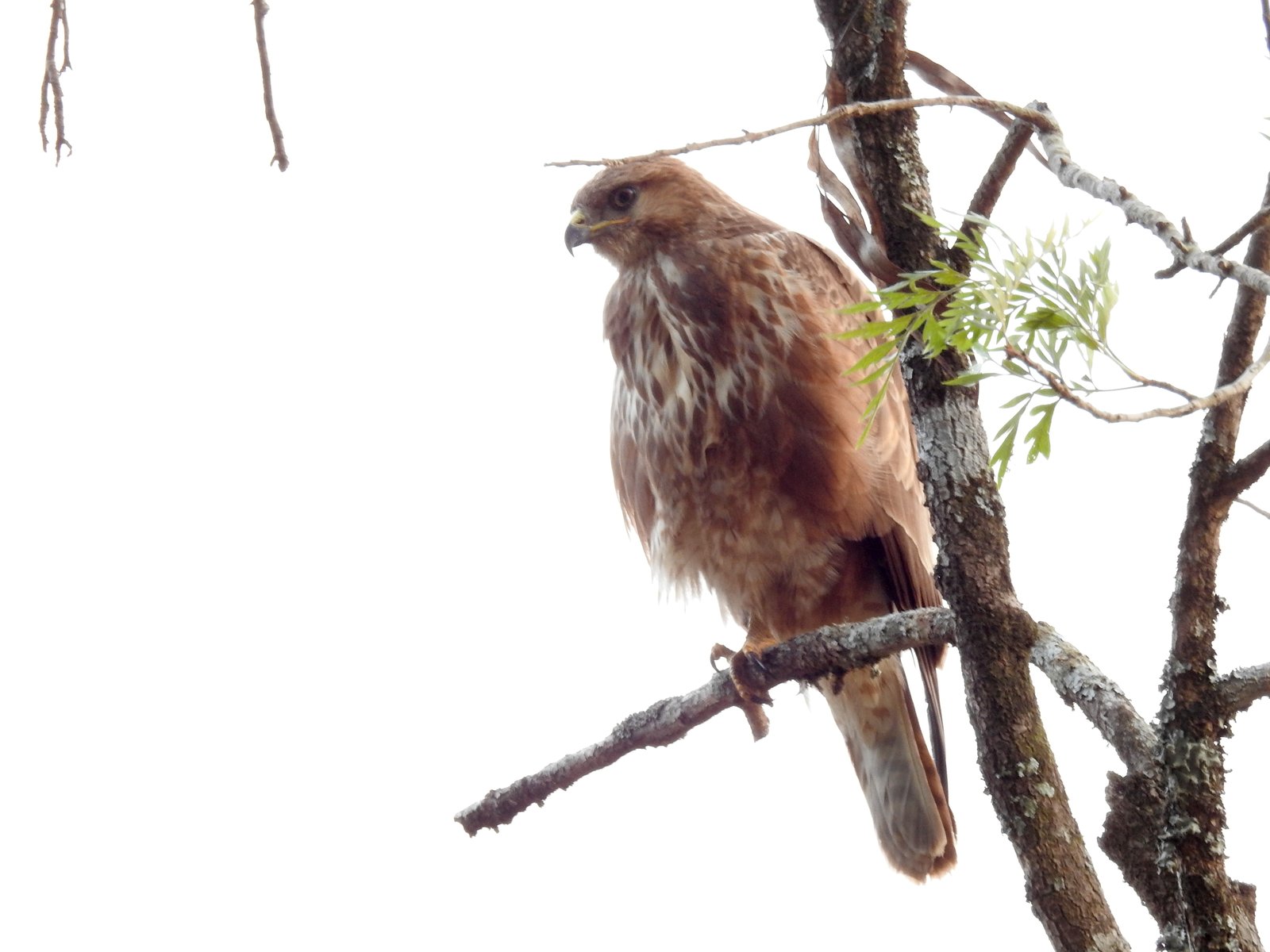
The Common Buzzard reaches southern Africa almost entirely as the Steppe Buzzard, the eastern subspecies vulpinus, which breeds from eastern Europe to Central Asia and spends the southern summer here. From November to March it is the commonest medium-sized raptor along the roads of the interior, perched on poles, wires and dead trees.
Voice
Usually silent in the non-breeding range. Occasionally a plaintive, falling mew, pee-eeoo, mostly during contact between birds or when mobbed by crows.
Recording: Olivier SWIFT — CC BY-NC-SA 4.0 · shortened to the first 60 s, mono · xeno-canto
Identification
45–50 cm, compact, with broad wings, a rounded head and a medium-length tail. The plumage is highly variable. Most birds are warm rufous-brown: brown above, streaked throat, a paler band across the lower breast and a rufous-barred belly; the tail is rufous to grey-brown with fine barring and, in adults, a broad dark terminal band. There are also dark, almost uniformly chocolate-brown birds and pale, nearly white ones. The underwing is pale with a dark carpal patch, black wingtips and, in adults, a sharp dark trailing edge. Juveniles are streaked rather than barred below, lack the broad tail band and crisp trailing edge, and have a pale eye. It soars with the wings in a shallow V and sometimes hovers briefly over grassland.
Confusion species
Jackal Buzzard Buteo rufofuscus is larger and heavier, with slate-grey to black upperparts, a rufous or white breast, a short rufous tail and white underwing coverts against black-edged flight feathers; it is a resident of hilly country. Forest Buzzard Buteo trizonatus is smaller and lives in forest and plantations all year; adults are white below with bold brown drops, but juveniles of the two species are barely separable in the field, so habitat and season matter. Mountain Buzzard Buteo oreophilus in the montane forests of Malawi and northern Mozambique poses the same problem. European Honey Buzzard Pernis apivorus has a small head on a long neck and a longer tail with two bands near the base; Black Kite Milvus migrans has a forked tail and soars on drooping wings.
Habitat
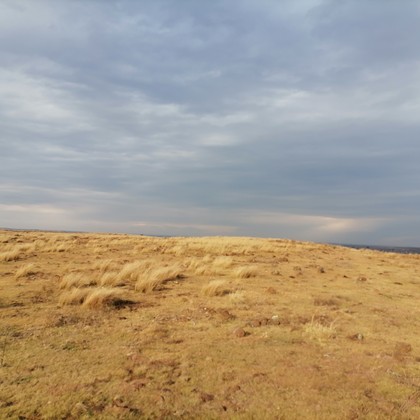
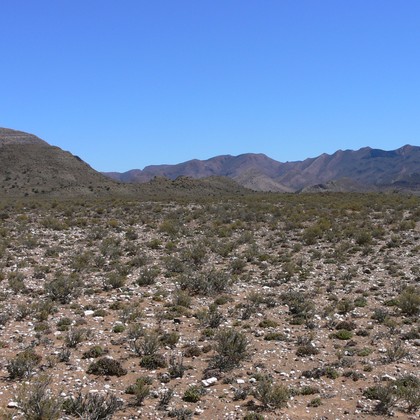
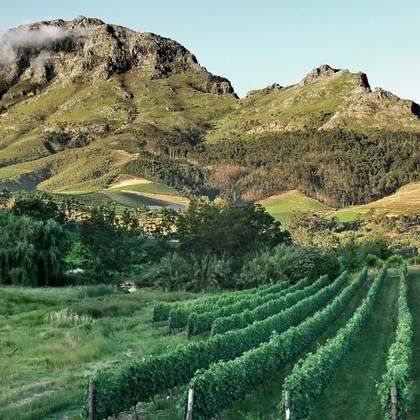
Open country with perches: grassland, Karoo scrub, farmland, pasture and road verges, also open savanna and the edges of plantations. It avoids dense forest and true desert. It hunts from a pole or wire, but also by hovering, taking rodents, lizards, large insects such as grasshoppers and termites, and young birds. Loose groups gather at grass fires and termite emergences.
Where the bird is most at home, classified by the vegetation units of southern Africa.
Range and movements
Widespread across most of South Africa, Lesotho, Eswatini, Botswana and Zimbabwe, most numerous on the Highveld, in the Free State and the eastern Karoo; also in Namibia except the Namib, and in Zambia, Malawi and Mozambique, where mainly passage birds occur. Scarcer in Angola. It breeds from Scandinavia and eastern Europe to Central Asia; the nominate form stays largely in Europe, while the Steppe Buzzard migrates in large numbers via the Bosphorus, Eilat and the Rift Valley to eastern and southern Africa.
- Resident
- Summer visitor (c. Oct–Mar)
- Passage (Mar–Apr, Oct–Nov)
- dark = core range, pale = thinly spread
How and when to look
Drive a country road on the Highveld or through the Karoo in December or January and count the raptors on the telephone poles: a large share will be Steppe Buzzards. That very habit makes the species the benchmark for identifying rarer buzzards; check each bird for the tail band, the trailing edge of the wing and the pale breast band. Small numbers oversummer and are sometimes seen in June and July.
Conservation status
Not threatened; the global population is large and Steppe Buzzards are counted in hundreds of thousands on migration. In the non-breeding range birds die in road collisions, by electrocution on power pylons and from poisoned bait, but large-scale declines have not been shown.
Scientific name
Buteo buteo | (Linnaeus, 1758)
Linnaeus described the species in 1758 as Falco Buteo; because it was later moved to another genus, the author and year stand in brackets. The genus Buteo was introduced in 1799 by De Lacépède. Buteo is the Latin word for a buzzard. The specific name repeats the genus name: the genus was established by tautonymy with this species. The specimen the first description was based on came from Sweden.