All species › Woodpeckers and allies › Honeyguides › Pallid Honeyguide
Pallid Honeyguide | Indicator meliphilus
Bleke honingspeurder | Indicador Pálido
The Pallid Honeyguide is a small, unobtrusive honeyguide of forest edge and secondary growth in the north-east of the region. It is poorly known and is easily overlooked or taken for a young Lesser Honeyguide.
Voice
Poorly documented. A series of high, clear notes, pew-pew-pew, slower and softer than in Lesser Honeyguide, and a short rattling trill.
Recording: James Bradley — CC BY-NC-SA 4.0 · converted to mono · xeno-canto
Identification
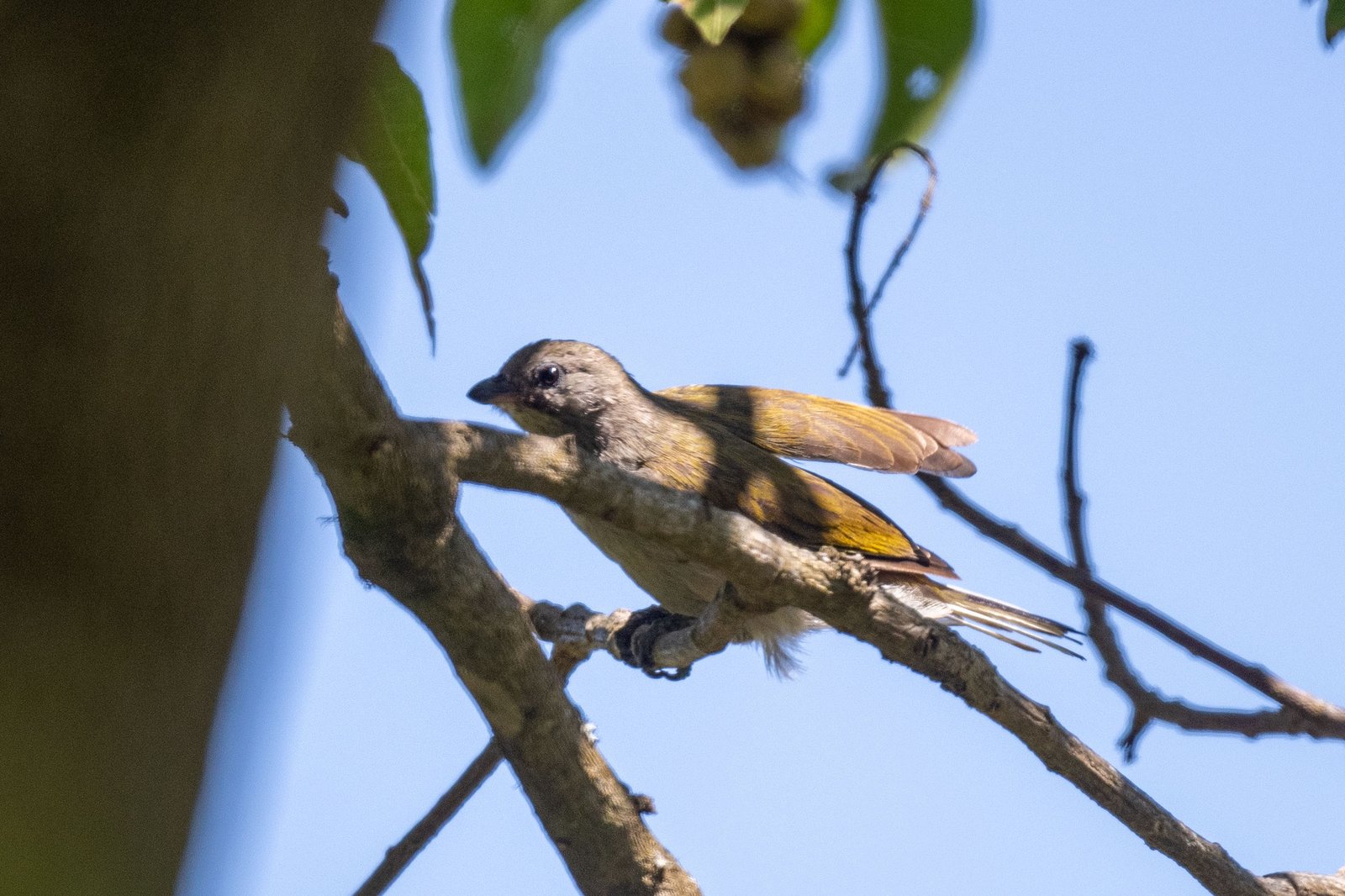
About 12 cm, with a short, stubby bill. Upperparts olive-green; head grey-green with a small white loral spot but no malar stripe. Throat and breast pale grey, becoming almost white on the belly, sometimes with a faint olive wash on the flanks. The outer tail feathers are white. Sexes alike.
Confusion species
Lesser Honeyguide (Indicator minor) is larger, with a greyer head, a black malar stripe and darker grey underparts. Least Honeyguide (Indicator exilis) is darker olive, with a distinct black malar stripe and a thicker bill, and lives in denser forest. Green-Backed Honeybird (Prodotiscus zambesiae) has a thin, pointed bill and white patches at the sides of the rump.
Habitat
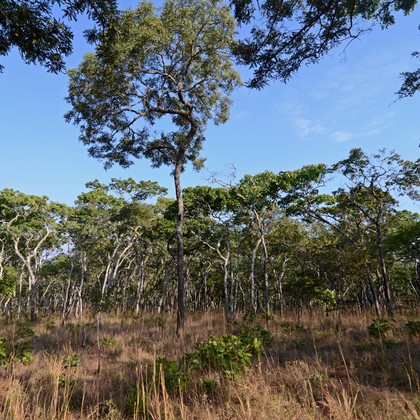
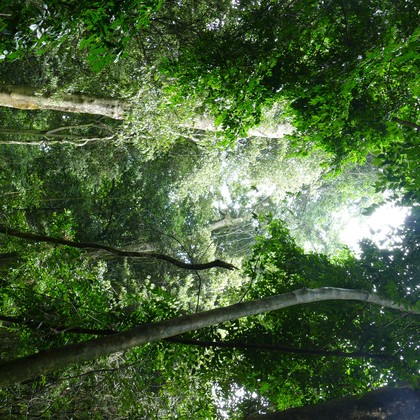
Forest remnants, forest edge, secondary regrowth and rich miombo, sometimes evergreen forest. It eats wax and insects. White-Eared Barbet is the only confirmed host in the region.
Where the bird is most at home, classified by the vegetation units of southern Africa.

Range and movements
Local in the north-east and north: Malawi, eastern and northern Zambia, central and northern Mozambique, marginally eastern Zimbabwe, and also parts of Angola. Beyond the region north to Tanzania, Kenya, Uganda and eastern DR Congo.
- Resident
- dark = core range, pale = thinly spread
How and when to look
Best looked for along forest edges around Gorongosa and in the Malawi highlands, where it sits quietly in the mid-storey. Watch for a small, pale honeyguide without a malar stripe sallying briefly for insects from a branch; photographs help to separate it from young Lesser Honeyguides.
Conservation status
Not threatened according to the IUCN, but its status in the region is uncertain. Slash-and-burn farming and firewood cutting erode the forest on which it depends.
Scientific name
Indicator meliphilus | (Oberholser, 1905)
Oberholser described the species in 1905 as Melignothes exilis meliphilus; because it was later moved to another genus, the author and year stand in brackets. The genus Indicator was introduced in 1815 by Stephens. Indicator is Latin for 'pointer, informer' — for the famous behaviour of the Greater Honeyguide, which leads people to bees' nests. meliphilus comes from the Greek meli, 'honey', and philos, 'loving' — 'honey-loving'. The specimen the first description was based on came from Taveta, Kenya.