All species › Passerines › Larks › Short-Clawed Lark
Short-Clawed Lark | Certhilauda chuana
Botswanaleeuwerik | Alondra Chuana
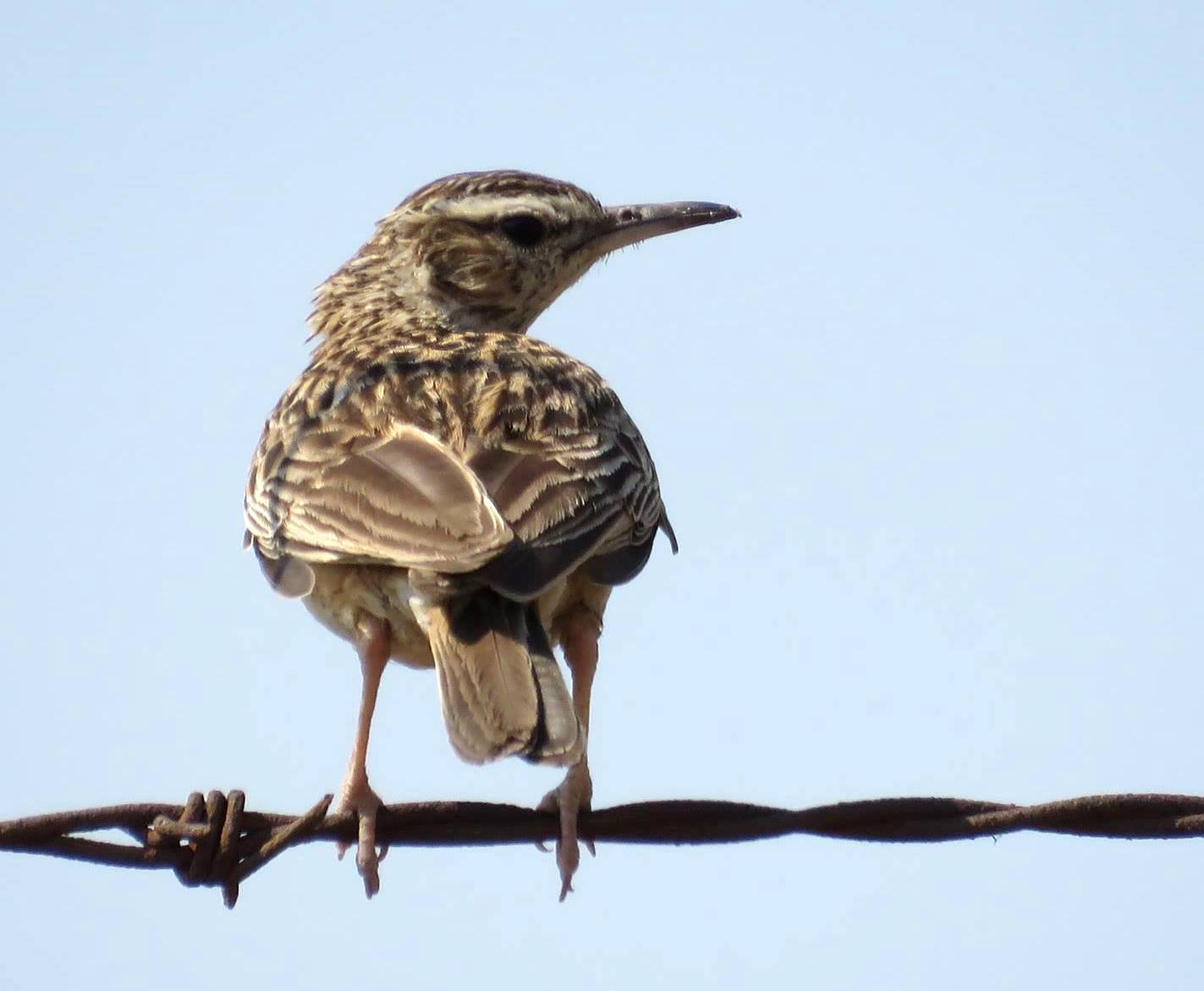
The Short-Clawed Lark is a slim, pipit-like lark with a long tail, a thin bill and a broad white supercilium. The male draws attention with a display flight in which he climbs steeply and then drops with a long, descending whistle. The species occurs only in a small area around the border of Botswana and South Africa.
Voice
In display the male climbs steeply to 10–15 metres, then drops with closed wings while giving a long, descending whistle, pheeeeeooo, sometimes preceded by a few short notes. It also gives a clear, very high-pitched call and a series of whistled notes from a bush or post.
Recording: Derek Engelbrecht — CC BY-NC-SA 4.0 · converted to mono · xeno-canto
Identification
18–20 cm. Slim and long-tailed, with a fairly long, thin and slightly decurved bill, shorter than in the long-billed larks. The head shows a broad whitish supercilium, a dark eye-stripe and a white throat. The upperparts are warm grey-brown with dark centres and pale fringes, giving a scaly back; the rump is warmer rufous-brown, mainly visible in flight. The breast is buff with fine dark streaks, the belly white. The hind claw is short, hence the name. There is no rufous in the wing and no crest. The sexes are alike, the male slightly larger.
Confusion species
Rufous-Naped Lark Corypha africana is stockier, with a crest, a heavier bill and much rufous in the wing. Sabota Lark Calendulauda sabota is smaller and more compact, with a short, stout bill and a bolder face pattern. Fawn-Colored Lark Calendulauda africanoides is smaller, plain buff-brown above and lives on red Kalahari sands. Eastern Long-Billed Lark Certhilauda semitorquata has a longer bill and lives on grassy, rocky slopes, not flat savanna. Most certain are the display flight with its descending whistle and the restricted range.
Habitat
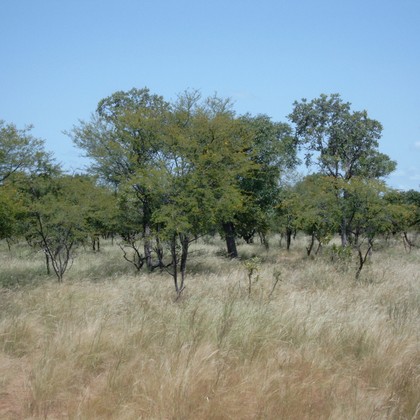
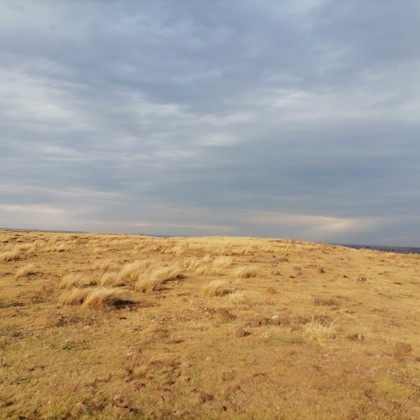
Open, closely grazed savanna and fields with scattered thorn bushes on flat to gently rolling ground, often on calcareous or stony soils, and on overgrazed land and fallow fields. Pairs forage on the ground for insects, other invertebrates and seeds.
Where the bird is most at home, classified by the vegetation units of southern Africa.
Range and movements
Endemic to the border area of Botswana and South Africa, in two separate populations: in south-eastern Botswana and adjacent north-western South Africa (North West, around Mahikeng), and an eastern population in Limpopo around Polokwane. It occurs nowhere else in the world.
- Resident
- Winter visitor (c. Apr–Sep)
- dark = core range, pale = thinly spread
How and when to look
Year-round, best early in the morning in the breeding season (mainly August–December), when the males perform their display flights. Listen for the long descending whistle, then look for the bird on a bush top or post. Well-known sites are the Polokwane area (Polokwane Game Reserve) and the plains around Mahikeng and Gaborone.
Conservation status
Not globally threatened, but the range is small and fragmented. Conversion of savanna to cropland, bush encroachment through overgrazing and urban expansion around Polokwane and Gaborone remove habitat locally.
Scientific name
Certhilauda chuana | (Smith, 1836)
Smith described the species in 1836 as Alauda chuana; because it was later moved to another genus, the author and year stand in brackets. The genus Certhilauda was introduced in 1827 by Swainson. Certhilauda combines Certhia, 'treecreeper', with Alauda, 'lark' — a lark with a long, decurved bill like a treecreeper's. chuana refers to Bechuanaland, the land of the Tswana, where this lark was first collected. The specimen the first description was based on came from The country beyond Kuruman (Latakoo), South Africa.