All species › Passerines › Chats and flycatchers › Sooty Flycatcher
Sooty Flycatcher | Artomyias fuliginosa
Rouwvliegenvanger | Papamoscas Ahumado
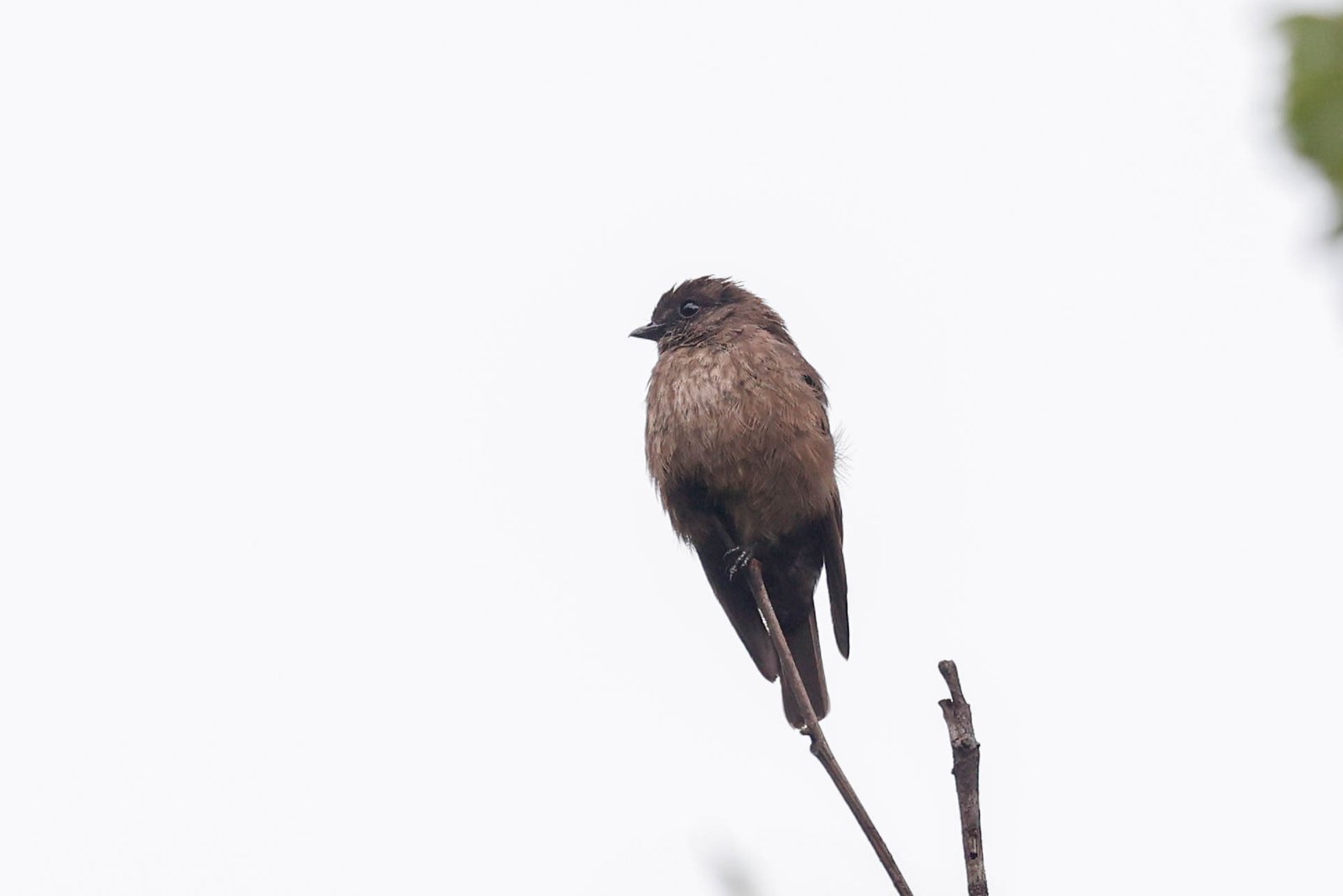
The Sooty Flycatcher is a small sooty-brown flycatcher of the Central African rainforests that reaches only the extreme northern edge of the region. It perches on bare branches high at forest edges and clearings and hunts flying insects like a swallow.
Voice
A thin, high, repeated tseep or tsee-tsee, and a soft sibilant song of rapidly repeated high notes. It is largely silent while foraging.
No recording with a suitable Creative Commons licence is available for this species yet.
Identification
12–13 cm, a small, stocky flycatcher with long, pointed wings that extend well beyond the short tail. The whole plumage is dark sooty brown, the throat and breast with faint pale streaking and the belly a little paler. The bill is short, broad and black; the legs are short and dark. The sexes are alike. The silhouette with long wings and a short tail is distinctive: it perches upright on the tops of dead branches, often in small groups, and makes long, gliding sallies.
Confusion species
African Dusky Flycatcher (Muscicapa adusta) is paler grey-brown, with shorter wings, a pale throat and whitish belly, and hunts lower at the forest edge. Swamp Flycatcher (Muscicapa aquatica) has a white throat and belly with a brown breast band and lives along water. Cassin's Flycatcher (Muscicapa cassini) is grey with a white throat and perches on branches and rocks over forest rivers. When hawking it can recall a saw-wing such as Black Saw-Wing (Psalidoprocne pristoptera), but saw-wings rarely perch on high bare branches and have a forked tail.
Habitat
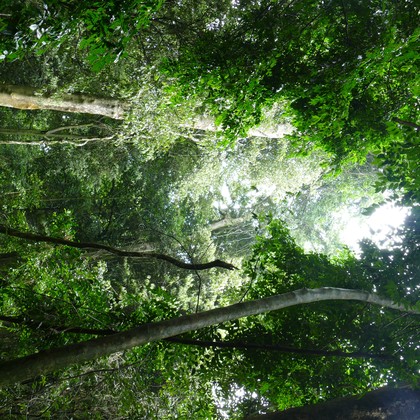
Edges of humid lowland and gallery forest, clearings, riverbanks and felled areas with tall dead trees, and also secondary forest and old plantations. It hunts flying insects from high, bare branches. It nests in a crevice or hole in a dead tree.
Where the bird is most at home, classified by the vegetation units of southern Africa.

Range and movements
In the region only in the far north: northern Angola (Cabinda, Uíge, Cuanza Norte and the Lunda provinces) and the gallery forest of extreme north-western Zambia around Mwinilunga, where the species is scarce and poorly documented. Beyond the region from southern Nigeria and Cameroon through Gabon, Congo-Brazzaville and DR Congo to Uganda, South Sudan and western Tanzania.
How and when to look
In northern Angola and around Mwinilunga, search forest and clearing edges for small dark birds on the highest dead branches that sally out and return to the same perch. A telescope helps; the long-winged silhouette is often the best feature.
Conservation status
Not threatened. Widespread and locally common in most of its range, and even benefits somewhat from forest clearings. In the region it is rare and depends on the scarce rainforest remnants of the far north.
Scientific name
Artomyias fuliginosa | Verreaux & Verreaux, 1855
Verreaux & Verreaux described the species in 1855 and placed it straight away in the genus where it still stands. He introduced the genus Artomyias in that same work. Artomyias combines Artamus, the woodswallow genus, with New Latin myias, 'flycatcher' — for its woodswallow-like hunting flights from a high perch. fuliginosa is Latin for 'sooty' — for the uniform dark, sooty-brown plumage. The specimen the first description was based on came from Gabon (not further specified).