All species › Rodents › Voles and hamsters › Common Vole
Common Vole | Microtus arvalis
Veldmuis | Topillo Campesino
The Common Vole is the most numerous mammal of European farmland and a main prey of many predators: buzzard, kestrel, barn owl, short-eared owl, stork, heron, fox, weasel and stoat follow its numbers in their breeding. In the hand the common vole is barely separable from the field vole, and in the field not at all.
Tracks
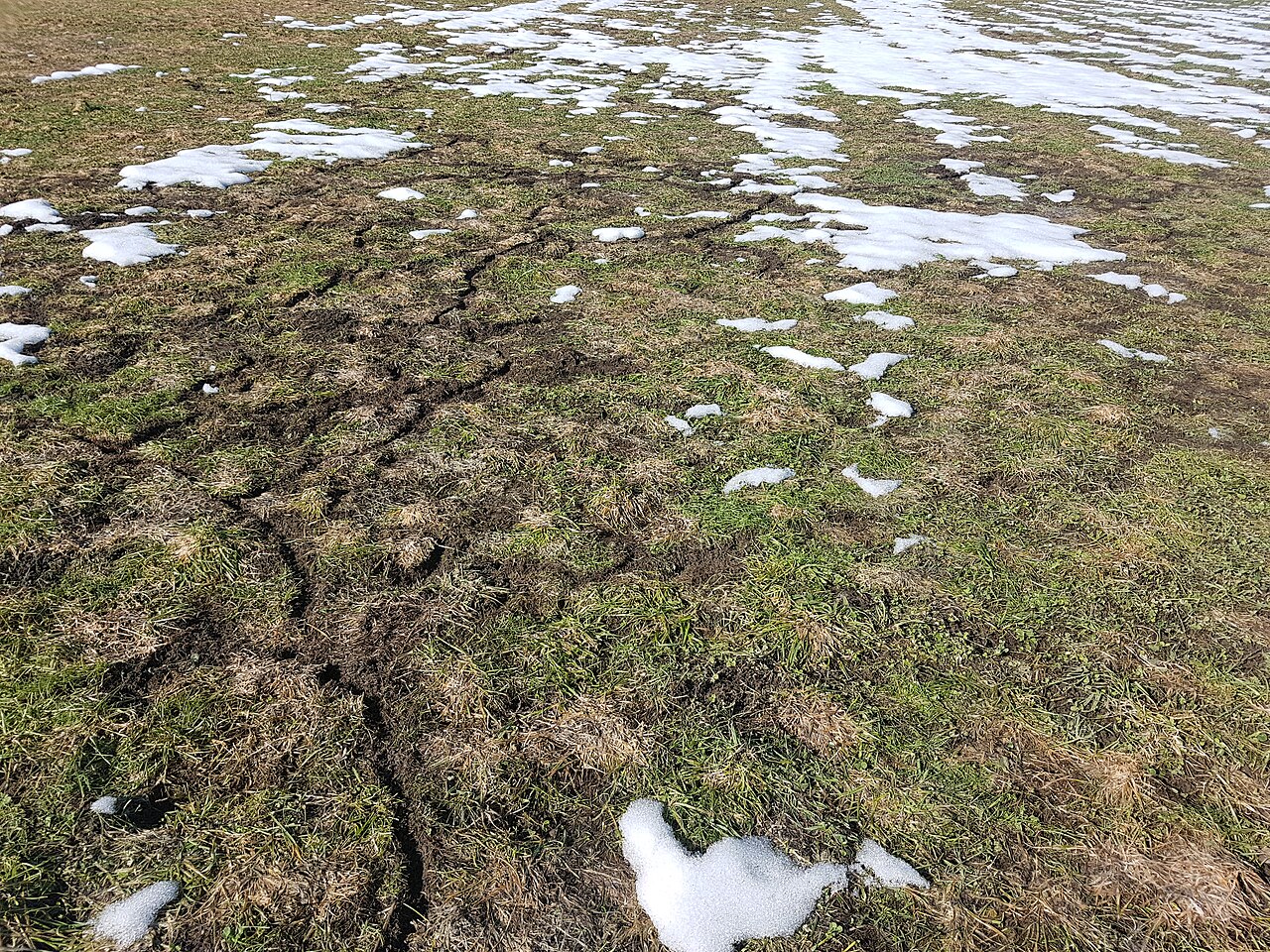
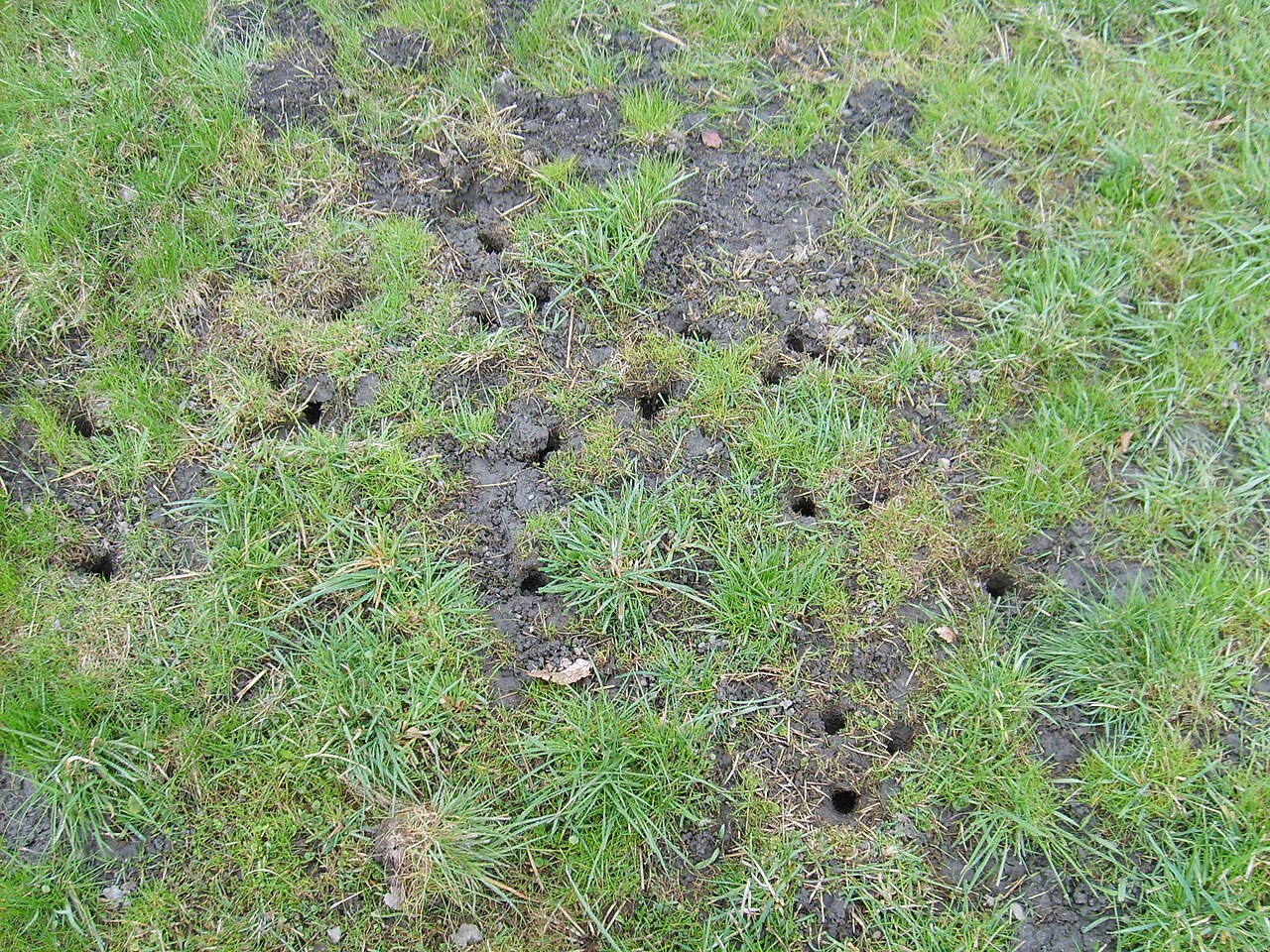
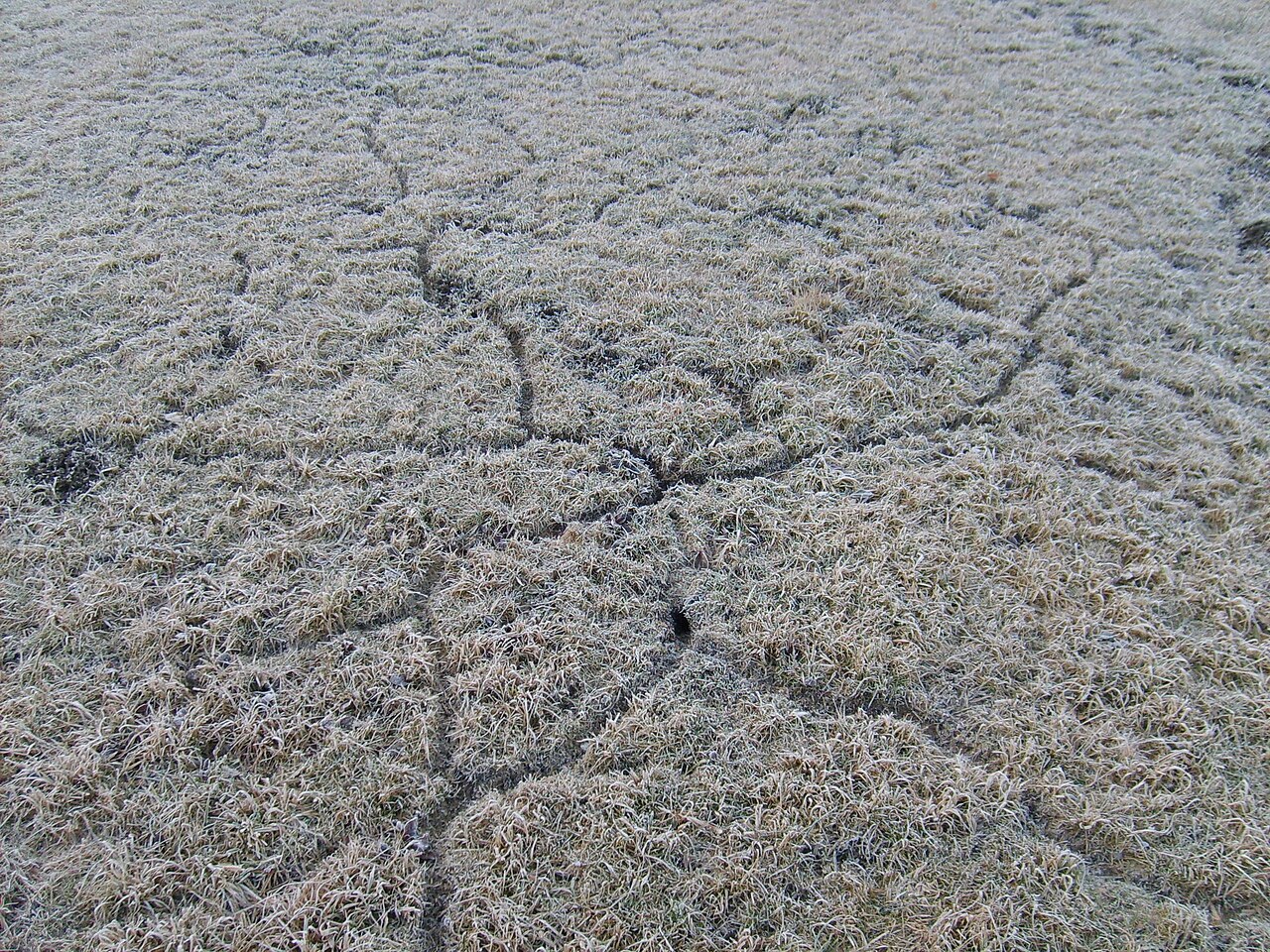
The common vole is most easily detected by its runway system. In short, dense grassland a network of tunnels three to four centimetres wide lies under the sward, worn down to the root mat and linking the burrow entrances; when the grass is parted by hand, the pattern becomes visible. The burrow entrances are round holes about three centimetres across, usually without a spoil heap, often five to fifteen together. Along the runs lie clipped grass stems: lengths of two to five centimetres cut cleanly at an angle and left in small heaps at the side, with the seed heads eaten off; this is the clearest feeding sign of the species. The droppings are 4 to 7 mm long, blunt-ended cylinders, grass green when fresh and brown later, left in small latrines at fixed points on a run. After snow the whole system is exposed: the winter nests of finely clipped grass, built above ground under the snow, remain after the thaw as fist-sized balls of yellow grass on the field, with the runs as channels between them. In a vole year a meadow at the end of winter is entirely churned and yellow. The common vole also gnaws bark at the base of young fruit trees and shrubs, just above ground level and higher under snow, so that an orchard can be ringed in a single winter. Pellets of barn, long-eared and short-eared owls, which take this species in large numbers, are the most reliable source for the group: Microtus cheek teeth are flat, folded into sharp zigzag prisms and grow throughout life, whereas those of the bank vole develop roots and wear down.
Head close-up
Identification
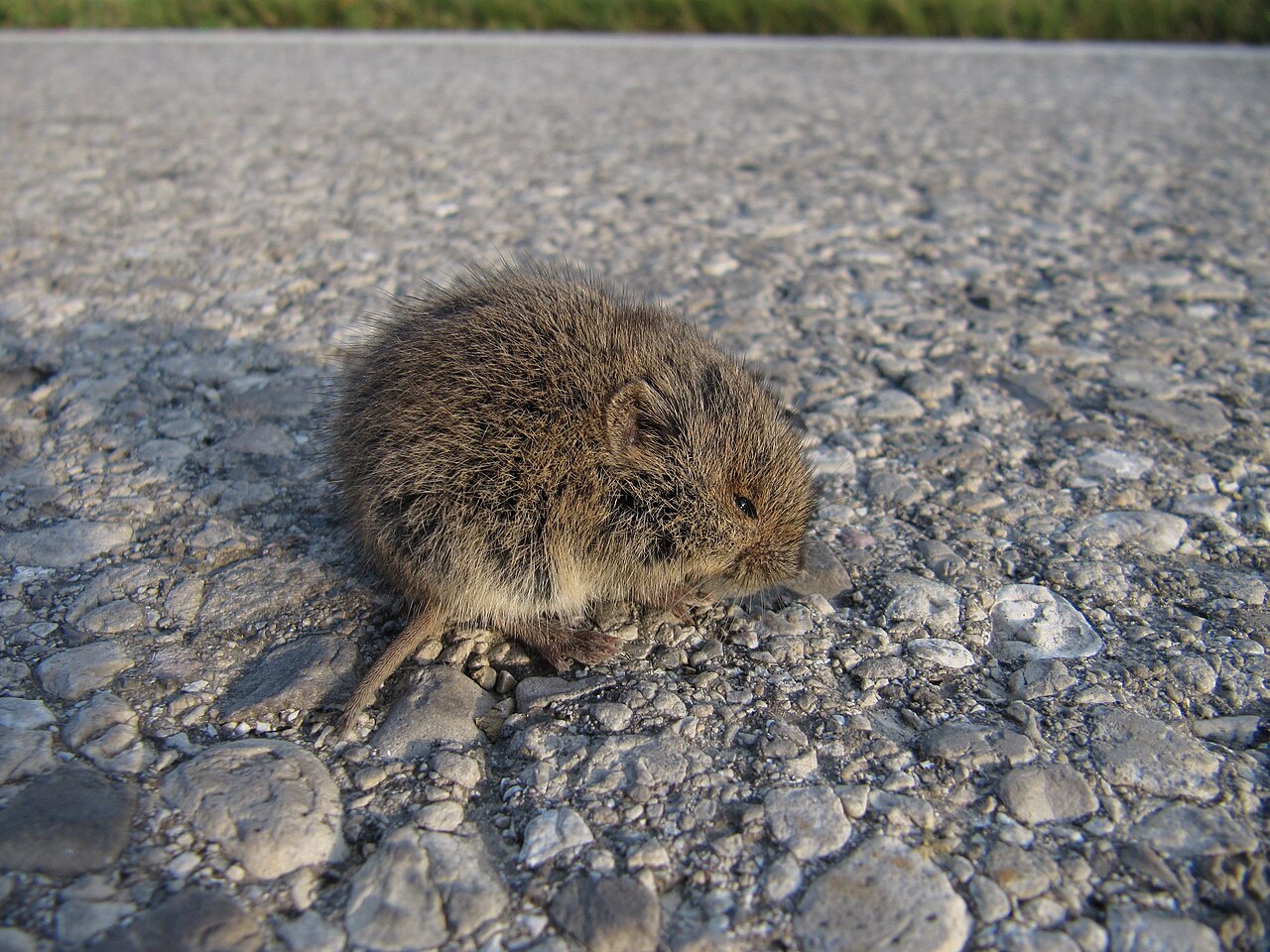
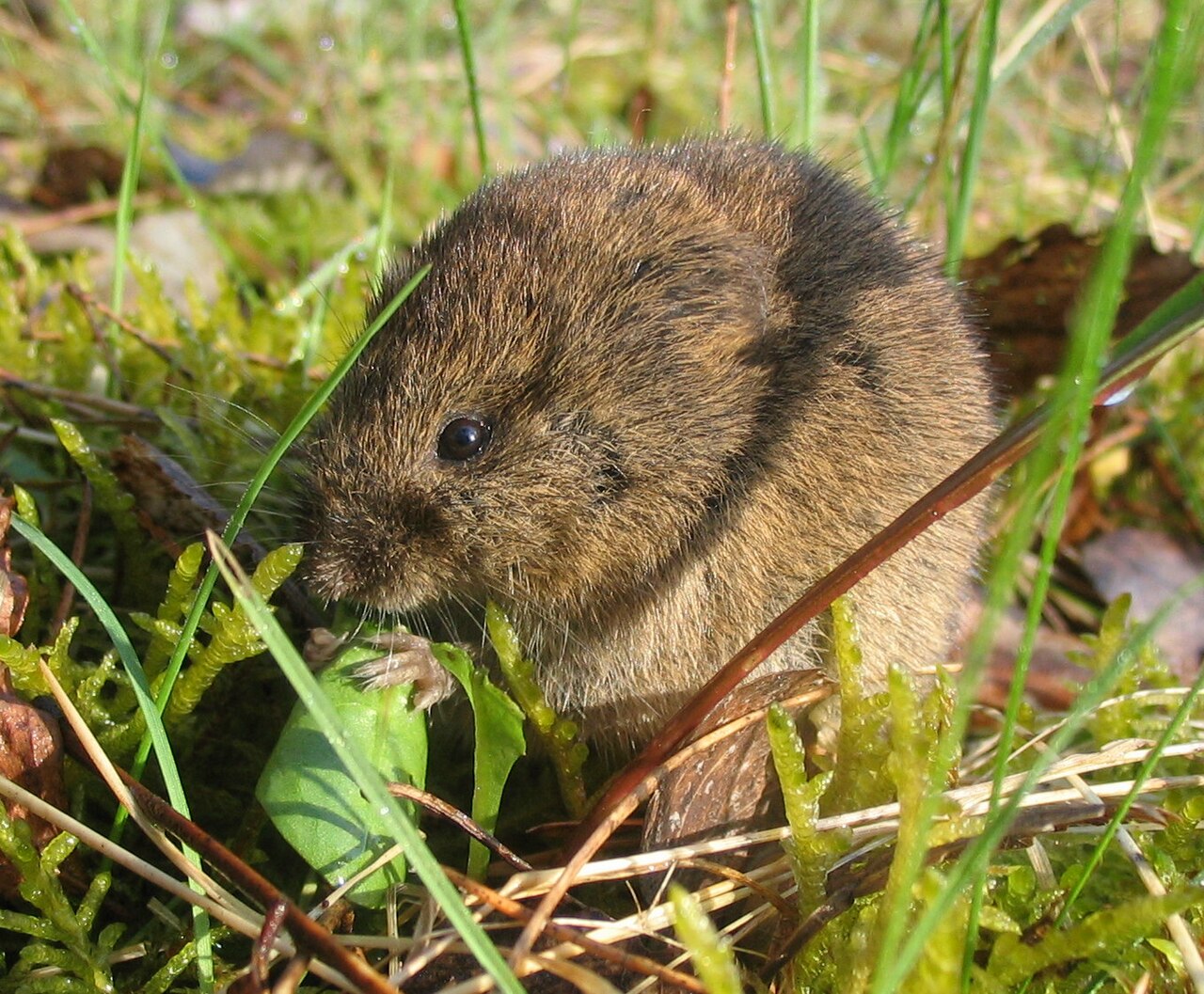
A thickset vole with a rounded, blunt head, small eyes and small ears half buried in the fur, and a short tail of 2.5 to 4.5 cm, roughly a third of the head-body length. The coat is short, soft and smooth, dull yellowish grey to yellow-brown above — without the rufous of a bank vole and without the shaggy coat of a field vole — and off-white to pale grey below, with a fairly sharp division on the flank. The tail is lightly haired and two-coloured, dark above and pale below. The common vole runs low and fast over the ground and does not bound. The ears are the most useful character: in the common vole they project just above the fur and the inside of the ear is bare, in the field vole they are smaller and hairy inside; this difference is only visible with the animal in the hand and in good light.
Similar species
Common vole, field vole and root vole cannot be told apart with certainty in the field. An animal that crosses a path or vanishes under a tussock can only be named as 'a vole', and a photograph of a vole in grass usually cannot be identified to species, even when it has been labelled online. In the hand more is possible: the Field Vole has a shaggier and darker coat, with smaller ears hairy on the inside; the Root Vole is larger, darker and longer-tailed and lives in wet, marshy ground where the other two are absent. In the Iberian Peninsula the Lusitanian Pine Vole and the Mediterranean Pine Vole also occur, both with even smaller eyes and ears and a more subterranean life, as does Cabrera's Vole, which is larger, longer-furred and tied to damp rank grassland. Certainty comes only from the teeth, and in the root vole also from the habitat. Outside this group identification is easy: the Bank Vole has a rufous back, large eyes, projecting ears and a tail twice as long, and lives in woodland and scrub; the Wood Mouse has very large ears, bulging eyes and a body-length tail, and bounds; the House Mouse is grey, sharp-muzzled and has a naked, scaly tail.
Habitat
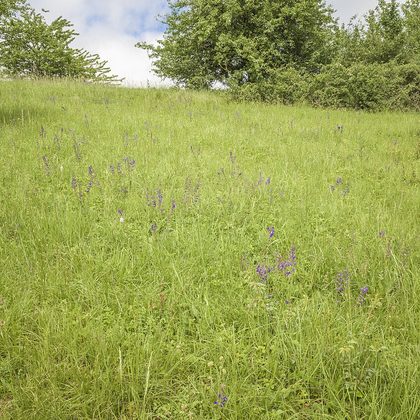
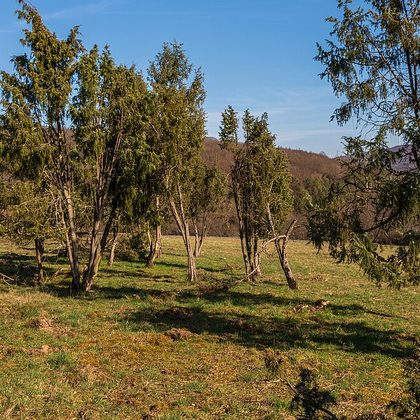
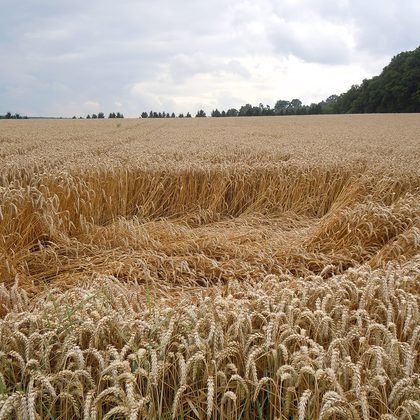
The common vole lives in open, short, dense grassland on drier soil: pasture, hay meadow, dykes, road verges, railway embankments, field margins, fallow land, lucerne and cereal fields, orchards and young plantations. The species needs grass that forms a dense sward and soil in which it can dig, and avoids wet ground, marsh, dense scrub and woodland. In southern Europe it lives in mountain pasture and, in Spain, in lucerne, cereal, irrigated fields and field margins on the Meseta. The highest densities occur not in nature reserves but in intensively used farmland with species-poor, short grass, and there outbreaks occur periodically.
Where the animal is most at home, classified with EUNIS — the European standard for habitats.


Distribution
The common vole occurs from northern Spain and central France to southern Finland and from the Atlantic coast far into Russia. In the Iberian Peninsula it was a mountain animal until the mid-twentieth century, confined to the damp meadows of the Cantabrian Mountains, the Pyrenees and the Iberian System. Since the 1970s it has colonised the northern Meseta, helped by irrigation, lucerne and land consolidation, and it now occupies all of Castile and León and much of Castile-La Mancha, Aragon, Navarre and La Rioja. With this colonisation came outbreaks: the peaks of 2007, 2014 and 2019 affected hundreds of thousands of hectares of farmland, with damage running into millions of euros, controversial control campaigns and associated tularaemia outbreaks. In the Netherlands the species occurs throughout, from the clay polders to the river district and the sandy soils, and on the Wadden islands of Ameland and Schiermonnikoog; the best-known outbreak there was in Friesland in the winter of 2014–2015, when tens of thousands of hectares of grassland were stripped and the damage ran into tens of millions, followed by an equally steep crash the next spring. In Belgium it is common in open farmland and scarce in enclosed landscapes. In Britain and Ireland the common vole is absent, with the exception of Orkney, where it has lived since the Neolithic; it was brought there by people about five thousand years ago and has been found in quantity in the middens of Skara Brae. The Orkney vole is much larger and darker than continental animals, occurs on Mainland, Rousay, Westray, Sanday, Burray and South Ronaldsay, and is the main prey of the islands' hen harriers and short-eared owls. A related introduced form survives on Guernsey. Elsewhere in the British Isles the field vole (Microtus agrestis) fills the same role; British and continental accounts of vole outbreaks therefore concern different species.
- Native
- dark = core range, pale = thinly spread
Way of life
The common vole is active round the clock in short bouts of two to three hours, with a clear emphasis on daylight; as a result it can be seen by day on dykes and verges, and kestrel and buzzard can live on it. It is almost entirely herbivorous: grasses, clover, lucerne, cereals, roots and tubers, and in winter bark and rhizomes. It lives in colonies in a system of shallow tunnels with nest and store chambers, in which females defend small territories. Reproduction determines its population dynamics: from March to October, and in mild winters all year, litters follow every three weeks, with three to eight young per litter, and young females are fertile at two weeks. A population can therefore increase tenfold in one summer; this causes the vole cycles of three to four years, on the Spanish Meseta three to five years, which affect the whole farmland ecosystem. Average lifespan is a few months; scarcely any common vole reaches a year. The species does not hibernate and is most active under snow.
Where and when to look
The runs are easier to find than the animal: in an old, short pasture or on a dyke the system becomes visible when the grass is parted. March is the best month, because the winter nests and channels still lie open after the thaw. The animal itself is best seen by standing still under a hunting kestrel or short-eared owl and searching the grass below the bird. In a vole year common voles are numerous by day on verges and dykes, buzzards stand on the ground beside the road and short-eared owls appear in places where they are otherwise absent. Pellets collected in winter under a barn owl roost give a more reliable picture of the vole population of an area than direct observation.
Conservation status
Least Concern (LC, 2016) and one of the most abundant mammals in Europe, with a population of hundreds of millions. The fluctuations are large, but the species is nowhere at risk. In intensively farmed land the common vole is a pest: at a peak it strips grassland, rings fruit trees and damages cereals and lucerne. On the northern Meseta in Spain it is the principal agricultural pest. Control with poisoned bait, mostly anticoagulant, and the burning of field margins kill the raptors and mammals that feed on the species — barn owls, kestrels, kites, weasels and foxes — and thereby prolong the outbreak; in Spain this also affects threatened species such as Montagu's harrier and the little bustard. Alternatives are the management of water levels and irrigation, tillage, vegetated buffer strips, and perches and nest boxes for raptors. On Orkney the situation is different: the Orkney vole, introduced there in the Neolithic, is a distinct form, the food base of hen harrier and short-eared owl, and therefore a part of the island ecosystem worth conserving.
Scientific name
Microtus arvalis | (Pallas, 1779)
Pallas described the species in 1779 as Mus arvalis; because it was later moved to another genus, the author and year stand in brackets. Microtus is Greek, from mikros, 'small', and ous, genitive ōtos, 'ear', after the small ears hidden in the fur. arvalis is Latin for 'of the field', from arvum, 'ploughed land'. The specimen the first description was based on came from Russia, St. Petersburg.