All species › Even-toed ungulates › Bovids › Cuvier’s gazelle
Cuvier’s gazelle | Gazella cuvieri
Edmigazelle | Gacela de Cuvier
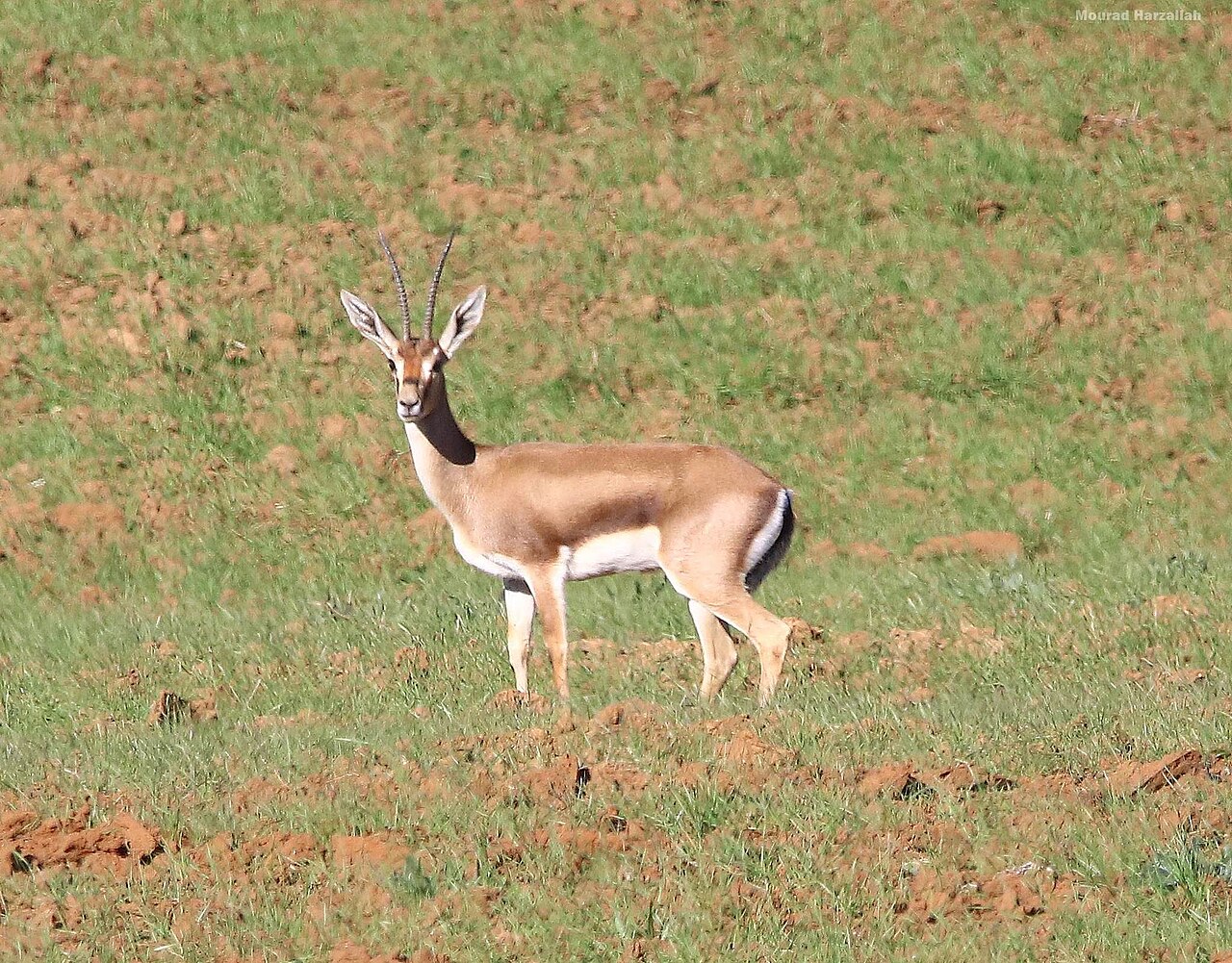
Cuvier's gazelle (Gazella cuvieri) is a dark gazelle of the Atlas Mountains and the adjacent uplands in Morocco, Algeria and Tunisia. It is one of the few gazelles that live in mountains and woodland and occurs only in north-west Africa, and thus entirely within the guide area. Fewer than 2000 live in the wild.
Tracks
The slot is small, narrow and pointed and resembles that of the Dorcas gazelle. Because the animals lie in scrub by day and come into the open at dusk, tracks are most likely at the transition from scrub to grassland.
Identification
A medium-sized gazelle of 95 to 105 cm head-body length, 60 to 69 cm shoulder height and 15 to 35 kg; males weigh 20 to 35 kg, females 15 to 20 kg. The tail is 15 to 20 cm long and entirely black. The upperparts are greyish brown, darker than in other gazelles, and a broad dark band on the flank separates the upperparts from the white belly. The rump is white with a black stripe on each side. The face has dark stripes from the eye to the mouth and a black spot on the bridge of the nose. The ears are long and narrow. Both sexes carry horns: in the male 25 to 37 cm, heavily ridged at the base, in the female 20 to 30 cm, narrower and smoother.
Similar species
The Dorcas gazelle is paler, sandy to reddish beige, with a narrower reddish-brown flank stripe and lyre-shaped horns, and lives in desert and semi-desert at the foot of the mountains. The slender-horned gazelle is almost cream-white and lives in the dune areas of the Sahara. The dama gazelle is much larger, white with a reddish-brown head and neck, and in Morocco lives only in fenced reserves.
Habitat
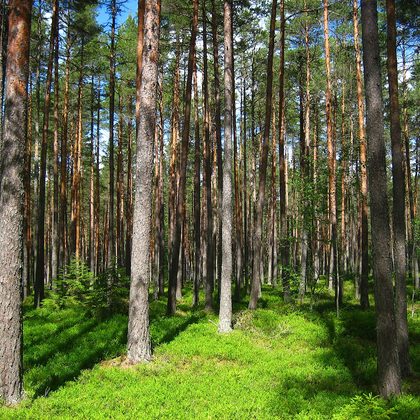
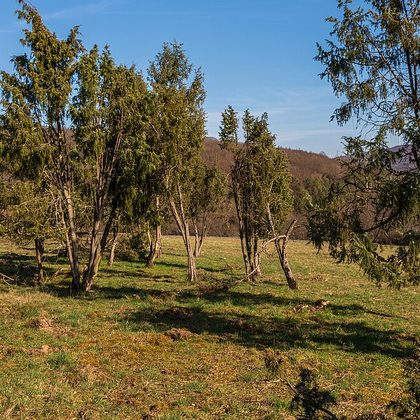
Sandy and stony hills, plateaus, Aleppo pine forest, regenerating woodland and scrub in the Atlas Mountains and foothills. By day the animals keep to scrub and woodland; in the early morning and evening they graze on low grassland in open valleys.
Where the animal is most at home, classified with EUNIS — the European standard for habitats.



Distribution
North-west Africa: Morocco including Western Sahara, Algeria and Tunisia, mainly in and along the Atlas Mountains. In Tunisia the species lives among other places in Chambi National Park. The distribution consists of fragmented populations, and the total is estimated at fewer than 2000 animals.
- Native
- dark = core range, pale = thinly spread
Way of life
Cuvier's gazelle is active mainly at dusk and at night: in cover by day, grazing in open valleys in the evening and at night. It eats grasses, herbs and the leaves of shrubs. The animals live in small mixed groups of usually about four, rarely more than eight, typically one male and up to three females with young. Mating takes place in winter; after a gestation of about 160 days one or two young are born in spring. Twins are frequent, in about 40 per cent of births. Birth peaks fall in the rainy periods from March to May and in October, and females can give birth twice a year. Females are sexually mature from about 7 months.
Where and when to look
In Tunisia, Chambi National Park near Kasserine is one of the areas where Cuvier's gazelle can be seen, early in the morning at the edge of the pine forest. The animals are shy and quickly flee into scrub when disturbed; scan clearings and valleys with binoculars from a higher point.
Conservation status
Vulnerable (VU, 2016). The species declined strongly in the twentieth century through hunting. Current threats are habitat loss through livestock grazing and conversion to farmland, and competition with sheep and goats. Protection has allowed populations to recover locally.
Scientific name
Gazella cuvieri | (W. Ogilby, 1841)
W. Ogilby described the species in 1841 as Antilope cuvieri; because it was later moved to another genus, the author and year stand in brackets. Gazella goes back through French and Spanish to Arabic ghazāl, 'gazelle'. cuvieri honours the French anatomist Georges Cuvier (1769–1832), the founder of comparative anatomy. The specimen the first description was based on came from Morocco.