All species › Hedgehogs, shrews and moles › Shrews › Cyprus White-toothed Shrew
Cyprus White-toothed Shrew | Crocidura cypria
Crocidura cypria | Crocidura cypria
A white-toothed shrew that occurs only on Cyprus. DNA studies show that its ancestors reached the island about one and a half million years ago and have remained isolated there since. The species thus belongs to the small group of island mammals from the Pleistocene that have survived to the present. On the basis of this separate evolutionary history it is recognised as a distinct species.
No photograph of a living wild animal of this species with a suitable Creative Commons licence exists. Do you have one that meets the rules? Send it in.
Tracks
Shrews leave few signs that are found during fieldwork, and no signs specific to this species have been described; what follows applies to the group. The dropping is a few millimetres long, dark and twisted, glossy from chitin remains, and usually lies hidden under a stone or plank. The print is visible only in very fine, damp silt and measures barely a centimetre, with five toes on fore and hind foot; on almost any other substrate it is not recognisable. Runs half a centimetre to a centimetre wide through the litter layer and under dead wood can be found, as well as small round openings at the foot of walls. The most widely used method of establishing presence is indirect: dissecting the pellets of Barn Owl and Little Owl, in which shrews can be recognised by the skull and the white teeth; this usually yields more distribution data than targeted searching. Crocidura species give high, shrill, rapidly repeated squeaks when foraging and in conflicts, at the upper limit of adult hearing.
Identification
A small white-toothed shrew of the genus Crocidura, with the characters of that genus: pure white, unpigmented teeth, without the red-brown tips of Sorex species, a pointed, mobile snout, small eyes, ears projecting clearly from the fur, and a tail with long, projecting tactile hairs among the short hairs; the latter is the quickest character in the hand for all Crocidura species. The fur is greyish-brown on the back and paler grey on the belly, without a sharp division. No reliably published field measurements are known for this species. The handbooks treat the animal under the broad species concept of the Lesser White-toothed Shrew, and the measurements given there belong to that species in the broad sense and not to the Cypriot animals.
Similar species
On Cyprus identification is in practice a matter of elimination, because there are hardly any confusion species. The only other shrew recorded from the island is Savi's Pygmy Shrew (Suncus etruscus), which is easily distinguished: it is the lightest mammal in the world, weighs a few grams, and has a proportionally longer tail and a much smaller head. Only a few records exist from Cyprus, so it is probably very scarce there or very poorly surveyed. Red-toothed shrews (Sorex) are absent from the island; a shrew with red-brown tooth tips there is worth reporting. The main identification problem is taxonomic: elsewhere around the Mediterranean this species cannot be separated from the Lesser White-toothed Shrew without DNA analysis, and the populations of Crete, Corsica and Menorca, which look the same in the hand, are not ice-age relicts but animals introduced from the Middle East during the Holocene. The species is therefore defined by origin and DNA, not by appearance: it is not to be expected outside Cyprus, and on Cyprus every white-toothed shrew belongs to this species.
Habitat
Little has been published on the habitat selection of the Cypriot animals; the species has been found in the ordinary Cypriot landscape and appears to be little selective. It can be expected in maquis and phrygana, the understorey of Aleppo and black pine woods, dry grassland with stone heaps and walls, field margins, orchards and gardens, with a preference for places with a thick litter layer or a dense herb layer that do not dry out completely in summer. Where there is irrigation the chance is higher. The species has been found from the coast into the Troodos mountains.
Where the animal is most at home, classified with EUNIS — the European standard for habitats.


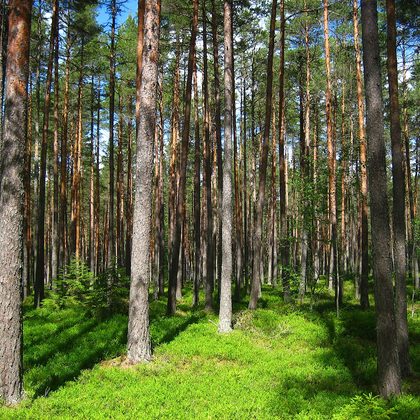
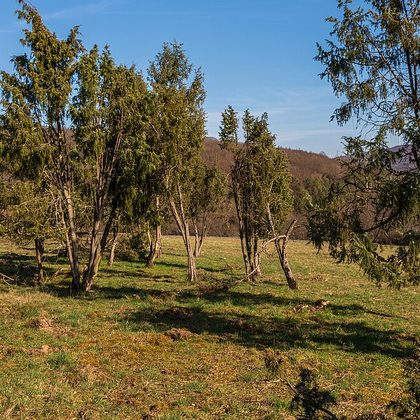
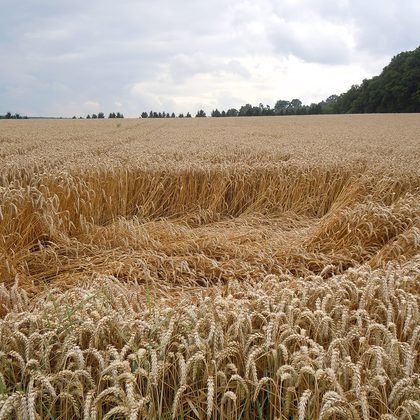
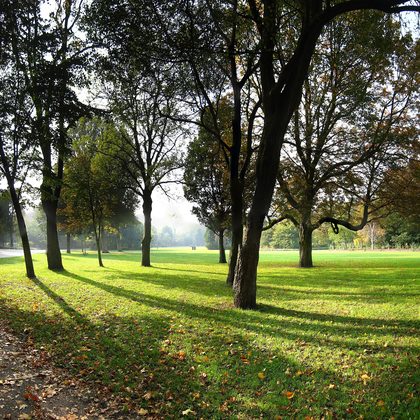
Distribution
Cyprus only, across the whole island. According to Dorothea Bate's original description of 1904 the type locality lies 'not far from Papho' (Paphos), in the south-west. The species occurs on no other island and on no mainland. Mitochondrial DNA dates the colonisation of the island to about 1.54 million years ago, in the early Pleistocene, whereas the white-toothed shrews of Crete, Corsica and Menorca were brought from the Middle East only six to eight thousand years ago, with the first farmers. The Cypriot population was therefore present on the island long before the arrival of humans. GBIF still treats the species as a synonym of the Lesser White-toothed Shrew, so Cypriot records are listed there under Crocidura suaveolens.
Way of life
Almost nothing has been studied of the way of life of this species; what follows applies to the white-toothed shrews of this group. They are active in short bouts throughout the twenty-four hours, with the emphasis on night and twilight; a shrew cannot go long without food, because it uses roughly its own weight every day. The diet consists of small invertebrates: insects and their larvae, spiders, woodlice, centipedes, worms and small snails. There is no hibernation, because the animals are too small for it; they remain active in winter and in the cold months often stay in and around buildings and stone heaps. White-toothed shrews show caravanning: when the nest is disturbed, each young grips the fur of the one in front and the first grips that of the mother, so that the whole litter moves behind her in a single line. Whether this has been observed on Cyprus is not known; in the genus it is common. A Crocidura seldom lives longer than one to one and a half years.
Where and when to look
Sightings of live animals are rare and usually accidental: an animal crossing a terrace in the evening, brought in by a cat or fallen into a bucket or well. The species is best detected through the pellets of Barn Owls at old buildings, churches and pumping stations; on Cyprus this is the only method that gives reliable results, and it costs nothing. Photograph a dead animal (in a well or by the road) in profile with the tail included, and preferably hand it to a museum or university; because no measurements have been published, measured Cypriot specimens are of scientific value. No freely licensed photograph of this species is known.
Conservation status
Not Evaluated (NE), as a result of the taxonomic arrangement. The IUCN follows the broad species concept in which the Cypriot animals fall under the Lesser White-toothed Shrew, which is assessed as Least Concern; there is therefore no separate assessment of Crocidura cypria, while the Mammal Diversity Database does recognise it as a distinct species. An endemic species of a single island, isolated for one and a half million years and with a range almost certainly below the Red List thresholds, is thus on no list at all. Nothing is known about numbers, trend or threats; possible threats on a Mediterranean island are the loss of litter-rich understorey, fire and feral cats. The first priority is therefore the collection of basic data: measurements, a distribution map and a density estimate, as a basis for an assessment.
Scientific name
Crocidura cypria | Bate, 1904 (GBIF: Crocidura suaveolens)
Bate described the species in 1904 and placed it straight away in the genus where it still stands. Crocidura is Greek, from krokys, genitive krokydos, 'flock of wool, nap', and oura, 'tail', after the long loose hairs standing out among the short ones on the tail. cypria means 'of Cyprus', the island where the animal lives and nowhere else. The specimen the first description was based on came from Cyprus.