All species › Rodents › Voles and hamsters › Steppe Lemming
Steppe Lemming | Lagurus lagurus
Steppelemming | Lagurus lagurus
Despite its name, the Steppe Lemming is not a tundra species but a rodent of the dry grasslands between Ukraine and Kazakhstan. It is recognisable by a black stripe down the middle of the back. It has outbreak years, and in those years it was formerly regarded as a serious agricultural pest.
Tracks
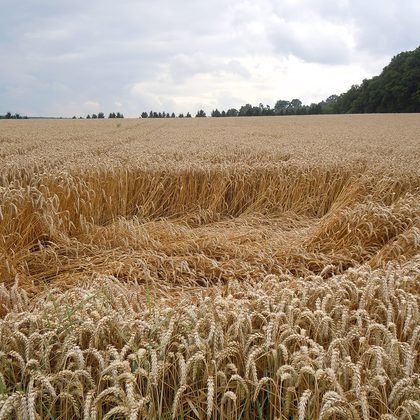
The Steppe Lemming lives in colonies, and these are the easiest thing to find in the field. On grazed steppe slopes or fallow field margins dozens of burrow entrances three to four centimetres across lie close together, round and running obliquely into the ground, each with a small fan of loose soil in front. The tunnel system reaches ninety centimetres deep and contains a nest chamber about ten centimetres across and one or more store chambers. Between the entrances run paths grazed bare, two to three centimetres wide, through the grass, with small heaps of droppings every few metres: dark green to black, cylindrical, two to three millimetres long, much smaller than those of the Norway Lemming. Around the colony the grass is clearly shorter and the herb layer eaten open; in an outbreak year a whole field is grazed bare and the cereal stems are gnawed through at the base, leaving the ears lying on the ground. In winter the animals remain active under the snow; after the thaw ribbed winter runs lie on the surface, together with loose balls of grass that served as winter nests. Pellets of Pallid Harrier, Kestrel and Short-eared Owl on the steppe contain many remains of this species in good years.
Identification
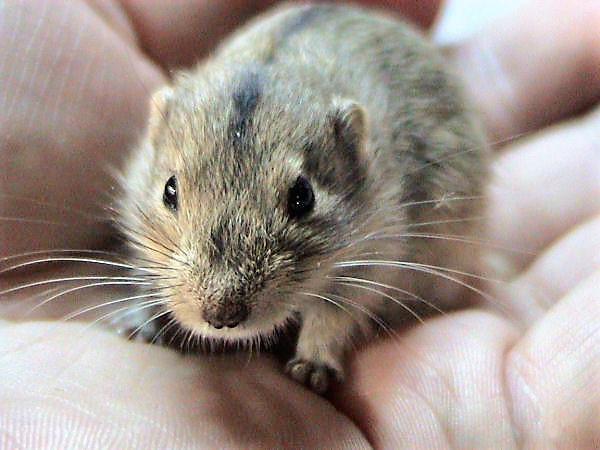
A small, thickset vole-like rodent: head-body 8 to 12 cm, with a tail of less than two centimetres that is largely hidden in the fur, and a weight of 22 g in winter to nearly 35 g in summer. The coat is short, dense and pale ash-grey to grey-brown, the belly dirty white. The characteristic mark is the narrow black dorsal stripe running from between the ears down the middle of the back to the rump; it is sharp in old animals and fainter in young ones, but almost never absent. The head is broad and blunt, the muzzle short, the ears so small that they disappear entirely into the fur, and the eyes small and dark. The feet are short, with strong digging claws. Females are on average slightly larger than males, and within the range size increases slightly from west to east.
Similar species
The combination of dorsal stripe, invisible ears and an almost absent tail is unique on the European steppe. The voles in the same area, Common Vole, Southern Vole and Water Vole, all have a clearly visible tail of at least a quarter of the body length and no dorsal stripe. The Steppe Mouse (Mus spicilegus) and other true mice are slimmer, with large eyes and ears and a long tail. In the far east of the range the Yellow Steppe Lemming (Eolagurus luteus) also occurs; it is sandy yellow and lacks the black stripe. A dead animal or remains in a pellet can be recognised by the very short tail and the size; the molar pattern separates the species definitively from the voles, but is not a field character.
Habitat
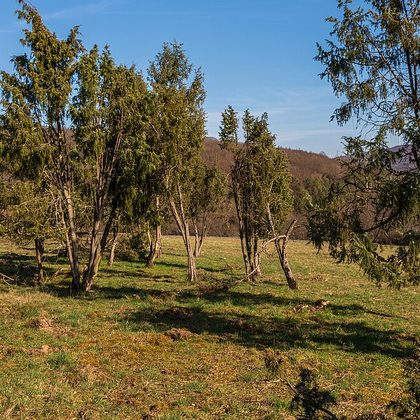
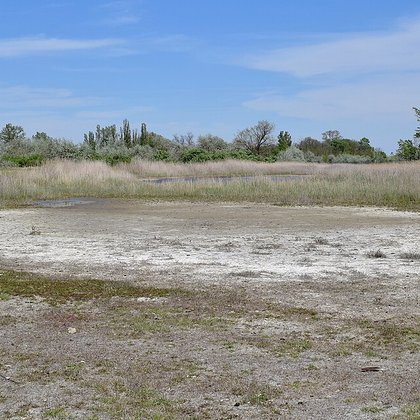
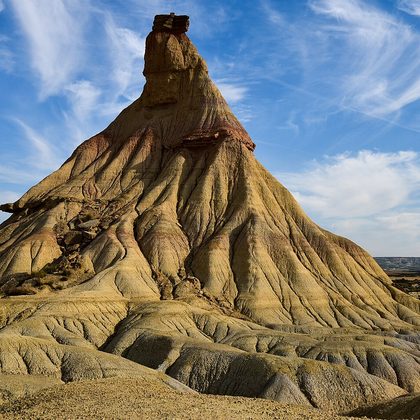
Dry and semi-dry grassland on chernozem and loess: feather-grass and fescue steppe, open patches in forest-steppe, salt steppe and semi-desert. In farmland, grazed slopes, dykes, road and railway embankments, field margins, lucerne fields and fallow land. The species depends on short vegetation and deep, free-draining soil; where the vegetation becomes too tall and dense, it disappears. At high density it also moves into cereal fields and pastures. From flat steppe up into low mountain steppe.
Where the animal is most at home, classified with EUNIS — the European standard for habitats.
Distribution
From eastern Ukraine eastwards through southern Russia and Kazakhstan to Kyrgyzstan, north-western China and western Mongolia. The western part of the range comprises eastern Ukraine, the Russian steppe around the Don and the Volga, and north-western Kazakhstan. Until about 1900 the species also occurred in central and western Ukraine, where it has disappeared. Fossil remains from the coldest phases of the last glaciation are known from western Europe, including cave and river deposits in Britain, the floor of the North Sea and the Iberian Peninsula, from the period when the mammoth steppe extended that far. In outbreak years the animals disperse up to hundreds of kilometres beyond the usual range.
Way of life
Mainly nocturnal, but, especially in summer, also out of the burrow in the early morning and late afternoon. Food consists of green plant material: grass shoots, leaves, stems, bulbs and seeds, and on farmland also cereals and lucerne. There is no hibernation; the animals lay up a small winter store and remain active under the snow. Reproduction is rapid: females are sexually mature at six weeks, gestation lasts about twenty days, and there are up to six litters a year of five to six young. In a favourable year, with a wet spring after a mild winter, a population can therefore increase within a single season to hundreds of animals per hectare. Such outbreaks occurred every few years in the Soviet period: whole cereal fields were eaten bare, and control with poisoned bait was a routine part of farming. After the peak the population crashes and the remaining animals move off across the steppe; because of this movement the species was formerly placed with the true lemmings, although the relationship is not close. The animals live in loose colonies in which each adult has its own tunnel system. In the wild they seldom live longer than a year.
Where and when to look
The species can be found in the steppe of eastern Ukraine, southern Russia and north-western Kazakhstan; May and June are the best months. Look for the colony first rather than the animal: walk grazed slopes or old steppe banks and watch for dense clusters of small burrow entrances with closely cropped paths between them. Then sit quietly ten metres away at sunrise or in the last hour before dark and wait. Searching with a torch along a field margin on a warm summer evening is more productive than searching by day. In short grass animals can be seen running fast and low from one entrance to another; the dorsal stripe is then the most useful character.
Conservation status
Least Concern (2008), with a large range and locally very high numbers. In the west of the range, in central and western Ukraine, the species disappeared around 1900, as a result of the ploughing of the last steppe and of intensive control in the period when it was regarded as a pest. The present range comprises the eastern part. In addition, the end of extensive livestock farming in the former Soviet Union has adverse effects: where grazing stops, the steppe becomes overgrown and the short vegetation the species needs disappears. Outbreaks have become rarer, which affects predators that depend on the species, such as Pallid Harrier, Red-footed Falcon and Steppe Polecat.
Scientific name
Lagurus lagurus | (Pallas, 1773)
Pallas described the species in 1773 as Mus Lagurus; because it was later moved to another genus, the author and year stand in brackets. Lagurus is Greek, from lagōs, 'hare', and oura, 'tail': hare-tail, after the short stump of a tail. The specific name repeats the genus name. The specimen the first description was based on came from Kazakhstan, Atyrau.