All species › Carnivores › Mustelids › Stoat
Stoat | Mustela erminea
Hermelijn | Armiño
The stoat is a small mustelid of the northern hemisphere, in Europe from Ireland and northern Spain to Fennoscandia. In much of its range the coat turns white in winter, apart from the black tail tip. It specialises in voles and other small rodents, and its numbers follow those of its prey.

Tracks
The print is 11 to 20 mm wide and 30 to 60 mm long, with five toes. In snow the trail disappears and reappears: stoats run over snow and tunnel through it. The scat is 4 to 8 cm long and 3 to 6 mm thick, twisted and pointed at the end. At the entrance of a rest site lie prey remains such as bitten-off feathers and mouse tails. The nest itself is lined with dry vegetation or with fur and feathers of prey.
In winter coat

Identification
A slender, elongated mustelid with short legs. In summer the upperparts are reddish to chocolate brown and the underparts white to yellowish white; the line between them runs straight and sharp along the flank. The tail is well furred and has a black, brush-like tip, in winter as well. Except in southern parts of the range stoats moult in April–May and October–November; in winter the coat becomes wholly or partly white. This does not happen everywhere or in every animal. Males are much larger than females; in measurements from the Netherlands males weighed 150 to 445 g and females 140 to 260 g.
Similar species
The weasel is smaller, has a much shorter tail without a black tip, a wavy line between brown back and white belly and often dark spots on the throat. A weasel in white winter coat also lacks the black tail tip. A large weasel and a small stoat come close in size; the tail decides. Polecat and minks are larger and dark, without white underparts.
Habitat
A wide range of habitats: tundra, alpine meadows, woodland, marsh, riverbanks, farmland and hedgerows, from sea level to 3000 m. Cover from vegetation or stones is required. In lowland areas, as in the Netherlands, it lives mainly in structurally rich, damp terrain: peatland, floodplains, reedbeds and wet woodland. In a subarctic area of Finland adult females lived where Microtus voles were most abundant; dominant males occupied less productive ground than the females.
Where the animal is most at home, classified with EUNIS — the European standard for habitats.
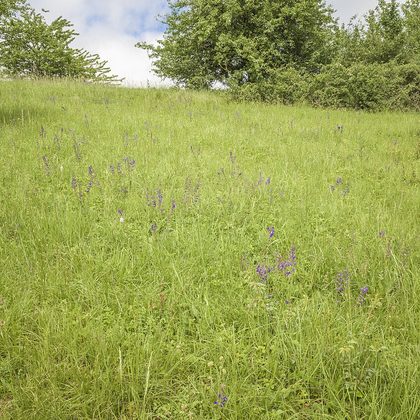
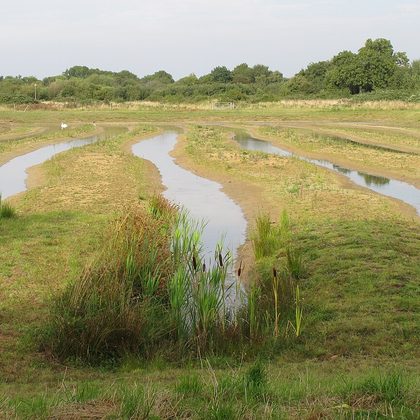
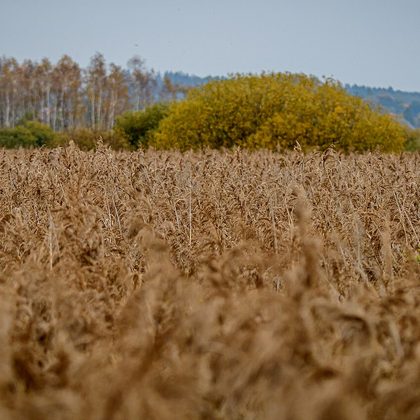
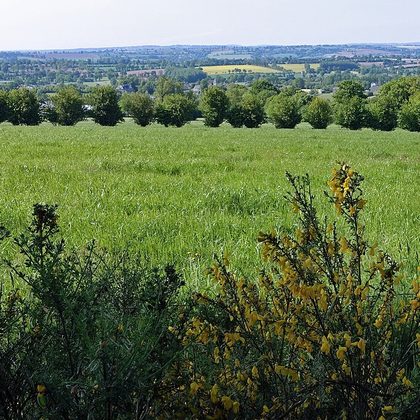


Distribution
The northern hemisphere. In Europe from Ireland and Great Britain across mainland northern and central Europe to Fennoscandia and on into Central Asia; in the south to the Pyrenees, northern Spain, the Alps and the Carpathians. In the lowlands of western Europe it is widespread; in the Netherlands it occurs throughout the country, but of the Wadden Islands only on Texel. It has been introduced to New Zealand, where it is controlled.
- Native
- dark = core range, pale = thinly spread
Way of life
Mainly nocturnal, but active at any hour; periods of activity and rest alternate every three to five hours. Its long, thin shape and high metabolic rate make it lose heat quickly, and it has to hunt almost constantly. It climbs and swims well. Prey is chiefly voles and other rodents, on the Iberian Peninsula mainly water voles. Stoats are solitary in territories usually of 10 to 40 ha, sometimes up to 200 ha, which are patrolled and scent-marked; daily movements are usually around 1 km, sometimes up to 15 km. Mating is in late spring or early summer; implantation of the fertilised egg is delayed for 9 to 10 months, after which development takes just over a month. The young, usually 4 to 8, are born in April or May. Young females can mate at two to three months, sometimes in their first summer; males are adult after a year.
Where and when to look
A stoat is best looked for in damp, structurally rich terrain with cover: reed fringes, hedgerows, dykes and stone piles. In winter with snow, white animals and trails are easiest to find. In years with many voles the chance of a sighting is highest.
Conservation status
Least Concern (LC, 2016). It is regarded as common through most of its range. In North America and Russia it is trapped for fur; the white winter coat has long been used as ermine. In New Zealand, where it was introduced to control rabbits, it is a pest that has severely reduced native birds. On the Iberian Peninsula the stoat depends on two water vole species that are declining. In western European lowlands such as the Netherlands, traffic, loss of structurally rich landscape and declining rodent numbers are the main problems.
Scientific name
Mustela erminea | Linnaeus, 1758
Linnaeus described the species in 1758 and placed it straight away in the genus where it still stands. Mustela is the Latin word for 'weasel'. Its further origin is uncertain: it is usually read as a diminutive of mus, 'mouse', after the animal's small size or its mousing. erminea is a latinized form of the word ermine, whose origin is disputed: it is traced either to Latin mus Armenius, 'Armenian mouse', or to a Germanic harmo, 'weasel'. The specimen the first description was based on came from Sweden.