All species › Passerines › Crows and jays › Carrion crow
Carrion crow
Corvus corone | Zwarte kraai | Corneja negra
The Carrion Crow is the crow without features: all black, no bare bill base, no grey mantle, no crest. That very plainness makes it the yardstick against which every other black bird is measured. Learn this one properly and the rest of the family sorts itself out on difference.

Voice
A hard, grating kraaa kraaa kraaa, usually in series of three or four with even gaps, often delivered with a deep bow of the whole front of the body. Also a hollow klok-klok between mates, a short rattling alarm and, in spring, a soft and surprisingly varied muttering near the nest tree. Heard all year, loudest during territorial disputes in March and April.
Recording: Sander Pieterse — CC BY-SA 4.0 · Wikimedia Commons
Identification
A heavy, compact crow of 44–51 cm, wholly black with a green-blue gloss that shows only in full light. The bill is stout and slightly curved, with an obviously feathered base: the nasal bristles run well out along the upper mandible. The eye is dark, the crown flat in profile and without a peak. In flight note the steady, shallow wingbeats, the nearly straight trailing edge of the wing and the short, square-cut tail. Juveniles are duller, washed brownish, with a blue-grey eye that darkens through the first autumn.
Confusion species
Rook is slimmer, with a more pointed, straighter bill and, in adults, a bare greyish-white face; it looks long-legged, with a peaked rear crown and baggy thigh feathering. Beware: young Rooks have no bare face yet and remain the real pitfall well into their first winter — then go by the pointed bill, the steeper forehead and the company the bird keeps. Jackdaw is far smaller, with a grey nape and a pale grey eye. Raven is much bigger, with a wedge-shaped tail and a deep cronk. In eastern and south-eastern Europe this species is replaced by Hooded Crow; hybrids showing grey patches occur in the narrow contact zone.
Habitat
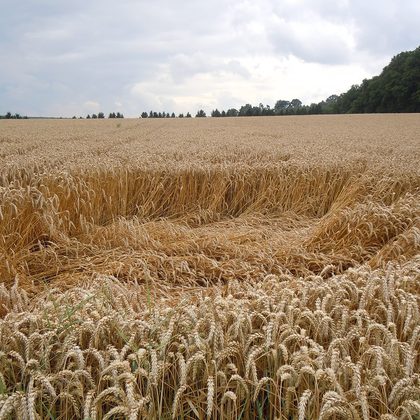
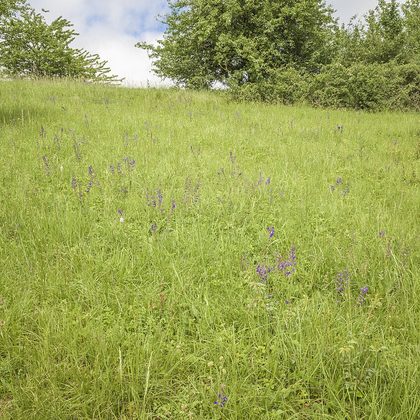
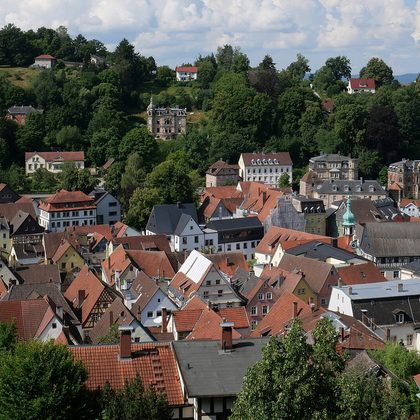
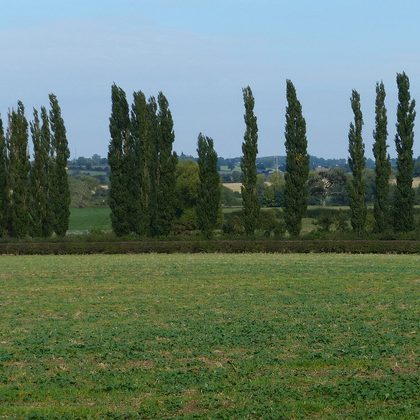
Almost any open or half-open country with trees: arable land, pasture, hedge banks, river floodplains, dunes, landfills, motorway verges, city parks and housing estates. Nests singly in a bulky stick basket high in a tree or pylon, always well spaced from the next pair. Feeds on anything: worms, insects, eggs and nestlings, carrion, nuts, grain and human refuse.
Where the bird is most at home, classified with EUNIS — the European standard for habitats.

Range and movements
Breeds across western and central Europe, from Ireland and Scotland to the Alps and northern Italy. In the Netherlands very common all year, from the Wadden Sea to city centres. In Spain it is confined to the north: the Cantabrian coast, Galicia, the Pyrenees and the northern Meseta, and it is all but absent from Andalusia and the Mediterranean coast. Eastwards the range grades into that of the Hooded Crow across a narrow hybrid belt.
- Resident
- Breeding (summer)
- Winter
- Passage
- dark = core range, pale = thinly spread
Where and when to look
In March find a breeding pair in a row of poplars along a dyke and watch how the bird drops its head and chest deeply as it calls. To see the corvids side by side, visit a freshly ploughed field in winter with a mixed flock: Jackdaws walk small and briskly among the Rooks, while Carrion Crows usually stand apart in twos.
Conservation status
Not threatened, and stable to increasing across most of Europe, helped by its move into towns and villages. In the Netherlands and Flanders it is an ordinary breeding bird, though still shot under wildlife management schemes. Local swings track that management and the supply of carrion and waste.