All species › Waterfowl › Ducks, geese and swans › Green-winged teal
Green-winged teal
Anas carolinensis | Amerikaanse wintertaling | Cerceta aliverde
The American counterpart of Teal, and but for one stripe the same bird. Finding one means training yourself to look for a single vertical white line in a flock of three hundred Teal.

Voice
It sounds like Teal, so voice is no help: the drake gives a clear, short, almost bell-like krrit, the female a thin, short quack. From January displaying parties call all day, and an American bird simply joins in.
No freely licensed recording is available for this species yet.
Identification
The drake is grey with a chestnut head and green eye patch, exactly as Teal, but carries a narrow vertical white bar dropping down the side of the breast just in front of the folded wing. The horizontal white scapular stripe that runs along the flank of Teal is absent. The creamy lines that outline the green mask on Teal are faint or missing here, so the head looks plainer, and the breast and flanks average slightly warmer and more finely marked. Females and immatures cannot be separated from Teal in the field.
Confusion species
It is all about Teal Anas crecca. Hold two questions in mind: is there a vertical bar on the side of the breast, and is the horizontal flank stripe absent? Only a yes to both gives a good candidate. The pitfall is hybrids between the two forms, which show a vertical and a horizontal stripe together, usually both weakened, and which tend to show partial head striping as well. A bird that differs on only one of the two points should be let go.
Habitat
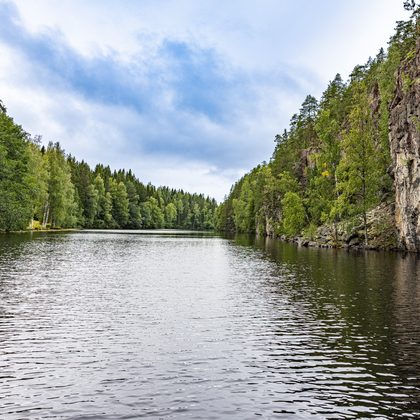
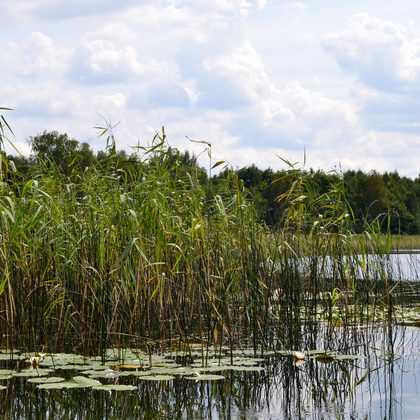
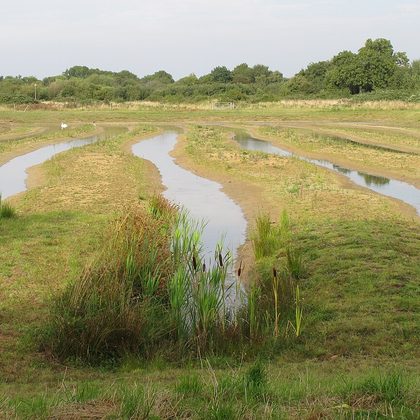
Found among Teal on shallow fresh water, muddy margins, flooded grassland and, on the coast, on estuarine mud and in creeks. Feeds by dabbling and sieving in a few centimetres of water, usually close to the reed edge or on the lowest part of a wet meadow.
Where the bird is most at home, classified with EUNIS — the European standard for habitats.

Range and movements
Breeds across North America from Alaska to Newfoundland and winters south to Central America. In Britain it went from about a dozen records before 1958 to an average of twelve a year in the 1980s and over forty a year by the early 2000s, and the Rarities Committee stopped adjudicating records in 1990. Individual drakes return to the same pool in successive winters, and spring is often the better time because the Teal flocks have thinned out.
- Breeding (summer)
- Winter
- Passage
- Migration direction
- dark = core range, pale = thinly spread
Where and when to look
From February to early April pick a site where Teal come close: a hide over a scrape, a creek behind a sea wall, a sheltered muddy margin. Scan low, resting birds from the side, since that is the only angle that shows the flank properly; a bird facing you shows the vertical bar but hides the flank stripe. Photograph both flanks, which saves a long argument later.
Conservation status
Numerous and stable worldwide, with one of the largest breeding ranges of any North American duck. British and Irish birds are genuine vagrants and their numbers say more about observer effort than about the population. Wetland loss along the flyways and hunting pressure in the wintering range are the recognised pressures.