All species › Waders, gulls and terns › Plovers and lapwings › Red-wattled lapwing
Red-wattled lapwing
Vanellus indicus | Indische kievit | Avefría india
A big, clamorous lapwing of the Indian subcontinent that just enters the Western Palearctic along the Euphrates and Tigris in south-east Turkey. Anywhere further west in Europe every record invites an argument, because the species is also kept in collections.

Voice
Loud and persistent, by day and by night. The alarm is the familiar, sharply enunciated did-he-do-it, rendered in some works as ti-ti-tu-eet; as the bird gets more agitated the series accelerates and rises into a piercing rattle. It calls in flight and at the roost as well. On the breeding grounds every passing heron, dog or birder is announced to the whole neighbourhood.
Recording: Manoj Karingamadathil — CC BY-SA 3.0 · Wikimedia Commons
Identification
Bulky, about the length of a Northern Lapwing but longer-legged and longer-necked. Crown, face, throat and breast are black, and from the cheek a broad white band runs down the side of the neck to the white belly. The upperparts are light brown with a purple and green gloss. The red fleshy wattle in front of the eye, the red black-tipped bill and the long yellow legs are unmistakable. In flight the upperwing shows a broad white band across the coverts between brown and black, with a white rump and a black tail band. Juveniles are duller, with a brownish-black hood, a smaller wattle and pale fringes above.
Confusion species
Spur-winged Lapwing, which shares parts of Turkey with it, has no wattle, a clean white cheek and throat, black legs and a black belly stripe, where Red-wattled has a black throat, yellow legs and the red wattle. Northern Lapwing is shorter-legged, crested and shows no red on the face. At range the neck pattern decides it: on Red-wattled the white runs as a narrow wedge down a black neck. On any suspected vagrant, look hard at feather condition and at the legs, because a worn plumage, a ring or a conspicuously tame bird points elsewhere.
Habitat
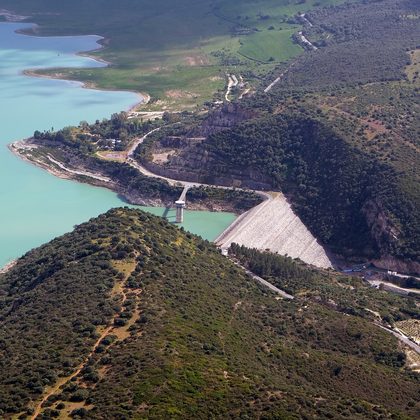
Open wet farmland: irrigated fields, river and canal banks, the drying margins of reservoirs and fish ponds, gravel bars and damp meadows. It avoids tall cover and wants bare, level ground with water within reach, and it will use village edges and waste ground around buildings.
Where the bird is most at home, classified with EUNIS — the European standard for habitats.
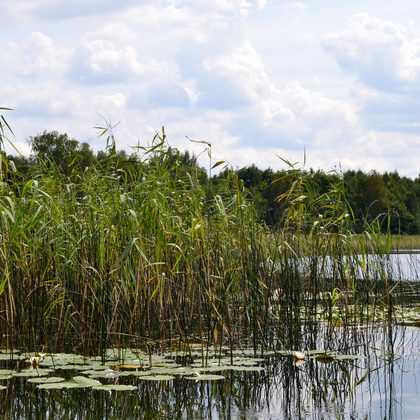
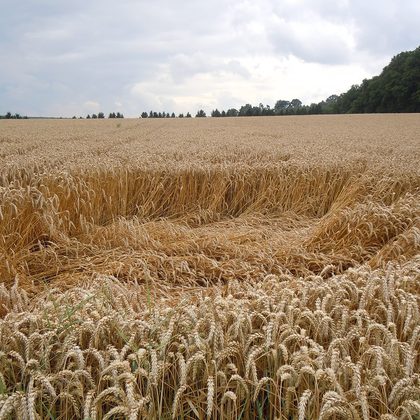
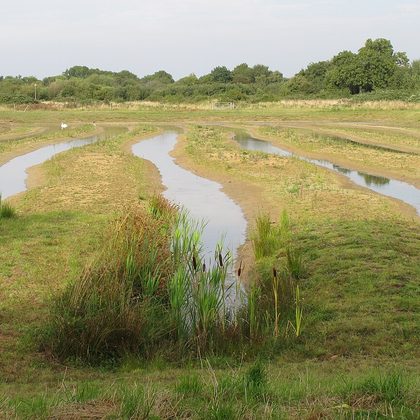
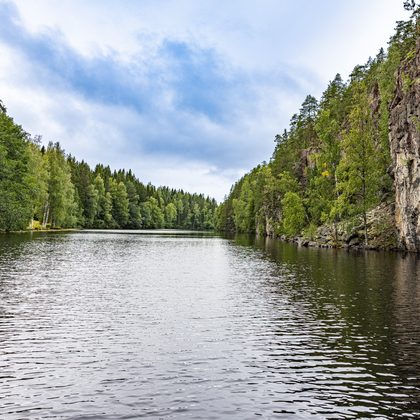
Range and movements
Breeds from Iraq, south-west Iran and the Persian Gulf east to South-East Asia; the western race reaches south-east Turkey along the Euphrates and Tigris and is slowly expanding there. Further west in Europe there are only a handful of records, scattered across countries and decades. A proportion of these is contested: the species is held in European collections, and a number of sightings go back to escaped birds, so committees place some records in category E or leave them unassessed. That does not diminish the species, but it belongs to the picture.
- Winter
- Passage
- dark = core range, pale = thinly spread
Where and when to look
For a bird beyond argument, go to south-east Turkey: the Euphrates valley around Birecik and Halfeti between April and September, where the species works gravel bars and irrigated land. Search bare banks early in the morning and listen, because it calls almost continuously. If a candidate turns up further west, note plumage condition, any rings and the bird's behaviour carefully, since that is what decides whether the record stands.
Conservation status
Least Concern globally and common to abundant across South Asia, including in towns. In the west of the range, in Iraq and Iran, it is declining with marsh drainage and the loss of traditional irrigation. The Turkish population is small but appears stable or increasing, with dam building on the Euphrates the main uncertainty.