All species › Kingfishers, bee-eaters and rollers › Kingfishers › White-throated kingfisher
White-throated kingfisher | Halcyon smyrnensis
Smyrna-ijsvogel | Alción de Esmirna
A big kingfisher with a chestnut head, a snow-white bib and a huge coral-red bill, most often seen miles from the nearest water. It sits on roadside wires above dry fields and hunts lizards, grasshoppers and frogs from them.

Voice
A loud, descending laugh — kee-kee-kee-kee-kee, hard and slightly whinnying — that carries across open country all year and is given almost continuously from March to June. There is also a long trilling kirrrr, sung by the male from a high perch, and a hard rattle when disturbed.
No freely licensed recording is available for this species yet.
Identification
Large, with a heavy head, a thick coral-red dagger of a bill and red legs. Head, neck, flanks and belly are deep chestnut, the back, tail and wing coverts brilliant turquoise, and a large, sharply cut white panel covers throat and breast and shows up at a distance. The wing is turquoise and black, and in flight a big white window opens in the primaries. The sexes are alike; juveniles are duller, with fine dark scaling across the white breast and a duller bill.
Confusion species
Common kingfisher is barely half as long, cobalt and orange, and has neither white bib nor red bill. Pied kingfisher is black and white. Seen from a car on a wire in Turkey or Israel, this bird suggests a roller more than anything: also blue, also on wires, also over open country. But roller is bulkier and broader-headed, with a black bill, a pale blue head and breast and no white anywhere. The white bib and the red bill settle it, even at long range.
Habitat
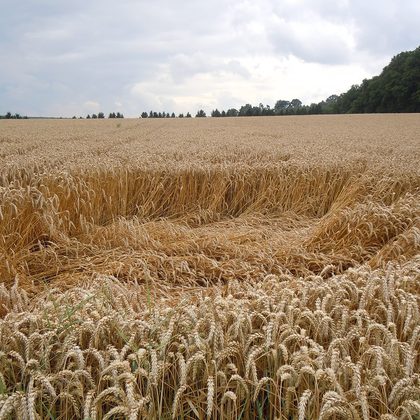
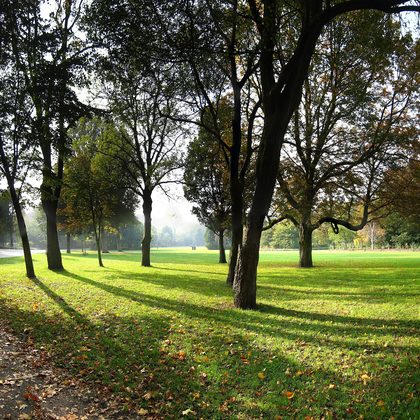
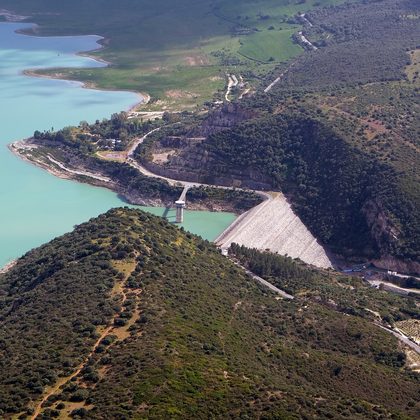
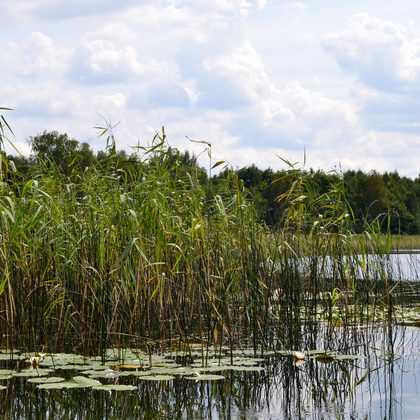
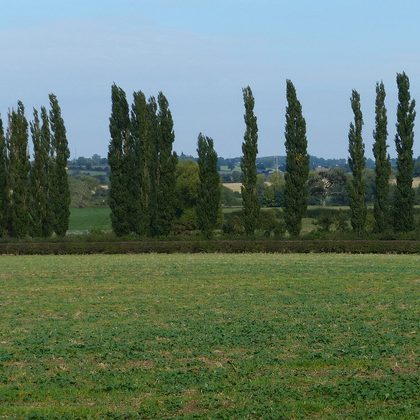
Open, warm farmed country with scattered trees and plenty of perches: fields, orchards, date gardens, village and town edges, parks and large gardens, and also ditches, irrigation canals and fish ponds. Water is not required. It hunts from wires, posts and dead branches and takes mainly lizards, large insects, frogs, crabs and mice, with fish only a secondary item. The nest tunnel is dug into a low earth bank, a ditch side or a building excavation.
Where the bird is most at home, classified with EUNIS — the European standard for habitats.
Range and movements
Within the area of this guide it breeds in southern Turkey from the Çukurova and the Göksu delta east to the Euphrates at Birecik, and down the Levant through Israel, Lebanon and Jordan to Sinai and the edge of the Nile delta. From there its range runs unbroken to south-east Asia. In Turkey it is spreading west along the Mediterranean coast, and it has bred on Cyprus. Resident. It occurs nowhere in Britain, Ireland or the Netherlands.
- Resident
- Breeding (summer)
- Winter
- Passage
- dark = core range, pale = thinly spread
Where and when to look
In Israel it is everywhere on the coastal plain and in the Jordan valley, down to car parks and hotel gardens. In Turkey the Çukurova near Adana and the Göksu delta are the surest ground. Drive the field tracks slowly and scan the wires; the laugh usually gives it away first. Early in the morning it will sit on one post for a long time, which is when the photographs come.
Conservation status
Not threatened, numerous, and expanding its range in Turkey and Israel, most likely thanks to irrigation and tree planting. It tolerates buildings well and breeds right into village edges. Local problems are the tidying of the ditch banks it nests in and pesticide use, which strips out the large prey it depends on.