All species › Passerines › Swallows › Bank Swallow
Bank Swallow | Riparia riparia
Oeverzwaluw | Avión zapador
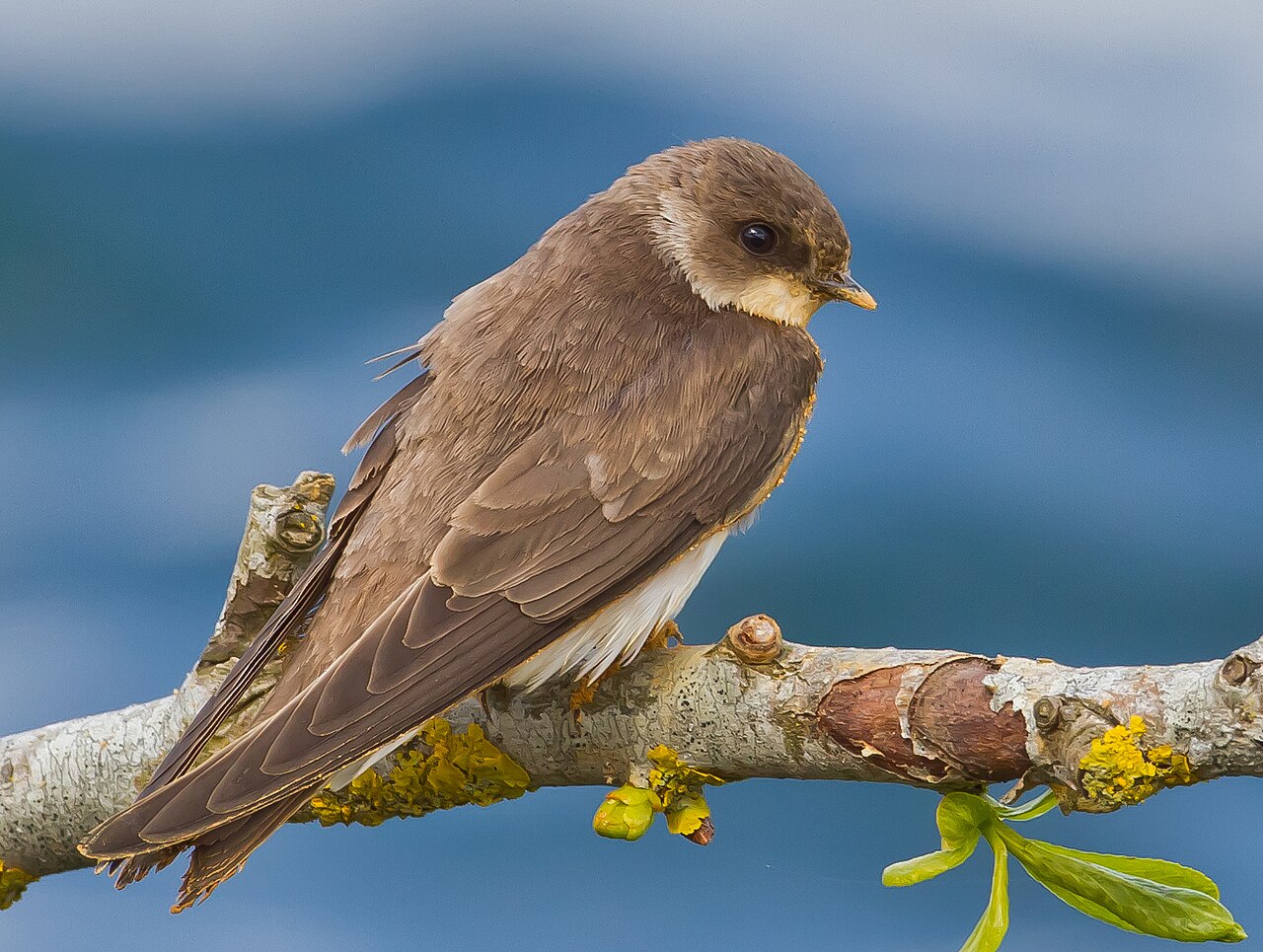
The Bank Swallow is the smallest swallow in North America and the only one with a sharply defined brown breast band across white underparts. It digs its nest tunnel into vertical sand and gravel faces along rivers, in pits and in eroding coastal bluffs, and breeds there in colonies of a few dozen to several hundred pairs.
Voice
The voice is a dry, gritty rasp: a series of short tjrrp notes that run together in flight into a continuous grating. Over a colony this becomes a steady wash of sound from dozens of birds at once. The alarm call given for a passing Peregrine Falcon or crow is louder and sharper, and lifts the whole colony at once. The species has no song in the sense of a fixed phrase.
Recording: Esperanza Poveda — CC BY-NC-SA 4.0 · Nyköping Municipality, Södermanland County, Sweden · xeno-canto
Identification
Upperparts are plain mouse brown, underparts white, with a crisp brown band across the breast that often sends a point down the centre. The tail is short and shallowly notched, the wings narrow, the bill small and black. In flight it beats fast and irregularly with short glides, lower and more jerky than the larger swallows. Juveniles have rusty edges to the wing coverts and a buff wash on the throat; the breast band still shows.
Confusion species
Northern Rough-winged Swallow is the hard one: slightly larger, warmer brown, with a dingy grey-brown throat and breast that fades gradually into white, with no sharp band. Bank Swallow has both a white throat and a clean band, and flies with faster, shorter strokes. Tree Swallow is blue-green above and wholly white below with no band. Violet-green Swallow shows white patches on the sides of the rump. Barn Swallow is much longer, with a deeply forked tail and a rufous throat.
Habitat
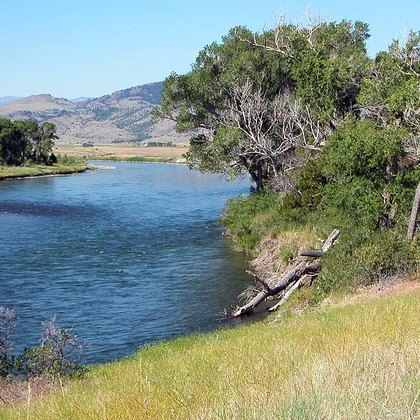
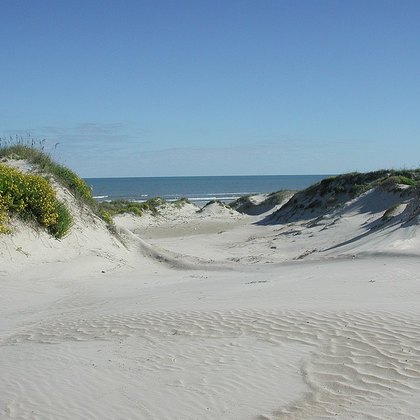
Vertical or undercut faces of sand, loam or fine gravel, high enough to stay out of reach of ground predators and high water: eroding river banks, sea cliffs of loose material, and man-made sand and gravel workings. The tunnel runs 30 to 90 centimetres and ends in a chamber lined with straw and feathers. Food is taken on the wing over adjacent rivers, lakes, pasture and cropland, usually within a few kilometres of the colony.
Where the bird is most often found, arranged by the USNVC — the vegetation classification of the United States and Canada — and CMECS for sea and coast.




Range and movements
It breeds across almost the whole continent, from Alaska and the Canadian taiga south to roughly the line of California, Colorado and Virginia, wherever suitable faces stand; occurrence is therefore local and shifts with the river. The species winters in South America and leaves the region early, in August and September. Through the southern states, Mexico, Central America and the Caribbean it occurs only on passage.
- Resident
- Breeding (summer)
- Winter
- Passage
- dark = core range, pale = thinly spread
Where and when to look
In May and June find an eroding river bank or a working sand pit and look for the row of holes in the face. Over water the species can be separated from Northern Rough-winged at a distance by the faster, more fluttering wingbeat; the breast band is reliable only at close range or through a scope.
Conservation
Globally the species is listed as Least Concern (LC), but Partners in Flight lists it among the Common Birds in Steep Decline: about 89 per cent of the North American population has gone since 1970, and about 98 per cent in Canada, where it has been listed as Threatened under the Species at Risk Act since 2013. The decline is linked to the fall in flying insect numbers, to bank stabilisation that stops rivers eroding fresh faces, and to the loss of active sand and gravel pits. In California the species is listed as Threatened at state level.
Scientific name
Riparia riparia | (Linnaeus, 1758)
Linnaeus described the species in 1758 as Hirundo riparia; because it was later moved to another genus, author and year stand in parentheses. The genus Riparia was introduced by Forster in 1817, from Latin ripa 'bank' and riparius 'of the bank'; genus and species name therefore say the same thing twice. The specimen described came from Europe, with Sweden as the restricted type locality. The Spanish name avión zapador, 'sapper martin', refers to the digging of the tunnel.