All species › Passerines › Swallows › Cliff Swallow
Cliff Swallow | Petrochelidon pyrrhonota
Amerikaanse klifzwaluw | Golondrina risquera
The Cliff Swallow is the colonial nester among North American swallows: gourd-shaped mud nests packed by the hundred under a bridge, a culvert or a rock face. In flight the square tail, the white forehead patch and the buff rump place it at once.
Voice
The ordinary contact note is a low, grating vrrt and a sharp nyew; over a colony there is a continuous chatter of squeaking and creaking notes. The song is a drawn-out series of the same material, without a clear beginning or end. Five call types have been described, among them an alarm call and a recognition call by which parents and young find each other in a colony of thousands of nests.
Recording: Stanislas Wroza — CC BY-NC-SA 4.0 · Québec, Capitale-Nationale, Québec, Canada · xeno-canto
Identification
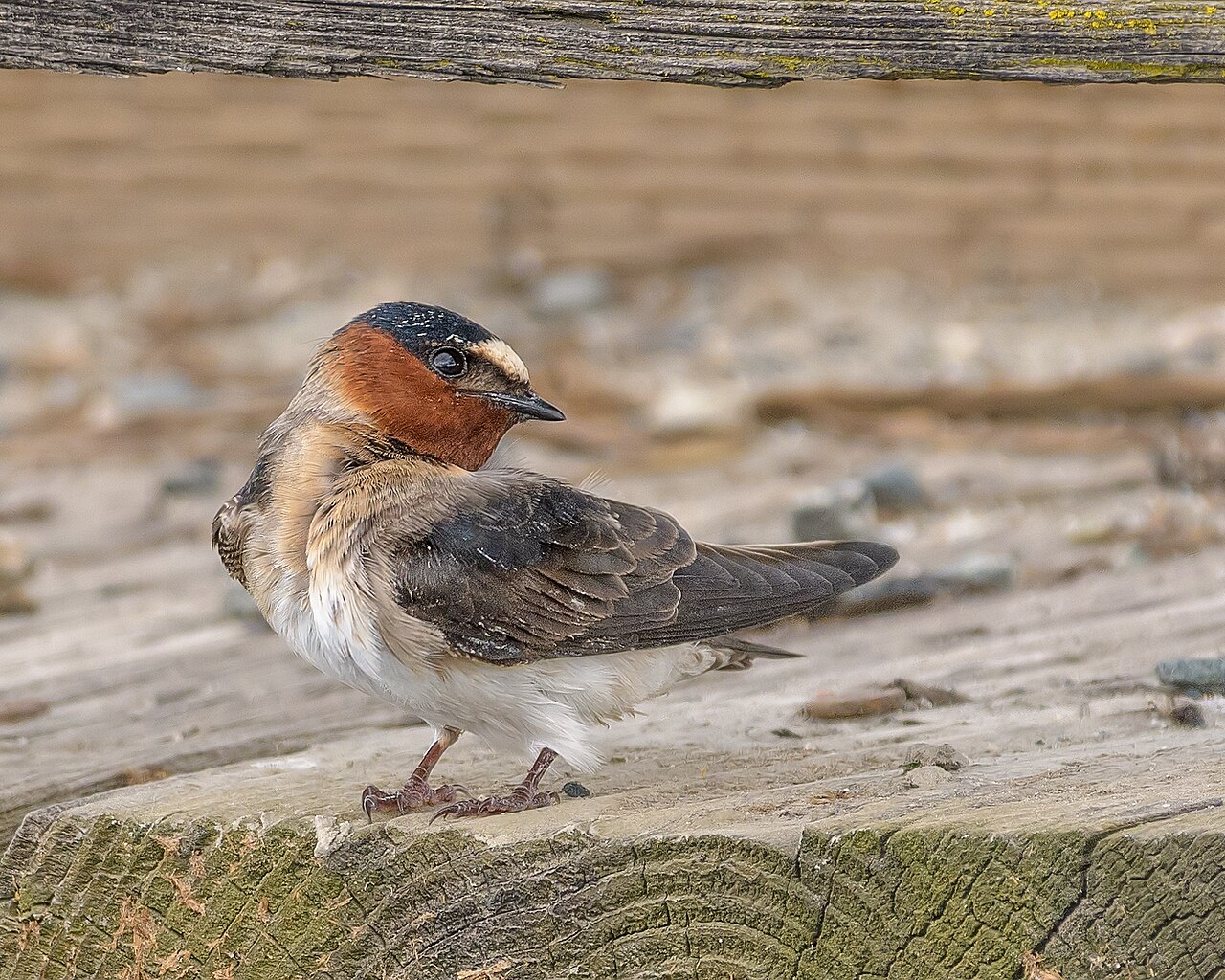
A medium-sized swallow with a short, square-cut tail — no fork. Upperparts dark blue-black with white streaks on the mantle, the rump buff to rufous, the underparts white. The head shows a creamy white forehead patch, chestnut cheeks and throat and a black patch on the upper breast. In the southwestern form the forehead is cinnamon rather than white. Young birds are duller, with a mottled throat and an irregular forehead. The flight consists of long glides on stiff, slightly bowed wings, usually higher above the land than Barn Swallow.
Confusion species
Cave Swallow has the same square tail and buff rump, but a pale buff throat and a chestnut forehead — exactly the reverse of the Cliff Swallow pattern. Barn Swallow has a deeply forked tail, a wholly rufous throat and no pale rump. Bank Swallow is smaller, plain brown, and has a brown breast band. In flight the pale rump against the dark back is the quickest mark at distance.
Habitat
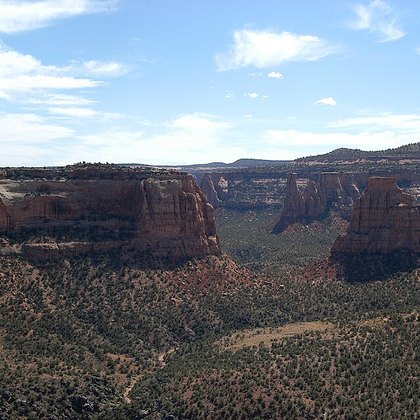
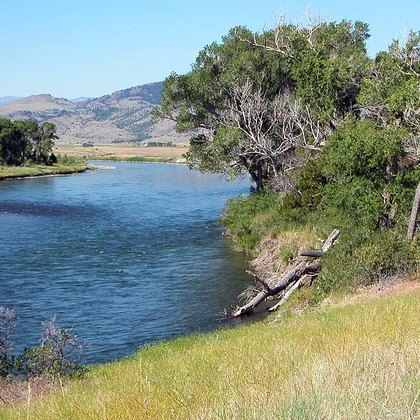
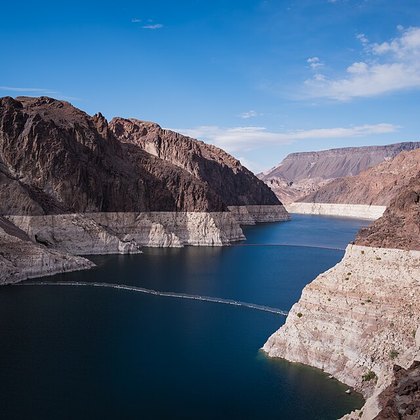
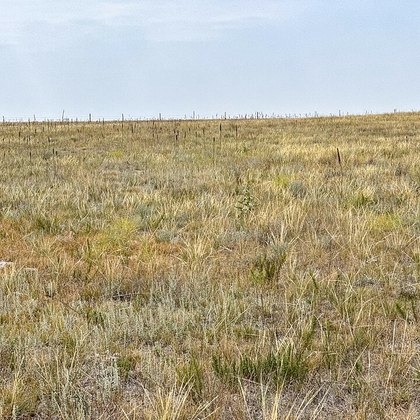
Open country with a vertical wall and mud within reach: river bluffs and canyon walls, and nowadays above all bridges, culverts, overpasses and dams. Forages high over pasture, prairie, cropland and water. Three things must coincide: an overhung place to build, wet clay or loam to build with, and open air with flying insects.
Where the bird is most often found, arranged by the USNVC — the vegetation classification of the United States and Canada — and CMECS for sea and coast.


Range and movements
Breeds from Alaska and northern Canada south to northern Mexico and across almost all of the United States except the southeastern coastal plain. It winters in South America, in southern Brazil, Uruguay and Argentina, outside the area of this guide. Migration runs over Florida and the Gulf coast in the east and over Mexico and Central America in the west. Return to California, including the mission at San Juan Capistrano, usually falls in March.
- Breeding (summer)
- Winter
- Passage
- dark = core range, pale = thinly spread
Where and when to look
Look under concrete bridges and culverts from April to July; a single stop at a creek bridge often brings the whole colony into view. Stand back a little and look at the nest itself: the closed gourd shape with its short tunnel entrance can be told from the open cups of Cave and Barn Swallow even with no bird at home.
Conservation
Partners in Flight puts the world population at roughly 44 million birds and the IUCN places the species in the Least Concern category (LC). The range expanded strongly during the twentieth century as bridges and culverts provided nest sites in country without cliffs. Nests are locally removed from buildings; in the United States the species falls under the Migratory Bird Treaty Act, so occupied nests may not be destroyed. Work on the Nebraska colonies shows that prolonged cold rain in the breeding season can cause mass mortality.
Scientific name
Petrochelidon pyrrhonota | (Vieillot, 1817)
Vieillot described the species in 1817 as Hirundo pyrrhonota; because it later moved to another genus, author and year stand in parentheses. The genus Petrochelidon was introduced in 1850 by Cabanis, from Greek petros 'stone, rock' and khelidon 'swallow', after the nest site. The species name comes from purrhos 'flame-coloured' and -notos '-backed' and refers to the rufous rump. The specimen described came from Paraguay, that is from the wintering range and not from the breeding range.