All species › Birds of prey › Kites, Old World vultures, eagles and hawks › Gray Hawk
Gray Hawk | Buteo plagiatus
Grijze buizerd | Aguililla gris
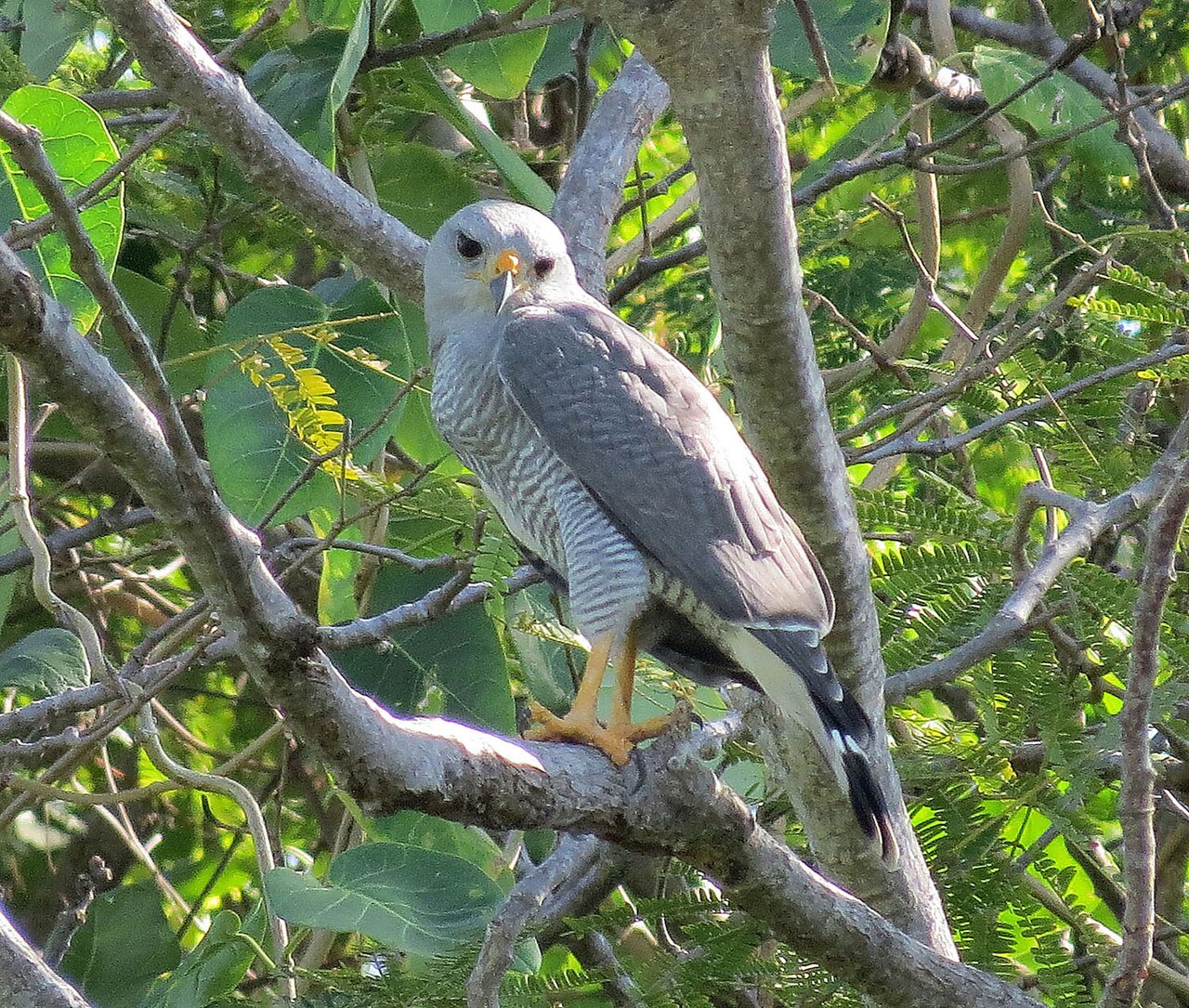
The Gray Hawk is a small, raincloud-grey raptor of tropical river valleys that only just reaches the United States, in south-eastern Arizona and the Lower Rio Grande. With its long tail and short broad wings it flies more like an accipiter than a buteo, in short bursts of flapping broken by a glide.
Click a thumbnail to switch the photo above.
Voice
The advertising call is a whistled series of three notes, drawn out and mournful, given throughout the breeding season above the riverside woods and carrying far through the leaves. It serves to claim the territory, to keep the pair together and to attract a mate, and it is sometimes rolled, slurred or exaggerated. There is also a short single-note alarm call, given mainly by the female when she is irritated or alarmed, and that one can be heard all year. The same single note accompanies prey transfers, disputes between males and begging by the young.
Recording: Richard E. Webster — CC BY-NC-SA 4.0 · San Bernardino National Wildlife Refuge, Cochise County, Arizona, United States · xeno-canto
Identification
The adult is pale blue-grey on head, back and wings and finely barred white and grey below, so that at a distance it looks plain light grey. The tail is black with two or three broad white bands, and the white uppertail coverts make a white U above the tail base in flight. The wings are short and broad as in all buteos, but the tail is long enough to give the bird an accipiter-like outline; it soars around the middle of the day with the tail fanned and the wings held level. Juveniles look quite different: dark brown above, heavily blotched brown on white below, with a white cheek set between a dark eye-stripe and a dark moustache, and a tail crossed by many narrow brown bars. The female is clearly the heavier sex — birds measured in Texas averaged 656 grams against 453 for males, with no overlap.
Confusion species
Juvenile Broad-winged Hawks resemble juvenile Gray Hawks but lack the crisp black-and-white face pattern with its moustache, while adult Broad-wings are brown above, rufous-barred below and show one broad white tail band instead of two or three. Red-shouldered Hawk is larger, with rufous shoulders, reddish underparts and a pale crescent near the wingtip. Cooper's Hawk has the same long tail and flight style but is brown or blue-grey with rufous barring, has a small head, and shows no white U above the tail. In Mexico the most similar bird is Roadside Hawk: browner, with a yellow eye and rufous in the primaries, whereas Gray Hawk has a dark eye and plain grey upperparts. Farther south the species is replaced by Buteo nitidus, closely similar but outside the guide area.
Habitat
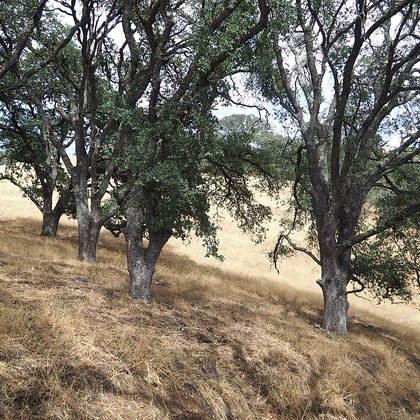
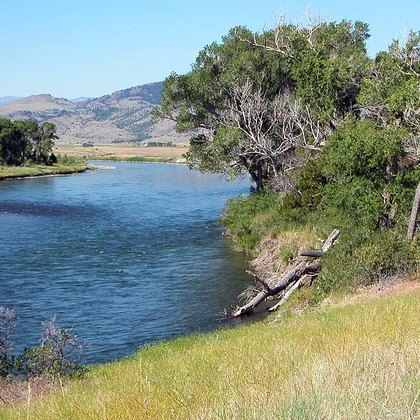
Lowland gallery woodland: cottonwoods and willows along permanent streams, with mesquite bosque, walnut, oak and ash beside them. It hunts from a perch below the canopy and needs closed crowns with open space underneath; bare treeless desert and high mountains it avoids. Farther south it also uses thorn scrub, tropical deciduous forest, savanna and wooded field edges. The tie to water is strict: where the stream dries up and the gallery wood dies, the hawk goes with it.
Where the bird is most often found, arranged by the USNVC — the vegetation classification of the United States and Canada — and CMECS for sea and coast.



Range and movements
From south-eastern Arizona, south-western New Mexico and the Lower Rio Grande of Texas south through the lowlands of Mexico to north-western Costa Rica. Arizona and New Mexico birds are summer visitors, arriving in March and leaving in September and October; those of southern Texas and Mexico stay all year. In the late nineteenth century the species was numerous along Arizona's rivers, and numbers fell as those riverside woods were lost. Over recent decades numbers have risen again in both Arizona and Texas.
- Resident
- Breeding (summer)
- Winter
- Passage
- dark = core range, pale = thinly spread
Where and when to look
Go at sunrise in April or May to a south-eastern Arizona creek lined with tall cottonwoods and listen for the three-note whistle; the voice almost always gives the bird away before the eye does. Then search the mid-level perches just under the canopy, where it sits still for long spells waiting for a lizard. Around midday it comes up to soar over the gallery wood with tail fanned and wings level, and then the black-and-white banded tail with its white U above is the clinching mark.
Conservation
The species is listed as Least Concern (LC); Partners in Flight puts the global population at two million birds and scores it 8 out of 20 on the Continental Concern Score. The main threat is loss of riverside woodland: clearing of mesquite (a thorny pod-bearing shrub of the Southwest that forms dense thickets) and cottonwood along streams, and groundwater pumping that dries the streams out. The United States share of the population is small, but it has been increasing for several decades.
Scientific name
Buteo plagiatus | (Schlegel, 1862)
Schlegel described the species in 1862 as Asturina plagiata; because it now stands in the genus Buteo and has therefore changed genus, author and year are given in parentheses. The species name comes from Latin plaga, 'stripe' or 'band', and means 'striped', after the fine barring below and the broad bands in the tail. Buteo is the ordinary Latin word for a buzzard; Asturina is a diminutive of astur, 'goshawk', and refers to the accipiter-like flight. The specimen described came from Veracruz in Mexico.