All species › Birds of prey › Kites, Old World vultures, eagles and hawks › White-tailed Hawk
White-tailed Hawk | Geranoaetus albicaudatus
Witstaartbuizerd | Busardo coliblanco
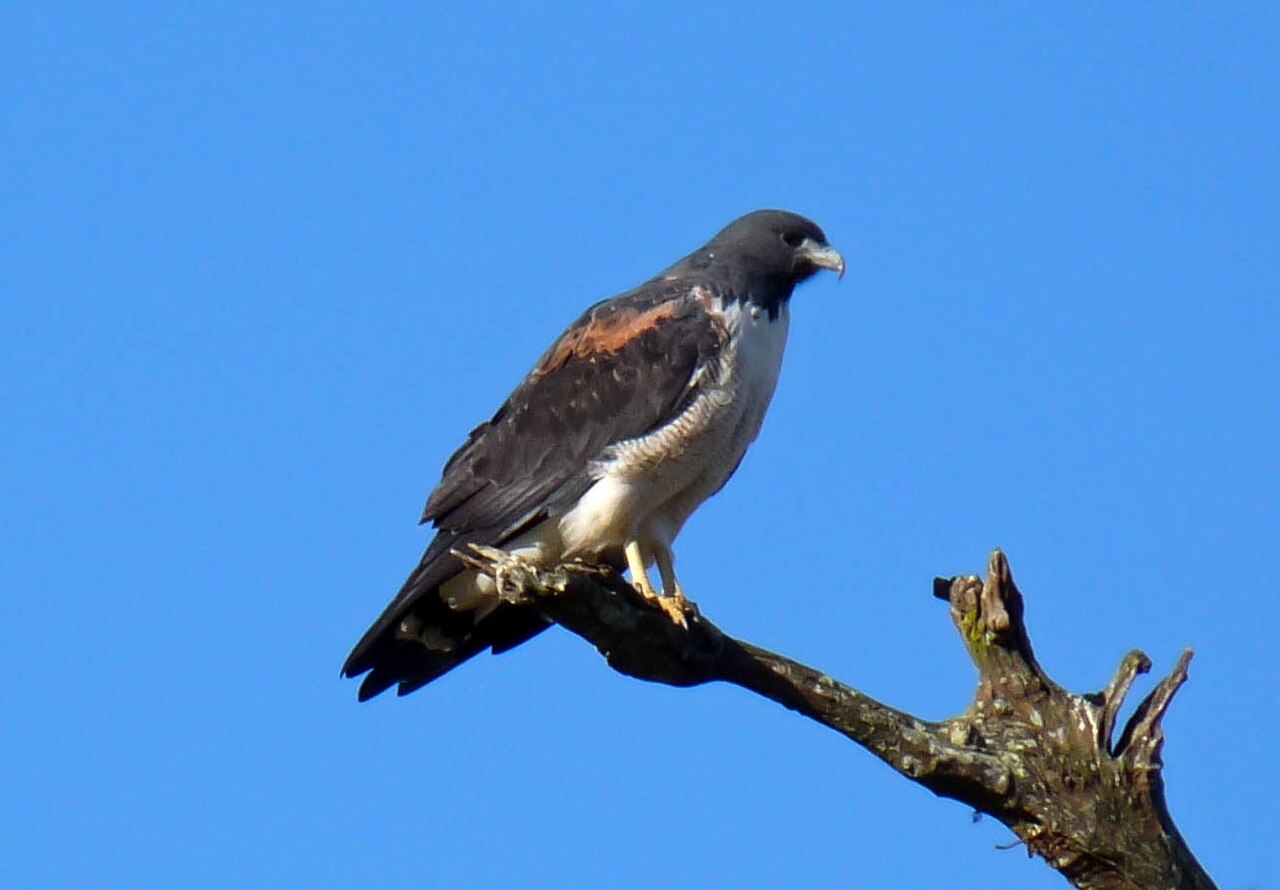
The White-tailed Hawk is the buteo of the Texas coastal prairie: slate grey above, clean white below, with a rusty shoulder patch and a white tail crossed by a single black band. Its wings are so long that they reach past the tail tip on a perched bird, and with them it hangs motionless on the wind above the grass for minutes at a time.
Click a thumbnail to switch the photo above.
Voice
The adult call is scratchy and high: a rising whine first, then a series of two-parted notes like ke-ke ke-ke ke-ke. It calls mostly over the nesting ground and when driving off other hawks; away from the territory it is silent. Young birds beg with a nasal, whistled peeee-up that carries across the prairie all summer and is often the first sign that a pair has bred. Where the land is flat the voice travels a long way, so a hawk heard but not seen is usually worth looking for high up rather than on the fence line.
Recording: JAYRSON ARAUJO DE OLIVEIRA — CC BY-NC-SA 4.0 · Córrego Batalha, Paracatu, Minas Gerais, Brazil · xeno-canto
Identification
The adult is slate grey on head and upperparts, with a rufous patch on the shoulder that shows best on a perched bird, and pure white on breast, belly and rump. The tail is white with a narrow black band just before the tip and a fine grey bar in front of that. In flight the wings are long and broad but clearly pinched in where they join the body, giving an anchor-shaped silhouette, and it soars with them raised in a shallow V. Juveniles look entirely different: dark chocolate-brown to almost black, with a white patch in the middle of the breast, black-and-white spotted underwing coverts and a finely barred grey tail; three to four years pass before the white adult plumage is complete. As in almost all hawks the female is the larger sex, reaching 58 centimetres against 52 for the male.
Confusion species
Swainson's Hawk shares the open country and the long pointed wings but has a dark breast band, a grey-brown tail with many fine bars, and never the white tail with one black band. Ferruginous Hawk is also white below, but has rusty upperparts, rusty leggings that form a dark V in flight, and a pale tail with no black terminal band. Red-tailed Hawk shows a dark belly band and a dark bar along the leading edge of the underwing — the patagial mark — and White-tailed Hawk has neither. Dark juveniles are confused with dark-morph Swainson's and Red-tailed Hawks; look then for the white breast patch and for wingtips that project beyond the tail on a perched bird.
Habitat
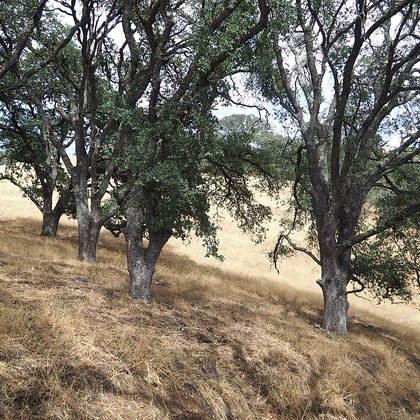
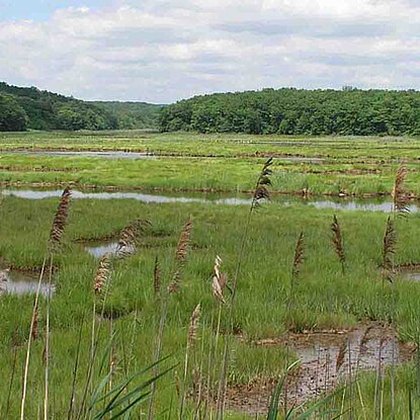
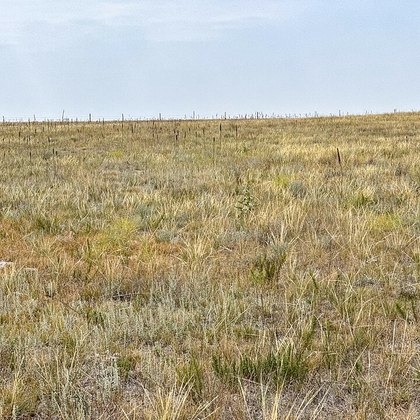
Open coastal prairie, savanna with scattered yucca and mesquite (a thorny pod-bearing shrub of the Southwest that forms dense thickets), and grazed rangeland with a few low shrubs to perch on. It needs room to hover and to kite; it avoids closed woodland and large-scale arable farming, and where prairie was turned into cotton or sorghum it disappeared. Along the coast it reaches the upper edges of salt marsh. At grass fires dozens gather above the smoke line to catch animals fleeing the flames.
Where the bird is most often found, arranged by the USNVC — the vegetation classification of the United States and Canada — and CMECS for sea and coast.


Range and movements
Resident on the coast and in southern Texas, south over both coastal plains of Mexico and through Central America; the range continues to Argentina, beyond the map of this guide. It does not migrate: pairs hold one territory all year and defend it together. Young birds do wander, and gather outside the breeding season where prey is concentrated. In Texas the range narrowed during the twentieth century as coastal prairie was ploughed; on the remaining grassland and on the large cattle ranches it holds its ground.
- Resident
- Winter
- Passage
- dark = core range, pale = thinly spread
Where and when to look
Drive a prairie road in southern Texas and look not at the poles but high into the sky: a large hawk hanging still on the wind with raised wings, showing a white tail with one black band, is this species and almost nothing else. Always go and look when smoke rises over grassland — at a prairie fire White-tailed Hawks are usually the first raptors to arrive. Juveniles are so dark that against the light they can pass for a vulture; wait until the bird banks and check for the white patch on the breast.
Conservation
The species is listed as Least Concern (LC); Partners in Flight puts the global population at about two million birds and scores it 10 out of 20 on the Continental Concern Score. Fewer than ten thousand live in the continental United States, all of them in Texas. The threats are conversion of prairie to cropland, heavy grazing and coastal development; on top of that, pairs abandon nests readily when disturbed.
Scientific name
Geranoaetus albicaudatus | (Vieillot, 1816)
Vieillot described the species in 1816 as Buteo albicaudatus; because it now stands in the genus Geranoaetus, and has therefore changed genus, author and year are given in parentheses. The species name combines Latin albus, 'white', with cauda, 'tail', after the adult's white tail. The genus name Geranoaetus is from Greek geranos, 'crane', and aetos, 'eagle'. Vieillot gave only South America as the type locality; Berlepsch restricted it to Rio de Janeiro in 1908.