All species › Passerines › Longspurs and snow buntings › Smith's Longspur
Smith's Longspur | Calcarius pictus
Bonte IJsgors | Escribano de Smith
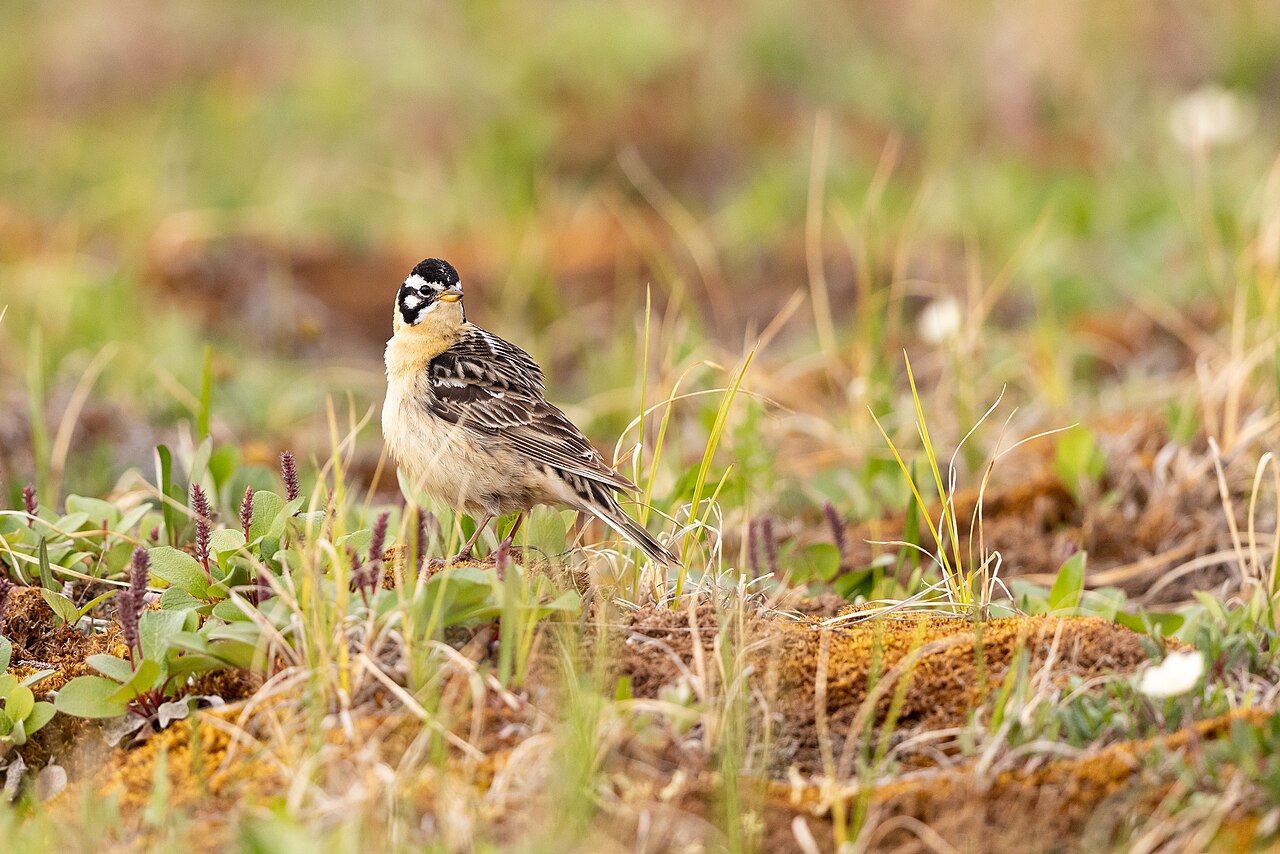
Smith's Longspur breeds on open sedge flats at the treeline of Alaska and northern Canada and winters on short grasslands and airfields in the south-central United States. The summer male is orange-buff from throat to belly, with a black-and-white patterned head. The species has a mating system in which both males and females take several partners.
Voice
The song is a short, quickly rising warble ending in an upturned final note, usually delivered from the ground or a low shrub rather than in a high song flight as in Chestnut-collared Longspur. The call is a dry ticking rattle that sounds like a shortened version of the rattle of a Brown-headed Cowbird. On migration that rattle is often all you get from a flock passing overhead.
Recording: Andrew Spencer — CC BY-NC-SA 4.0 · Dempster Highway KM 449, Yukon, Canada · xeno-canto
Identification
Slimmer and longer tailed than Chestnut-collared Longspur, with a fine, sharply pointed bill. The breeding male has plain orange-buff underparts and nape, a black head with a white ear patch, a white supercilium and a white shoulder patch that is often half hidden on a perched bird. Females, immatures and winter birds are buff with fine streaking on breast and flanks, a weakly outlined ear patch and a narrow dark eye line. All plumages have a dark tail with white outer feathers.
Confusion species
Chestnut-collared Longspur is shorter tailed, paler sandy, and has a white tail with a central black triangle, where Smith's has a dark tail with white edges. Lapland Longspur is larger and heavier billed, with rufous in the wing and a clear pale border around the cheek patch. The buff, finely streaked underparts without a sharp breast band are the key to Smith's in every plumage; the male's white shoulder patch is diagnostic but usable only in good viewing conditions.
Habitat
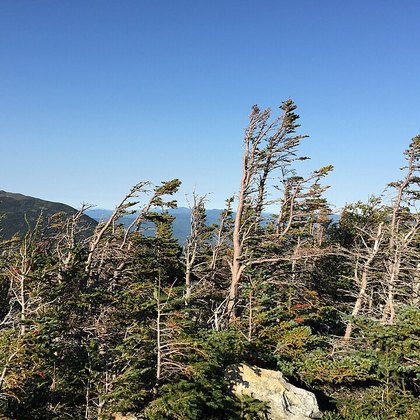
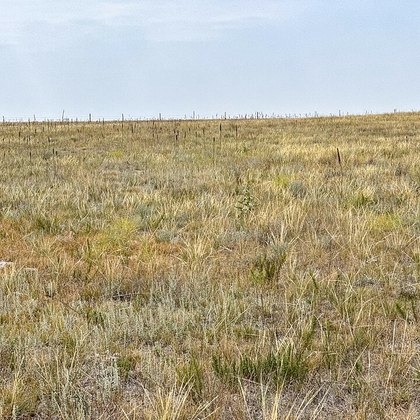
Breeds in wet sedge meadows, boggy tundra and open ground with scattered dwarf birch and willow at the treeline, and on alpine slopes in the mountains of Alaska and Yukon. Outside the breeding season it is a bird of bare, short ground: heavily grazed pasture, stubble fields, prairie remnants and the grass strips along runways, where it feeds on the ground in tight flocks and flushes only at short range.
Where the bird is most often found, arranged by the USNVC — the vegetation classification of the United States and Canada — and CMECS for sea and coast.




Range and movements
The breeding range runs from northern and central Alaska through Yukon and the Northwest Territories to northern Manitoba and the Hudson Bay lowlands of northern Ontario. Migration follows a loop: further east in spring, through Illinois and the Midwest, and further west in autumn over the Great Plains. It winters in a limited block from southern Kansas, Oklahoma, northern Texas, Arkansas, southwestern Missouri and northwestern Louisiana; outside that block it is rare in winter.
- Breeding (summer)
- Winter
- Passage
- dark = core range, pale = thinly spread
Where and when to look
In winter a short grazed field or the grassland along a small airfield in Oklahoma or northeastern Texas is the best place: walk slowly through the grass until a flock lifts and listen for the ticking rattle. In spring, late March and April, males in Illinois and Missouri are already in orange-buff plumage. Keep your eyes low — the species rarely sits on a post or wire.
Conservation
The world population is put at about 75,000 breeding birds and the species is treated as Least Concern (LC), but almost no regular survey covers the breeding range, so the trend is poorly known. The advance of shrubs and trees across the tundra under a warming climate reduces the open ground on which it depends. In the small wintering range it depends on short grassland and grazed pasture; the conversion of those fields to cropland or development is the main change there.
Scientific name
Calcarius pictus | (Swainson, 1832)
Swainson described the species in 1832 as Emberiza (Plectrophanes) picta, from a bird taken at Carlton House in Saskatchewan; the later move to Calcarius puts author and year in parentheses. Calcarius goes back to Latin calcar 'spur', after the lengthened hind claw. The species name pictus is Latin for 'painted', after the crisp black-and-white head pattern. The English name goes back to Audubon, who renamed the bird in 1844 for his acquaintance Gideon B. Smith of Baltimore after an earlier identification proved wrong.