All species › Waterfowl › Ducks, geese and swans › Steller's Eider
Steller's Eider | Polysticta stelleri
Stellers eider | Eider chico | Scheckente | אדרית שטלר | Eider de Steller
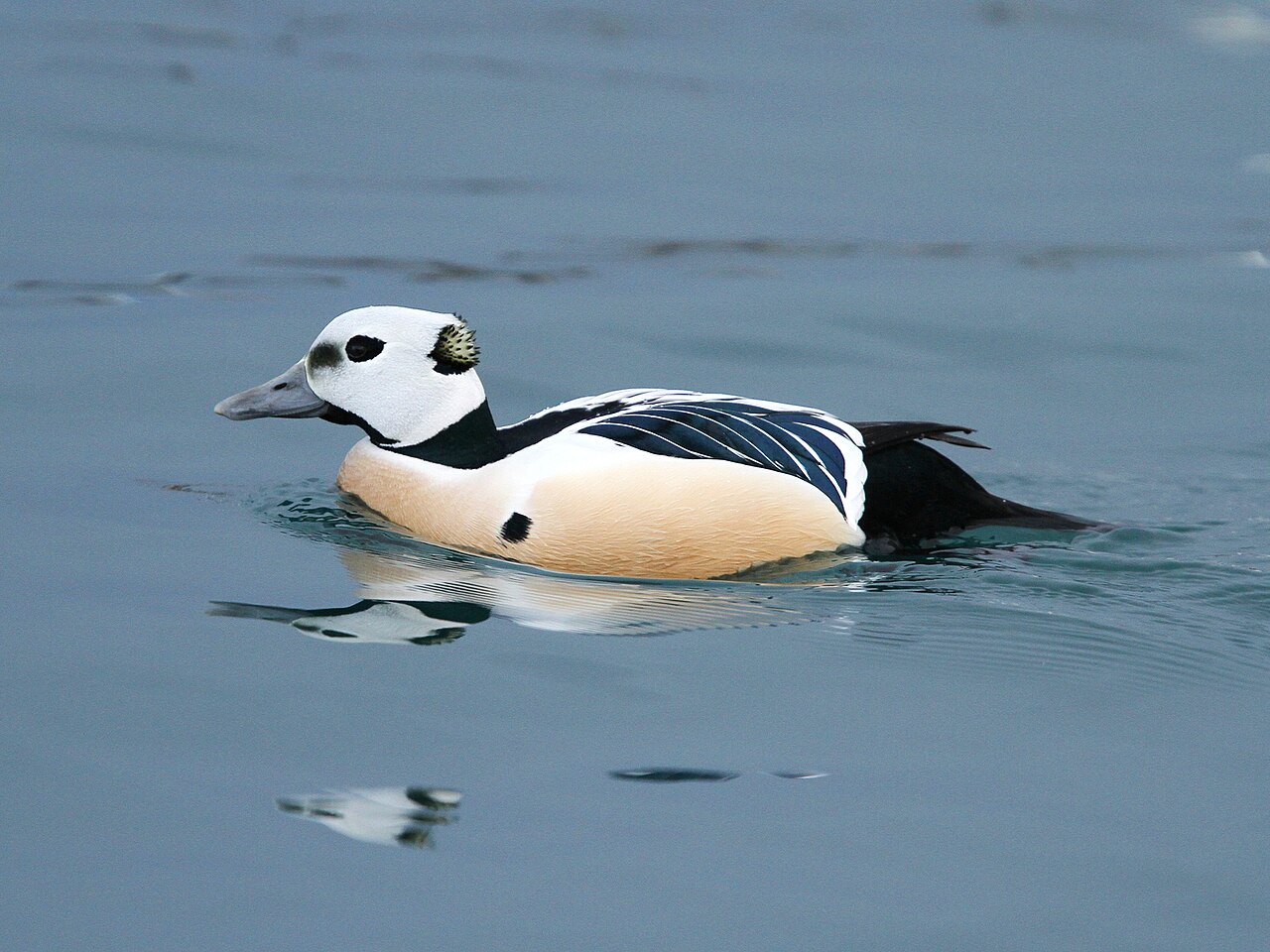
The smallest and fastest of the eiders. In the harbours of Varanger hundreds feed right below the quay in winter, so a species that looks unreachable on paper can be watched at ten metres.
Click a thumbnail to switch the photo above.
Voice
Largely silent in winter. Drakes give low growls and short barking notes; females are the more vocal, with a hoarse barking kroo and low throaty sounds within the flock. On a still day in a Varanger harbour that muttering carries, but elsewhere the bird is found by eye alone.
Recording: Andrew Spencer — CC BY-NC-SA 4.0 · Wikimedia Commons
Identification
The drake has a white head with a black throat, a black eye patch and a green-yellow patch on the rear crown, a black stripe down the nape, warm buff underparts with a sharp black spot on the flank and blue-black, white-fringed scapulars. The female is deep rufous-brown with dark feather centres, a pale eye-ring and a blue-purple speculum bordered white above and below. The bill is small and grey, notably short for an eider. Eclipse drakes resemble females but are blacker, with a grey-brown head and finely barred breast; the white forewing panel still shows in flight.
Confusion species
The difficulty lies with females and eclipse drakes, which at range read as a dark brown duck among Eiders. Go on size and shape: far smaller than Eider, with a short, high forehead, a small grey bill and a pointed, cocked rear end more reminiscent of a Teal than of a sea duck. The blue-purple speculum with its two white borders is often visible on a swimming bird, and in flight the wing is narrow and the beat noticeably fast. Common Scoter and young Eider lack the speculum and have a far heavier bill profile.
Habitat
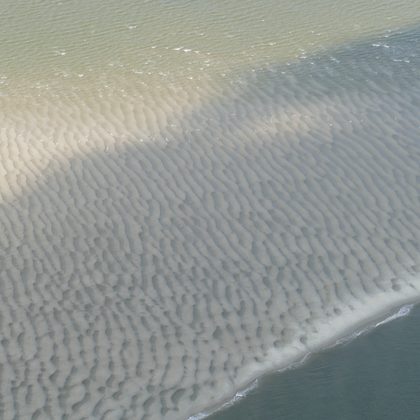
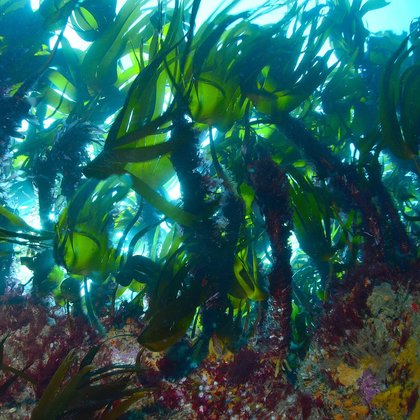
Winters at sea close inshore: shallow sandy bottoms, kelp over rock and the tidal zone of harbours and bays, where flocks dive for small molluscs, crustaceans and snails. Breeds on wet coastal tundra in Siberia and Alaska, beside shallow pools.
Where the bird is most at home, classified with EUNIS — the European standard for habitats.

Range and movements
Breeds on the arctic coasts of Siberia and Alaska. Atlantic birds winter in the Barents and Baltic Seas, with Varanger in arctic Scandinavia the dependable place, with flocks at Vadsø, Vardø, Kiberg and Båtsfjord, and further along the eastern Baltic coast. In the British Isles, Orkney, Shetland and the Outer Hebrides hold most of the long-staying drakes; several have summered for years in the same bay. Further south it remains a great rarity.
- Resident
- Breeding (summer)
- Winter
- Passage
- dark = core range, pale = thinly spread
How and when to look
In February or March walk the harbour front at Vadsø or the quay at Båtsfjord and simply look down; the flocks feed between the boats and let you come close. Elsewhere it is a lottery: follow the news and then scan Eider flocks around Orkney and Shetland for size, looking for the small, sharp-tailed duck that dives faster and more often than the rest.
Conservation status
Listed as Vulnerable. The European wintering population has fallen sharply since the 1990s and Alaskan breeding numbers have collapsed. The pressures are oil pollution and shipping accidents in the confined wintering areas, drowning in set nets, lead poisoning from ingested shot, nest predation by foxes and skuas, and change on the breeding tundra.
Scientific name
Polysticta stelleri | (Pallas, 1769)
Pallas described the species in 1769 as Anas stelleri; because it was later moved to another genus, the author and year stand in brackets. The genus Polysticta was introduced in 1836 by Eyton. Polysticta is Greek, from polustiktos 'much spotted', from polus 'many' and stiktos 'spotted'. stelleri honours the German naturalist and explorer Georg Wilhelm Steller (1709–1746); the specimen described came from Kamchatka. The specimen the first description was based on came from Kamchatka.