All species › Waterfowl › Ducks, geese and swans › Long-tailed duck
Long-tailed duck | Clangula hyemalis
IJseend | Havelda
A small, round sea duck that changes plumage all year and is the most confusing duck of the winter coast. Males carry two long tail pins and call incessantly, even far out at sea.

Click a thumbnail to switch the photo above.
Voice
A far-carrying, yodelling, nasal ow-ow-owdelee or a-ahoolie, delivered in chorus by groups of males. Heard mainly on calm days from January to April, at night as well, and the sound carries for kilometres across open water.
No freely licensed recording is available for this species yet.
Identification
Small, rounded and short-billed, with a steep forehead and a compact body that rides high. Winter males are largely white with a dark breast, grey face and a big dark brown cheek patch, long black tail pins and a pink band across the bill. Females and first-winters are brown and white with a dark crown and cheek smudge, and no tail pins.
Confusion species
In winter plumage it is unmistakable, but at long range juvenile Smew and female Goldeneye can cause doubt. Long-tailed duck has wholly dark, unmarked wings with no white panel, which settles it instantly in flight; it also flies low and rolling, flashing black and white as it tilts over the waves.
Habitat
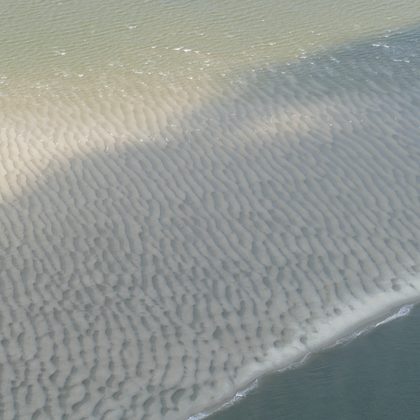
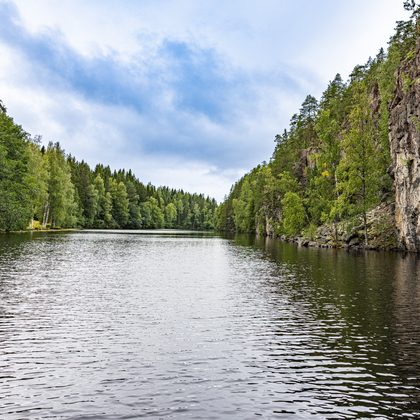
Winters on open sea and large brackish waters over sandy bottoms: the Baltic, the North Sea coast, tidal inlets and the IJsselmeer. Dives deep, sometimes to several tens of metres, for molluscs and crustaceans. Breeds beside tundra pools, arctic coastal lagoons and mountain lakes in Iceland, Fennoscandia and Siberia.
Where the bird is most at home, classified with EUNIS — the European standard for habitats.

Range and movements
A circumpolar high-arctic breeder. The wintering population of the map area is centred on the Baltic; along the North Sea coast and in the Low Countries it is a matter of tens of birds each winter, on shallow sea arms, in the Wadden Sea and on large inland lakes. Further south, on the Cantabrian coast, it is an exceptional vagrant.
- Resident
- Breeding (summer)
- Winter
- Passage
- dark = core range, pale = thinly spread
How and when to look
Try a dam, pier or sea wall on the North Sea or the Baltic in January and February, choosing a day of strong north-westerly wind or the calm day that follows. Scan from a high point; birds dive often and vanish for minutes, so keep working the same trough of water patiently.
Conservation status
The species has declined steeply, above all in the Baltic, its most important wintering area worldwide. Bycatch in gill nets, oil pollution, loss of benthic food and disturbance from shipping and wind farms are the main causes, with climate change affecting the breeding grounds. Dutch numbers have fallen in parallel.
Scientific name
Clangula hyemalis | (Linnaeus, 1758)
Linnaeus described the species in 1758 as Anas hyemalis; because it was later moved to another genus, the author and year stand in brackets. The genus Clangula was introduced in 1819 by Leach. Clangula is a Latin diminutive of clangere 'to resound', after the far-carrying call. hyemalis is Latin for 'of the winter'. The specimen the first description was based on came from northern Sweden.