All species › Cranes, rails and allies › Cranes
Cranes | Gruidae
Kraanvogels | Grullas
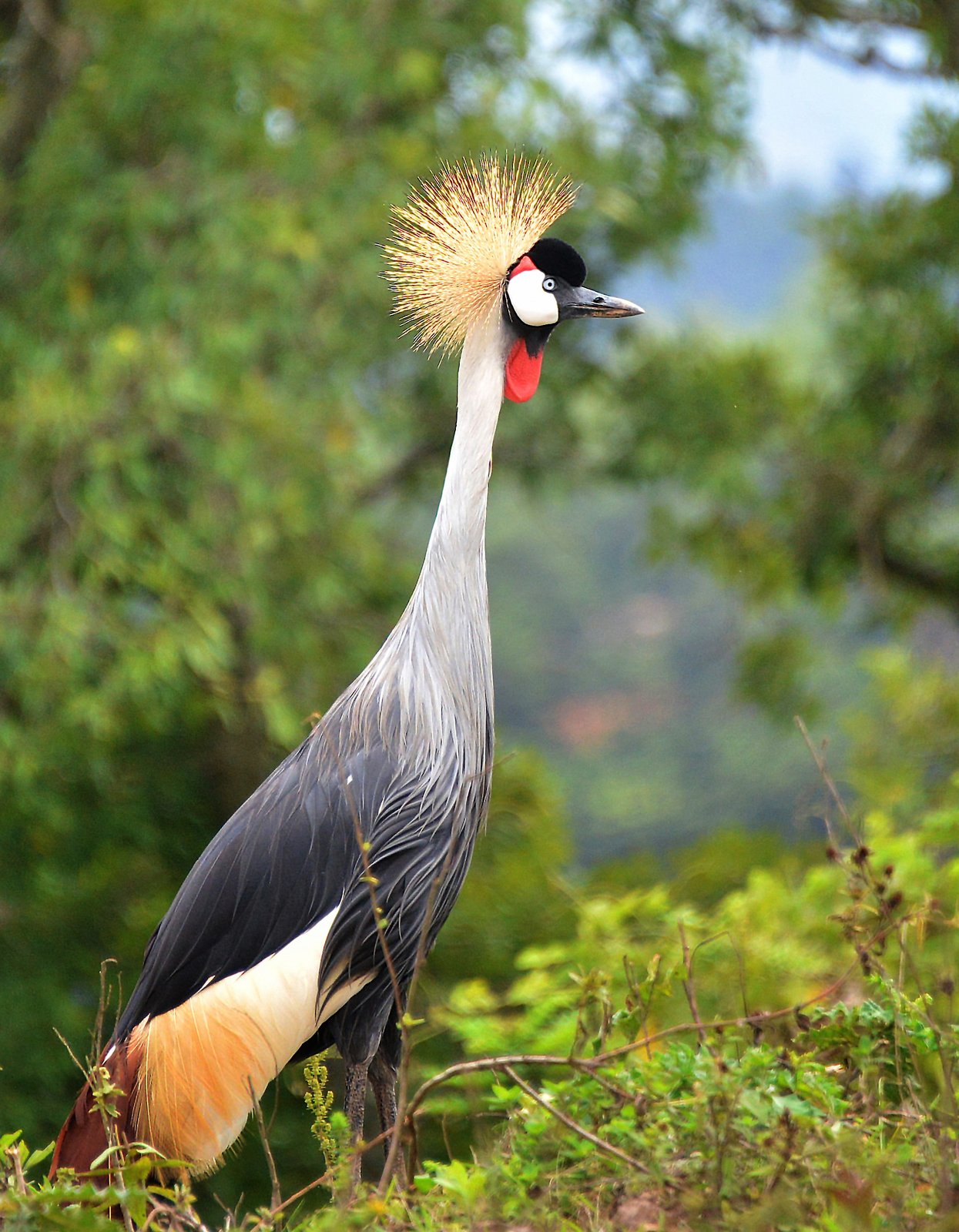
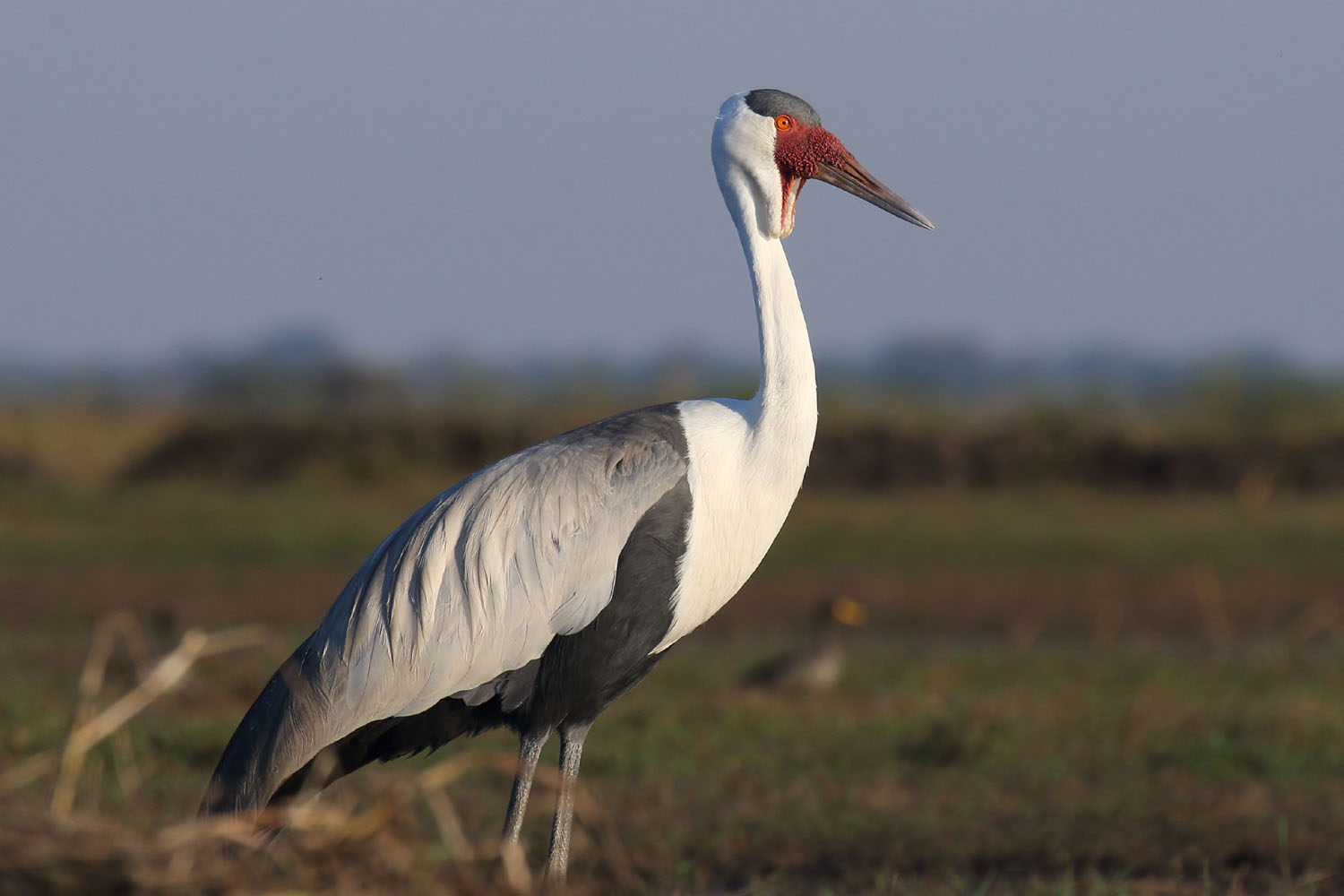
Large birds with a long neck and long legs which, unlike herons, fly with the neck stretched out; the lengthened inner secondaries droop over the tail as a bustle, drawn out in some species into trailing, hair-fine plumes. In the species of the genus Grus the windpipe is elongated and coiled into the breastbone, which accounts for the far-carrying trumpeting note that a pair often delivers in duet; the crowned cranes lack that loop and instead give a blowing, honking call amplified by a red throat sac. The bill is straight and of moderate length: they feed while walking over grassland, vlei, arable land and flooded plain, digging up tubers and roots and taking seed, insects and small vertebrates as well. In most species the hind toe is small and set high, so they cannot perch in trees; only the crowned cranes have a long, low-set hind toe and roost in treetops. One to three eggs are laid on a heap of plant material in or beside shallow water, and the chick stays with its parents for the first months.
Native species 3 species
Species that occur here by nature: breeding birds, winter visitors and passage migrants. They are arranged by genus, in the sequence of the list.
Balearica 1 species