All species › Passerines › Finches › Canary Islands chaffinch
Canary Islands chaffinch | Fringilla canariensis
Canarische vink | Pinzón de Canarias
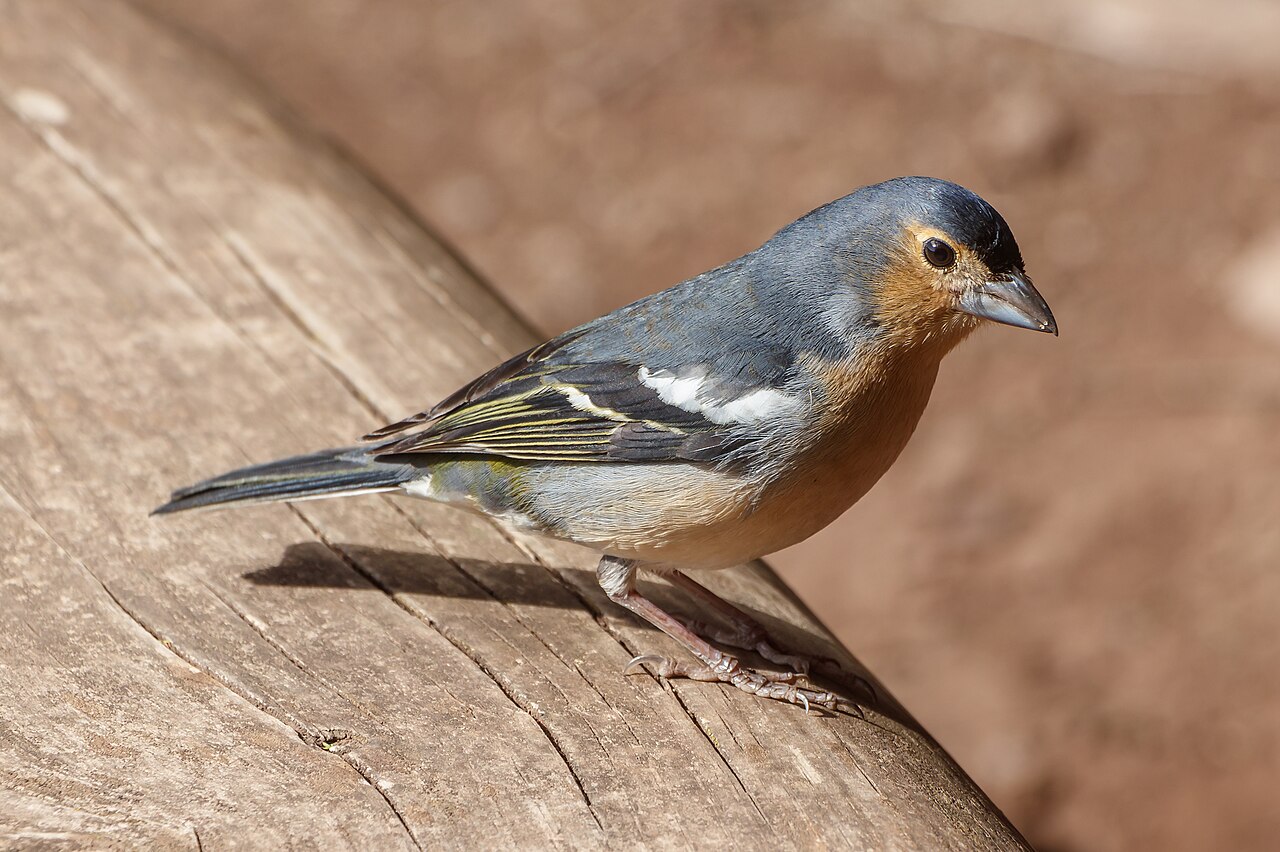
On the Canary Islands it is called the tintillón, and it is the commonest bird of the pine forest, the laurel forest and the hotel car park alike. It has been treated as a separate species since 2021, on the strength of genetic work, measurements and song. It is also the island chaffinch that looks least like a common chaffinch: here the blue-grey runs on across head and back together, so that the whole upperside is close to one colour.
Voice
The song is a short, hard, rattling phrase of about a second that accelerates and stops abruptly — the chaffinch phrase, but without the flourish at the end, and slightly different in tone from island to island. It runs from January into June, almost always from an open branch in the canopy. The call is a loud hard chink, a shade sharper than common chaffinch's, plus a soft yup in flight. In pine forest, which is otherwise silent, the call carries a long way.
No freely licensed recording is available for this species yet.
Identification
A chaffinch with no rust-brown on it. The upperside of the male is a deep, cool blue-grey, from forehead over crown and nape and on across mantle and rump; only the scapulars and the wing fringes carry an olive or yellow-green wash. Face and breast are a warm orange-pink, far paler and softer than the brick-pink of common chaffinch, and belly and undertail are white. The wing is black with a white shoulder patch and a second, strikingly narrow white bar, plus yellow-green fringes to the flight and secondary feathers; outer tail feathers white. The female is dull brown with a grey cast over head and back and the same wing pattern. The shade varies by island: darker and greyer on La Palma and El Hierro, paler on Gran Canaria.
Confusion species
Against common chaffinch two things decide it: the upperside here is blue-grey throughout instead of a rust-brown back below a blue head, and the white wingbar is distinctly narrower, so the closed wing looks darker. The pink on the breast is much less pronounced too. Common chaffinch is only a rare winter visitor to the islands, so the problem is small. More to the point are blue chaffinch on Tenerife and Gran Canaria blue chaffinch on Gran Canaria: both are considerably larger and bulkier, with a far heavier bill, no pink or orange anywhere, and blue-grey or off-white underparts as well. If the bird is in pine forest above a thousand metres and the breast has no colour in it, look twice. Atlantic canary, which shares the same gardens, is green-grey and streaked and has no white wingbars at all.
Habitat
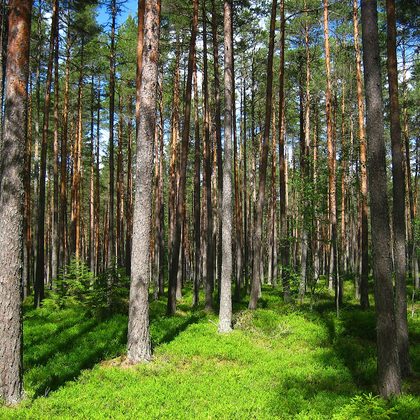
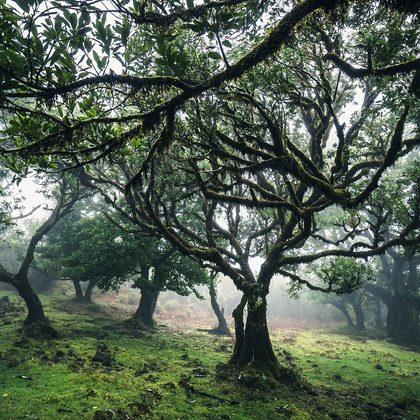
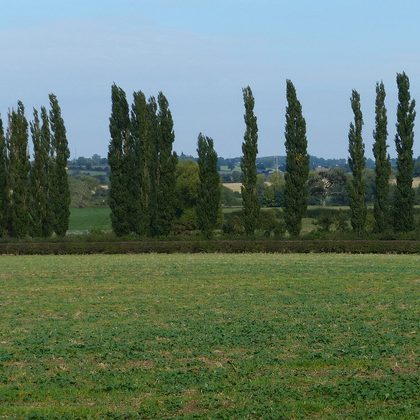
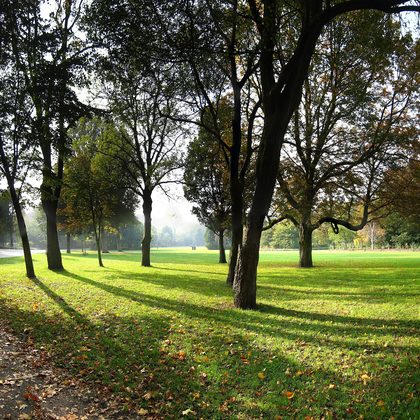
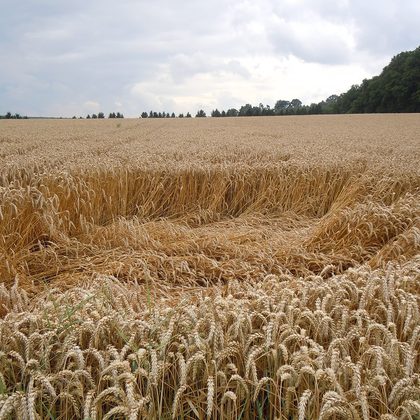
Canary pine forest is its core, but it is in almost anything with trees: laurel forest and tree-heath woodland in the north, chestnut groves, plantations, barrancos with willow and tamarisk, village and hotel gardens, parks, orchards and banana plots. It ranges from the coast up into the broom scrub above two thousand metres. It feeds mostly on the ground, on paths, car parks and among pine needles.
Where the bird is most at home, classified with EUNIS — the European standard for habitats.
Range and movements
The five western Canary Islands: El Hierro, La Palma, La Gomera, Tenerife and Gran Canaria, each with its own form. It is absent from Lanzarote and Fuerteventura, which are too dry to carry the woodland it needs. It does not migrate and barely crosses between islands. It occurs nowhere outside the archipelago.
- Resident
Where and when to look
Any picnic site in the Corona Forestal on Tenerife or in Garajonay on La Gomera will produce one inside five minutes, usually walking about on the tarmac. Then watch the back: if the blue-grey of the crown simply carries on to the rump, this is your bird. And in high pine forest on Tenerife, if a chaffinch looks too big and too colourless, do not walk past it — that may be blue chaffinch.
Conservation status
The category above is that of the common chaffinch. BirdLife, which assesses birds for the Red List, still keeps this finch within that species and so does not assess it separately; the guide therefore shows the category of the wider species rather than “not evaluated”, because assessed it has been — only under a broader species concept. In practice it is common to very common on all five islands and stable. It benefits from the replanting of Canary pine and does perfectly well in gardens and plantations. The main worry is how readily the great pine forests burn; for a few years after a fire they carry far fewer birds.
Scientific name
Fringilla canariensis Vieillot, 1817
Vieillot described the species in 1817 and placed it straight away in the genus where it still stands. The genus Fringilla was introduced in 1758 by Linnaeus. Fringilla is the Latin word for 'finch'. canariensis is Latin for 'of the Canary Islands', where the bird lives. The specimen the first description was based on came from Tenerife.