All species › Passerines › Finches › Eurasian linnet
Eurasian linnet | Linaria cannabina
Kneu | Pardillo común
The Linnet is the finch of heath, dune and rough ground: a slim brown bird with white flashes in wing and tail, the male taking a crimson breast and forehead in spring. It nests in loose colonies in low scrub and feeds on the seeds of weeds all year round.

Voice
The song is a cheerful, fast, musical babble of twittering and fluting notes, usually delivered in chorus from a bush top or a wire, from March into August. The call is a light, nasal, quickly repeated chek-ek-ek by which flying parties are known, plus a plaintive descending tsooeet.
No freely licensed recording is available for this species yet.
Identification
A slim finch with a short grey bill and a long forked tail. The breeding male has a grey head, a chestnut mantle and a crimson breast and forehead; outside the breeding season most of that red is gone. The female is brown and streaked, with no red. Both sexes show white panels along the primaries and white edges to the tail in flight. The throat is whitish and finely streaked.
Confusion species
Twite is the species that matters, and bill and throat settle it. The Linnet has a grey bill and a whitish, streaked throat; the Twite in winter has a bright yellow bill and a plain, warm buff throat with no streaking. The male Linnet also has a grey head with a red forehead, where the Twite keeps a uniformly streaked brown head and the male shows a pink rump.
Habitat
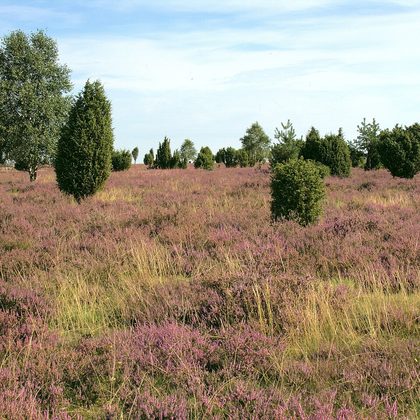
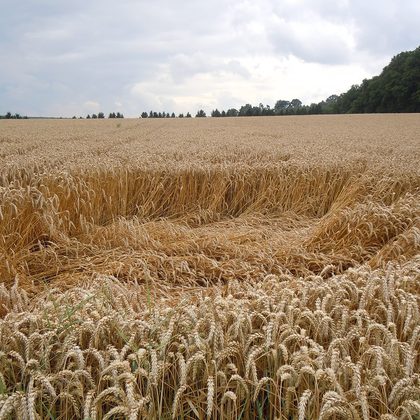
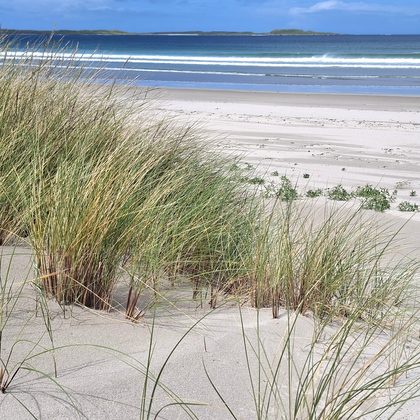
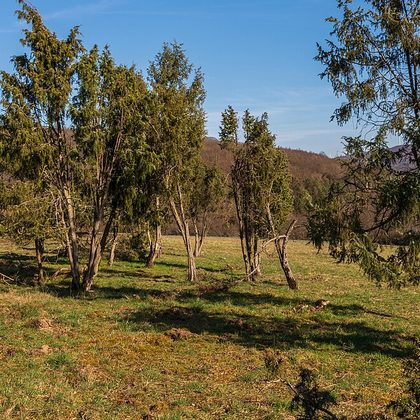
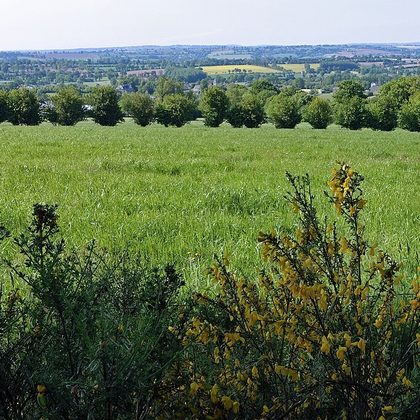
Heath, dune scrub, rough field margins, set-aside, young plantations, nurseries and banks with gorse and broom. It nests low in dense bushes, often several pairs together, and feeds on the ground on the seeds of crucifers and composites.
Where the bird is most at home, classified with EUNIS — the European standard for habitats.
Range and movements
Almost all of Europe from southern Scandinavia to the Mediterranean, and on into North Africa and Turkey. British and Low Country birds largely move to France and Iberia in winter; those that stay form flocks on saltmarsh and stubble.
- Resident
- Breeding (summer)
- Winter
- Passage
- dark = core range, pale = thinly spread
Where and when to look
Walk a heath or a dune slack in May and watch the song posts: Linnets like to sing several males at once from the top of a bush or from a wire fence. In August and September look for parties on weedy field margins, where they feed on the ground and dive into a bush as one when disturbed.
Conservation status
Not globally threatened (IUCN: Least Concern), but heavily reduced in north-west Europe. The cause is the loss of seed-bearing weeds: winter stubbles replaced by autumn-sown cereals, margins kept clean and set-aside abandoned. In southern Europe illegal trapping for the cagebird trade adds further pressure.
Scientific name
Linaria cannabina (Linnaeus, 1758)
Linnaeus described the species in 1758 as Fringilla cannabina; because it was later moved to another genus, the author and year stand in brackets. The genus Linaria was introduced in 1802 by Bechstein. Linaria is the Latin word for a linen-weaver, from linum 'flax'. cannabina is Latin for 'of hemp', after the seeds the bird feeds on. The specimen the first description was based on came from Sweden.