All species › Passerines › Finches › Twite
Twite | Linaria flavirostris
Frater | Pardillo piquigualdo
The Twite is the Linnet of bare country: a brown, streaked finch that breeds on treeless moor and spends the winter on the coast, on saltmarsh and along the tideline. It is one of the few European finches that lives all year in open ground without trees.

Voice
The call is the bird's own name: a hard, nasal, strikingly high tsweeet, shriller and more grating than anything a Linnet says, alongside a fast chek-ek-ek that does sound Linnet-like. The song is a quick rattling babble full of nasal notes, given from a boulder or a fence post on the breeding ground.
No freely licensed recording is available for this species yet.
Identification
A slim finch with a long forked tail, warm ochre-buff and finely streaked all over, with white edges to the primaries and the tail. The throat is plain orange-buff and unstreaked — the best character it has. The bill is bright waxy yellow in winter, grey-brown in summer. The male has a pink rump; the female does not.
Confusion species
Linnet is the mistake, and bill and throat settle it. In winter the Twite's bill is yellow and the Linnet's grey. The Twite's throat is a plain warm orange-buff, the Linnet's whitish with fine streaks. The Twite also lacks the grey head and red forehead of the male Linnet and, as a male, shows a pink rump. Both species carry white in wing and tail, so that is no help at all.
Habitat
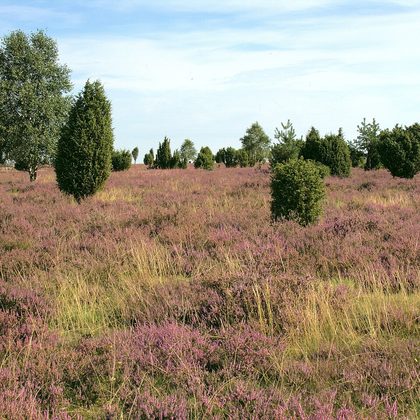
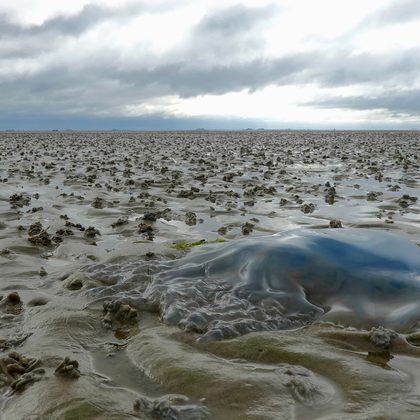
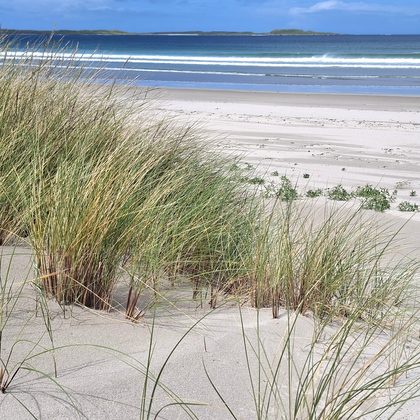
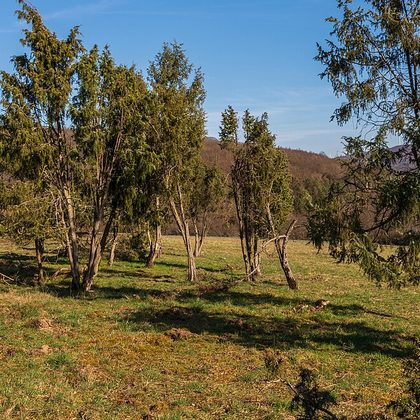
Breeds on treeless moor, blanket bog and steep coastal slopes of bracken and heather, in Scotland often just above the surf. It winters almost entirely on the coast: saltmarsh, glasswort flats, the strandline and salt-tolerant field margins, feeding on the seeds of glasswort, seablite and orache.
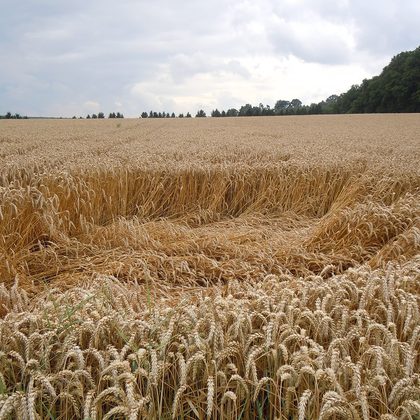
Where the bird is most at home, classified with EUNIS — the European standard for habitats.
Range and movements
Within the map area it breeds along the whole western seaboard of Norway, in Scotland and the Hebrides, in Ireland and very locally in the Pennines, and further east in Turkey and the Caucasus, in a separate high-mountain form. In winter it moves to the coasts of the North Sea and the Baltic, with the East Anglian saltmarshes among the traditional strongholds.
- Resident
- Breeding (summer)
- Winter
- Passage
- Migration direction
- dark = core range, pale = thinly spread
Where and when to look
From November to March find a saltmarsh on a rising tide: Twites feed low among the glasswort and are pushed ahead of the water until they sit in a tight party on the tideline. Check every bird for the bill — yellow means Twite — and for the throat, which on a Twite is plain orange-buff.
Conservation status
Not globally threatened (IUCN: Least Concern), but the western European population is small and much reduced. In Britain and Ireland the species has gone from large parts of its former range, as grazing and moorland burning strip out the seed-bearing herbs the young need, and as unimproved hay meadows near the nesting grounds have disappeared.
Scientific name
Linaria flavirostris (Linnaeus, 1758)
Linnaeus described the species in 1758 as Fringilla flavirostris; because it was later moved to another genus, the author and year stand in brackets. The genus Linaria was introduced in 1802 by Bechstein. Linaria is the Latin word for a linen-weaver, from linum 'flax'. flavirostris is Latin, from flavus 'yellow' and rostrum 'bill', after the yellow bill of the winter plumage. The specimen the first description was based on came from Sweden.