All species › Passerines › Finches › Eurasian siskin
Eurasian siskin | Spinus spinus
Sijs | Lúgano
The Siskin is the small yellow-green finch of alders, an acrobat that hangs upside down from the cones and moves through the country in restless parties. Its numbers swing widely with the spruce and alder seed crop.

Voice
The flight call is the sound you hear most: a clear, plaintive, slightly rising tsooeet or a falling tsyu, audible from a passing party a long way off. The song is a long, fast, sustained babble of clear and wheezy notes closed by a drawn-out nasal dzzhreee, given from March to June and often in a slow, bat-like song flight.
No freely licensed recording is available for this species yet.
Identification
Small, short-tailed and finely built, with a thin, sharply pointed horn-coloured bill. The male is yellow-green with a black crown and a black bib, a yellow breast and a yellow bar running across the black wing. The female is greyer green, without the black cap, and more heavily streaked on flanks and mantle. Both have a deeply forked tail with yellow sides.
Confusion species
Greenfinch is the usual mistake, but it is much bigger — 14.5 to 16 against 11 to 12.5 centimetres — and shows only a yellow edge along the closed wing, never a bar across it. Juvenile Goldfinches are also grey-brown and streaked, but their wing band is broad, unbroken and golden and they have white tail spots. The Greenfinch also carries a heavy pink bill where the Siskin has a fine spike.
Habitat
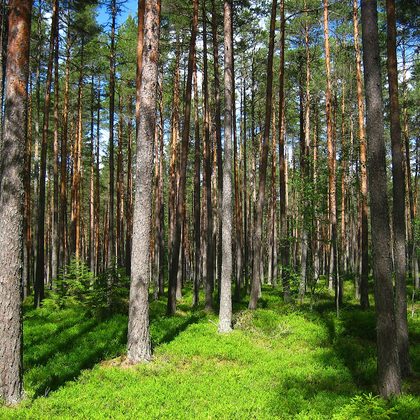
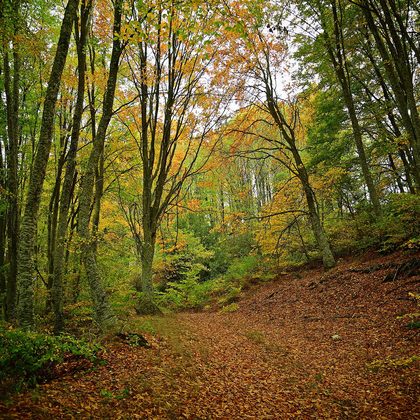
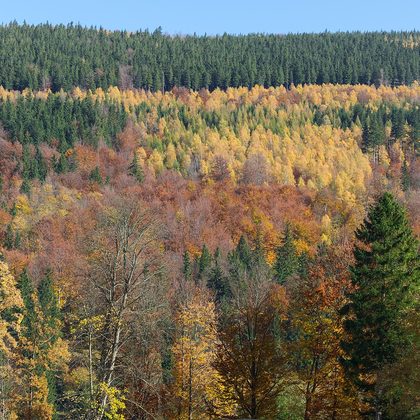
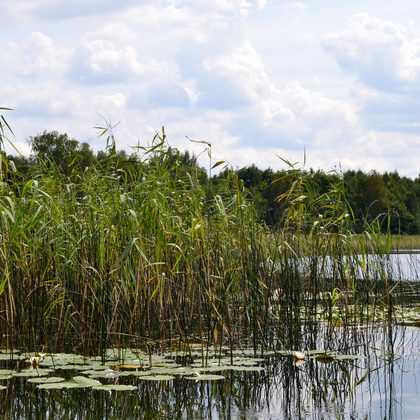
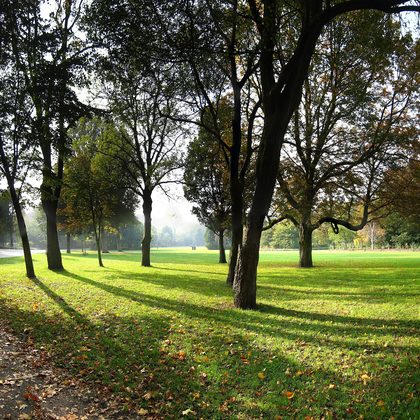
Breeds in mature conifer forest, above all spruce, and also in larch and mixed woodland. Outside the breeding season it works alders and birches along streams, canals and pools, and visits parks and gardens for nyjer seed.
Where the bird is most at home, classified with EUNIS — the European standard for habitats.
Range and movements
A breeding bird of the conifer forests of northern and central Europe and of the southern mountains. In Britain and the Low Countries it is a local breeder but a common winter bird from October to April, in numbers that vary hugely: in a good spruce year the birds stay north, in a poor one they flood into the lowlands.
- Resident
- Breeding (summer)
- Winter
- Passage
- Migration direction
- dark = core range, pale = thinly spread
Where and when to look
Between November and March find a line of alders along a stream or canal and look up into the cones: Siskins hang upside down and send scales fluttering down, which on still water sounds like falling snow. They are strikingly unafraid, so simply stand and let them work overhead.
Conservation status
Not globally threatened (IUCN: Least Concern), with a large and broadly stable population. Numbers swing from year to year with the seed crop, which makes trends hard to read. If you feed them nyjer seed, the warning that applies to Greenfinch applies here too: keep the feeding place clean.
Scientific name
Spinus spinus (Linnaeus, 1758)
Linnaeus described the species in 1758 as Fringilla spinus; because it was later moved to another genus, the author and year stand in brackets. The genus Spinus was introduced in 1816 by Koch. Spinus goes back to Greek spinos, the classical writers' name for a small finch, probably the siskin. The specific name repeats the genus name. The specimen the first description was based on came from Sweden.