All species › Passerines › Longspurs and snow buntings › Snow bunting
Snow bunting | Plectrophenax nivalis
Sneeuwgors | Escribano nival
On a winter beach a small party suddenly lifts, flashing broad white panels at every wingbeat, and at any distance the flock looks more like blown snow than like birds. The snow bunting breeds further north than any other songbird, on boulder fields and screes from Iceland to the Russian tundra, and drops down to our coasts in October.

Voice
The flight call does most of the work: a rippling, rolling tirri-rirri-rit that carries far across an empty beach, alternating with a clear, slightly wistful tyuu. In a flock lifting off the two run together and betray the birds before you see them. The song is a short, loud, cheerful phrase delivered from a boulder or in a brief song flight; it belongs to the breeding grounds and is almost never heard here.
No freely licensed recording is available for this species yet.
Identification
Bulky and short-necked for a bunting, with long pointed wings. Every plumage is built on one plan: a large white panel in the wing, white outer tail feathers and a white belly. The summer male is pure white with a black mantle, black wingtips and a black bill, but that is a bird you will seldom meet here. In winter the crown, ear coverts and flanks are washed warm buff, the mantle is streaked black-brown, and the bill is orange-yellow with a dark tip. Females and first-winter birds carry distinctly less white in the wing, sometimes no more than a narrow stripe, and a duller head. The hind toe bears a long, almost straight claw.
Confusion species
Lapland bunting is the only real confusion on stubble and saltmarsh, and the difference lies in the wing: snow bunting shows one large unbroken white field, Lapland bunting two narrow white bars framing a chestnut covert panel. Snow bunting is also whiter below and rises with a light, bounding flight, while Lapland bunting shoots away low and straight. Shore larks often feed in the same flocks, but they have a yellow-and-black face pattern and no white in the wing. A pale or partly white house sparrow can raise a false alarm at range; check the bill colour and where the white sits, which on a snow bunting is always in the same place.
Habitat
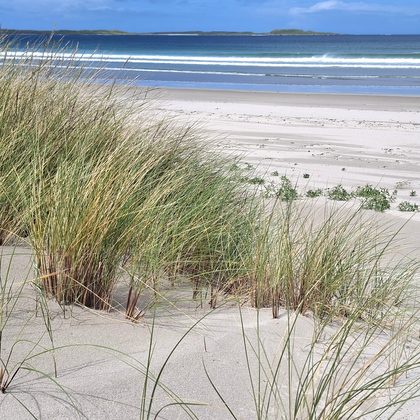
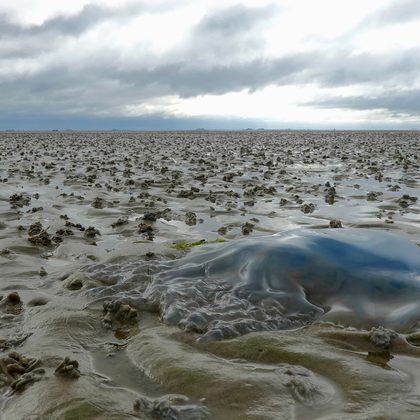
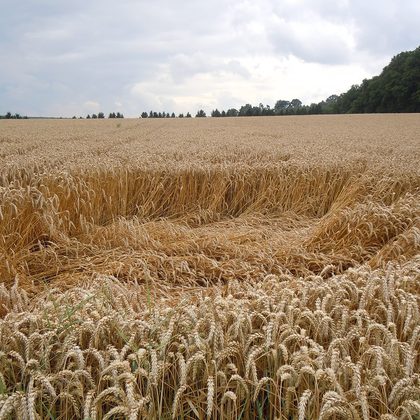
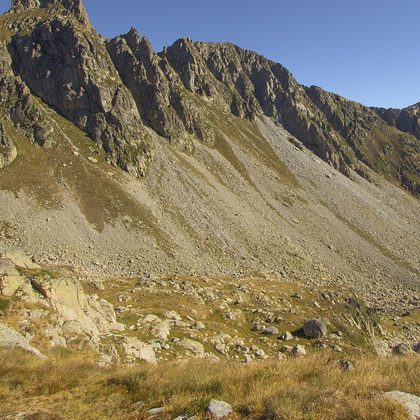
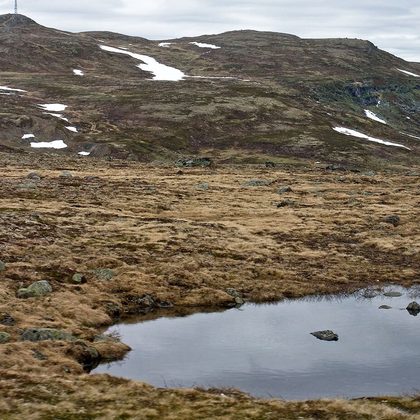
In winter, bare open ground close to the sea: the tideline and the front of the dunes, sand flats and the edge of the mud, sea walls and harbour moles, saltmarsh and stubble behind the bank. It is always low, open ground with the seed of sea rocket, saltwort and arable weeds, and as little cover as possible. On the breeding grounds it is boulder fields, screes, rocky summits and cliffs, the nest set deep in a crevice between stones, the young raised on insects and spiders.
Where the bird is most at home, classified with EUNIS — the European standard for habitats.
Range and movements
Breeds right around the Arctic. Within the map area that means Iceland, the mountains of Norway, Sweden and Finland, the Russian tundra, and a small number of pairs in the Scottish Cairngorms, where it is Britain's scarcest regular breeding songbird. It winters along the North Sea and Baltic coasts and eastwards across the steppes. In Britain and the Netherlands it is a regular but never numerous winter visitor to beaches, sea walls and coastal stubbles from October to March. In Spain it is a rarity, mostly on the Cantabrian coast and in the high Pyrenees.
- Resident
- Breeding (summer)
- Winter
- Passage
- Migration direction
- dark = core range, pale = thinly spread
Where and when to look
November to January, ideally on a rising tide with a stiff wind: walk a sea wall or a groyne and watch the tideline, where the birds pick through the strandline litter and flush only at a few metres. They are remarkably unconcerned and usually settle again a little further on, so a flock can be worked through at leisure. In every flock look for a bird with two narrow wingbars instead of a white panel: that is a Lapland bunting.
Conservation status
Not globally threatened (IUCN: Least Concern) and still numerous across the Arctic. It is the southern edge of the range that gives concern: the Scottish population is small and vulnerable, and there as in Fennoscandia the warming of the breeding grounds is the factor most often named. Numbers wintering along the North Sea coast have fallen noticeably over recent decades.
Scientific name
Plectrophenax nivalis (Linnaeus, 1758)
Linnaeus described the species in 1758 as Emberiza nivalis; because it was later moved to another genus, the author and year stand in brackets. The genus Plectrophenax was introduced in 1882 by Stejneger. Plectrophenax is Greek, from plēktron 'spur', after the long hind claw, and phenax 'impostor'. nivalis is Latin for 'of the snow', from nix, nivis 'snow', after the white plumage and the breeding range. The specimen the first description was based on came from Lapland.