All species › Passerines › Wagtails and pipits › Eastern yellow wagtail
Eastern yellow wagtail | Motacilla tschutschensis
Oostelijke gele kwikstaart | Lavandera boyera oriental
Eastern yellow wagtail is the Siberian counterpart of our yellow wagtail, and has been treated as a separate species since 2003, after genetic work showed that the eastern forms do not belong with the western ones. For the observer that means a pale, cold-toned wagtail standing on a muddy field edge in November, staying for weeks, and being named in the end from a sound recording. It is a late-autumn rarity, and the number of records is rising.

Voice
The call is what everything turns on: a loud, rasping, buzzy and slightly strangled dzreep or tsreep, flatter and harsher than the full note of a yellow wagtail and close to that of a citrine. If a wagtail on an autumn field edge gives a call that grates rather than rings, get a recording of it. The song, not heard in Europe, is a short series of thin, scraping phrases much like a yellow wagtail's.
No freely licensed recording is available for this species yet.
Identification
Almost exactly the size of a yellow wagtail, 15 to 16 cm, with black legs and the same short tail. Practically every bird that reaches Europe is a first-winter, and that plumage is the subject. The upperparts are cold grey-brown, without the olive-green that a young yellow wagtail always shows somewhere; the whole bird looks sandy and washed out. The underparts are white to off-white, at most with a yellowish hint on the under tail coverts and a warm wash on the flanks, and the throat is clean white. The wing carries two pale bars formed by broad whitish tips to the coverts, and the tertials have broad pale fringes. The head pattern is plain: a pale supercilium, a darker ear patch and often a fine dark necklace. The hind claw is long and only slightly curved, longer than on yellow wagtail, and a sharp photograph of a walking bird will show it. Summer adults, which hardly ever occur here, have a grey crown, a white supercilium and a white throat above yellow underparts.
Confusion species
Yellow wagtail is the only real alternative, and the difference is a matter of tone and of sound. Tone: eastern is cold grey-brown and sandy, with no olive on mantle or rump, and white below; young yellow wagtails keep a greenish or olive-brown cast and are buff to yellow-buff underneath. Throat: clean white against a usual pale buff. Hind claw: long and straight against shorter and more curved. The call decides: a loud, rasping, buzzy dzreep, where yellow wagtail gives a full, musical and much cleaner tswee-eep. Because plumage alone is rarely enough, European records are almost always assessed on sound recordings, and increasingly on DNA from droppings or a shed feather. Citrine wagtail sounds nearly the same and is also grey and white, but shows much broader white wing bars, a pale surround running right round the ear coverts and a paler forehead. Grey wagtail is far longer-tailed with pink legs.
Habitat
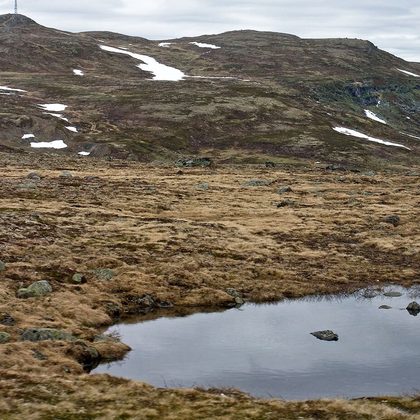
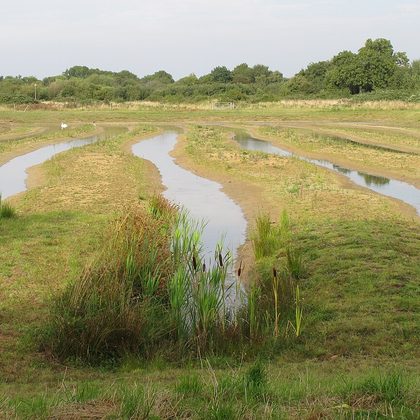
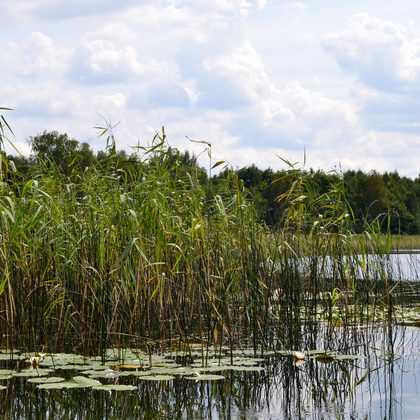
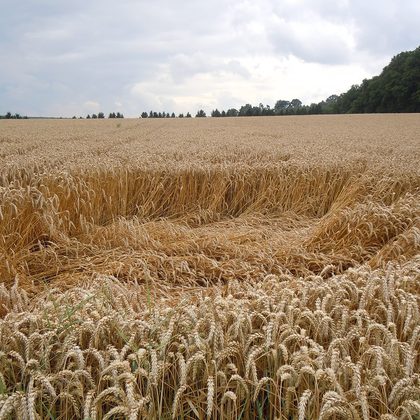
Breeds in wet tundra and in the marshy belt below it: sedge fen, waterlogged river floodplain, hummocky bog with pools and open birch scrub. In winter and on passage in damp grassland, rice fields, the margins of sewage works and muddy field edges. Birds that appear in Europe pick exactly the last of those: a wet corner of an arable field, a cattle drinker, a settling bed or a freshly muck-spread paddock, where they may stay for weeks or months in the company of a handful of pied wagtails.
Where the bird is most at home, classified with EUNIS — the European standard for habitats.
Range and movements
Breeds across northern and eastern Siberia, from about the Yenisey east to the Bering Sea, with an outpost in western Alaska; winters in South-East Asia from India to the Philippines and Indonesia. A small number reach Europe each year, nearly always first-winters in October, November and December, with some staying to overwinter. Britain has the largest share of European records, with birds found from Shetland to the south coast and a run of long-staying wintering individuals inland at sewage works and cattle fields; the Netherlands, Scandinavia, Germany and France also record it. In Iberia it is an exceptional rarity.
Where and when to look
In November and December work the field edges, muck-spread paddocks and sewage works where pied wagtails are feeding, and look for the bird that is colder, paler and white below rather than buff. Such birds usually settle for a long stay, so there is no hurry: take your time, wait until it calls and record the call. Photograph it while it is walking, with the foot sharp, because the long straight hind claw is one of the few characters that can be captured on an image. Without sound, an autumn bird is in practice rarely named.
Conservation status
Not globally threatened: the breeding range is vast and the population large. European records are rising clearly, but that says as much about observers as about birds. The species has only been treated separately since 2003, its autumn plumages were described properly after that, and the use of sound recordings and of DNA from droppings has made it possible to confirm birds that would once have stayed in the notebook as a pale yellow wagtail. Whether more birds are genuinely coming this way as well is unresolved.
Scientific name
Motacilla tschutschensis Gmelin, 1789
Gmelin described the species in 1789 and placed it straight away in the genus where it still stands. The genus Motacilla was introduced in 1758 by Linnaeus. Motacilla is the Latin name for the wagtail; it is really a diminutive of motare 'to move about', though from medieval times -cilla was wrongly taken to mean 'tail'. tschutschensis refers to the Chukchi Peninsula in far-eastern Russia, where the first described birds came from. The specimen the first description was based on came from the coast of the Chukchi Peninsula.