All species › Passerines › Sparrows › Italian sparrow
Italian sparrow | Passer italiae
Italiaanse mus | Gorrión italiano
Sit outside a bar in Rome, Naples or Palermo and a sparrow will come for the crumbs; that sparrow is this one. Italian sparrow is the everyday house sparrow of almost the whole of Italy, of Corsica and of Crete, and it looks the part — except that it wears a chestnut crown instead of a grey one and a brilliant white cheek instead of a dingy one. It has been treated as a separate species by most lists since 2011, while part of the literature still keeps it with house sparrow. For a birder in the field the question is a different and simpler one: what does the bird look like, and where does it stop?

Voice
Indistinguishable from house sparrow, which is itself worth knowing: the same cheep in strings from a gutter or an awning, the same nasal rattle in alarm, the same rolling chur-chur from a flock taking off and the same evening murmur out of thick ivy. Anyone trying to identify it by ear in Italy gets no further than sparrow; the crown has to do the rest.
No freely licensed recording is available for this species yet.
Identification
Size, stance and bill as house sparrow. The male has an entirely chestnut crown and nape with no grey at all, black lores, and a large, pure white cheek that runs onto the side of the neck and cuts sharply against the chestnut. The black bib is small and neatly bounded: chin, throat and a limited part of the upper breast, and no more. The underparts are plain off-white to pale grey and lack the black flank streaks that make Spanish sparrow look flamed. The mantle is warm chestnut with black streaks, the wing shows a single white bar, and the bill is black in the breeding season and horn-yellow outside it. In winter pale fringes mute the pattern, but the chestnut crown stays visible. The female cannot be told from a female house sparrow: plain grey-brown, with a pale supercilium and a streaked mantle. Juveniles resemble the female.
Confusion species
Two species matter, and each on a single character. Against house sparrow: that bird has a grey crown and a greyish-white cheek, while Italian sparrow has chestnut on the crown and white on the cheek. Against Spanish sparrow: that bird shares the chestnut crown and white cheek but has a far larger black bib and heavy black streaking across breast and flanks, where Italian sparrow is plain and pale below the small bib. Within a flock the females of all three are inseparable. More important than the characters, though, are the boundaries. In northern Italy, in the southern Alpine valleys and on the Austrian and Slovenian side, there runs a narrow belt no more than twenty to thirty kilometres wide in which the characters of house and Italian sparrow appear in every possible combination: birds with a half-grey crown, with a dingy cheek below a chestnut cap, with a bib that is too large or too small. Those birds cannot be named, and failing to name them is not inexperience. On Sicily and Malta the same thing happens on the other side, towards Spanish sparrow. South of the Po plain and on Corsica, Sardinia and Crete the picture is by contrast unambiguous.
Habitat
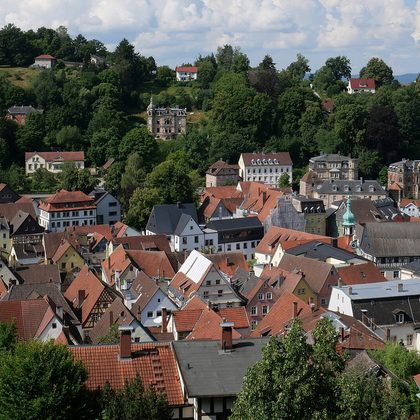
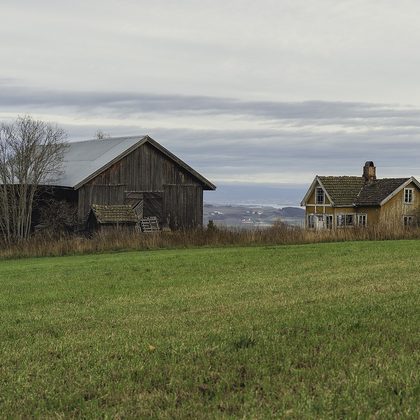
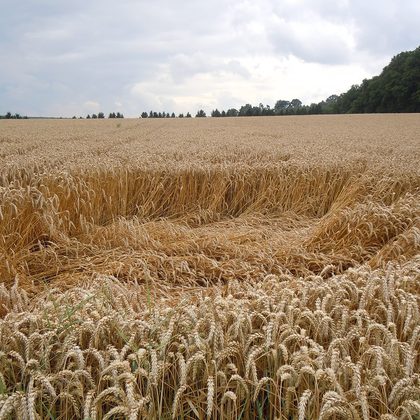
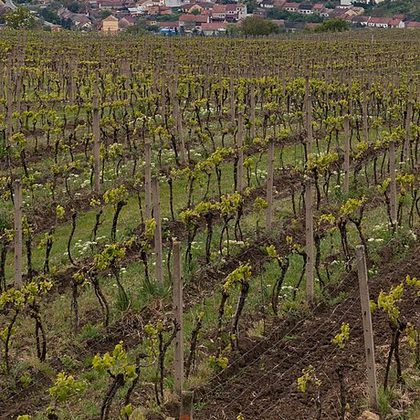
Exactly the places house sparrow occupies further north: city centres and squares, suburbs, villages, farmyards, campsites, railway stations and harbours, with olive groves, vineyards, market gardens and cereal fields around them where it feeds. The nest is an untidy domed ball of grass and feathers in a gap under the roof tiles, a hole in masonry, behind a shutter, in a recess in an old facade or in a nest box, and often free-standing in a tree crown or among the sticks of another bird's nest. From sea level up to the hill villages of the Apennines.
Where the bird is most at home, classified with EUNIS — the European standard for habitats.

Range and movements
The whole of Italy from the Po plain to Sicily, plus Corsica, Sardinia and Crete, and along the northern edge a strip of southern Switzerland, southern Austria and Slovenia. In northern Italy and the Alpine valleys its range meets that of house sparrow across a narrow transition belt; north of it sits house sparrow, south of it Italian sparrow. In southern Italy, Sicily and Malta it meets Spanish sparrow on the other side. Beyond this area it is a major rarity. It does not migrate and barely wanders: the colonies hold the same street all year.
- Resident
- Breeding (summer)
- Winter
- Passage
- dark = core range, pale = thinly spread
Where and when to look
In Italy, Corsica or Crete simply take a table outside or a village square and watch the sparrows that come for the crumbs; no effort is required. Pick a male on a table top or a chair back half a metre away and check two things at once: the crown (chestnut right onto the nape) and the flanks (plain and pale, without streaking). The second point separates it from Spanish sparrow, the first from house sparrow. If you drive south through the Alps, look at the crown of a male every hundred kilometres or so: somewhere between Innsbruck and Verona the picture tips over, and in between lies the belt where the birds show everything mixed together.
Conservation status
Vulnerable on the global Red List (IUCN), which comes as a surprise for a bird that begs for crumbs on every Italian square. The reason is not rarity but speed: Italian monitoring has shown a heavy, sustained decline for decades, and because the entire range consists of Italy, a few islands and a fringe beyond, that decline counts globally at once. The causes are the same as those behind the house sparrow's decline in north-west Europe: restoration and insulation seal the gaps under the tiles and in the facades, green strips and rough corners are paved over, and there is less insect food in spring within the small radius a breeding sparrow works. The picture is not uniform — in the countryside and the small hill villages numbers are still healthy, and it is the cities and the intensive arable of the Po plain where it drops out. Putting up sparrow terraces and leaving a dense hedge does the same for this species in Italy as it does for house sparrow further north.
Scientific name
Passer italiae (Vieillot, 1817)
Vieillot described the species in 1817 as Fringilla italiae; because it was later moved to another genus, the author and year stand in brackets. The genus Passer was introduced in 1760 by Brisson. Passer is the Latin word for 'sparrow'. italiae is Latin for 'of Italy', the peninsula the species is almost entirely confined to. The specimen the first description was based on came from Italy.