All species › Passerines › Sparrows › Spanish sparrow
Spanish sparrow | Passer hispaniolensis
Spaanse mus | Gorrión moruno
Spanish sparrow is the colonial one: where house sparrow keeps a handful of pairs under one roof edge, a single eucalyptus or line of poplars in Extremadura or the Ebro valley can carry hundreds of domed nests, and such a tree can be heard three hundred metres away. The male is also the most striking sparrow in the region — chestnut crown, brilliant white cheek, and underparts that look as though black ink had been thrown over them. Its billing as a rarity in north-west European books is purely a matter of viewpoint: across the whole south of the map area, from the Canaries to Anatolia, this is one of the most numerous songbirds there is.

Voice
The same chirping as house sparrow, but louder, fuller and with a metallic edge; the call is a drawn-out chweeng or cheeng, deeper and more nasal than in house sparrow. The real character is not one note but the volume: a breeding colony in a line of trees produces a continuous surging roar of hundreds of birds at once, running from first light to dusk and carrying a long way. A flock taking off gives a rolling chur-chur, and in alarm a hard dry rattle.
No freely licensed recording is available for this species yet.
Identification
The size of a house sparrow or a shade larger, with a noticeably heavier bill. The breeding male is unmistakable: the entire crown and nape are deep chestnut with no grey at all, and below them sits a large white cheek separated from the crown by a black eye-stripe. The black bib is enormous and continues in broad blotches and streaks across the breast and flanks, so that at distance the underparts look flamed with black. The mantle is warm brown with heavy black streaks, the rump greyish, the wing with a single white bar. Outside the breeding season pale feather fringes hide much of that and the male can look very like a house sparrow; the chestnut crown and the black flank streaks are then the best handles. The female is barely separable from a female house sparrow: slightly paler and whiter on the belly, with a heavier bill, a rather more obvious pale supercilium and sometimes a trace of grey streaking on the flanks. Juveniles resemble the female.
Confusion species
A breeding male in good light is no problem at all: chestnut crown plus black-streaked flanks occur together in no other sparrow. In winter plumage and against the light it becomes harder, and house sparrow is then the rival — it always has a grey crown and plain, unstreaked underparts. Italian sparrow shares the chestnut crown and white cheek but has a small, neatly bounded bib and clean pale flanks without streaking; on Sicily and Malta the characters of the two forms also run into one another and many birds cannot be named. Females cannot be separated from female house sparrows in the field: look at the males in the same flock, or at the nest site, since a tree full of domed nests points one way. Rock sparrow is larger, paler, finely streaked across the whole underside, and shows a pale crown stripe and white tail-tip spots.
Habitat
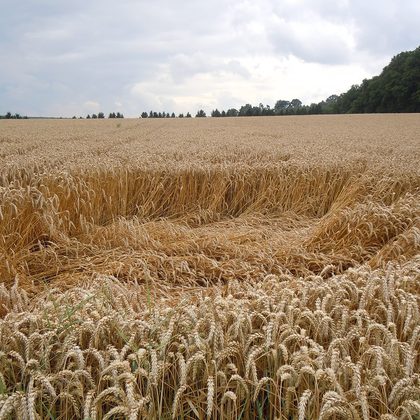
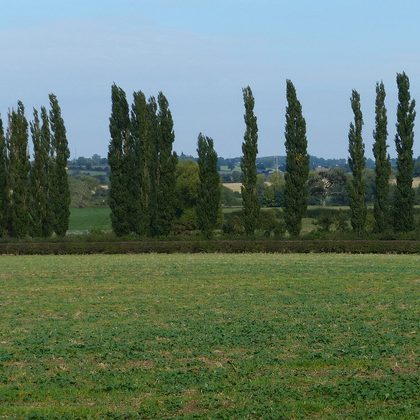
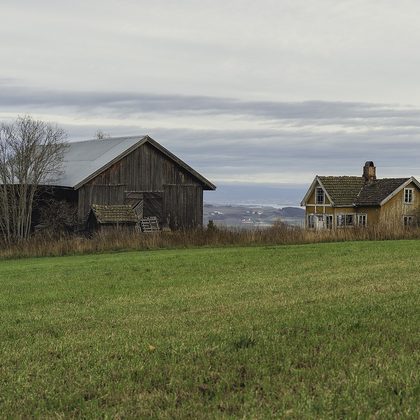
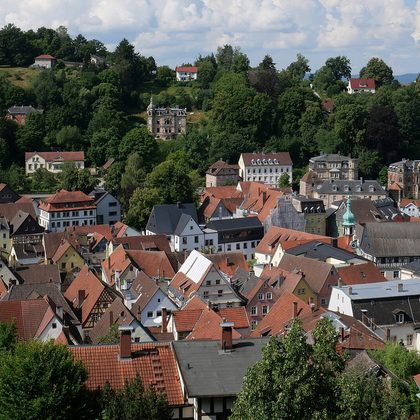
Open, hot farmland with trees: cereal fields and fallow with a poplar row or a eucalyptus clump beside them, river valleys with tamarisk and oleander, olive and almond groves, rice fields, irrigated land and the edges of villages. It nests almost always in colonies, in untidy domed balls of grass high in a tree, in tamarisk or thorn scrub, in the crown of a date palm, and by preference in the underside of a white stork's or a raptor's nest, where dozens of pairs may live among the sticks of a single eyrie. On the Canary Islands and Madeira it takes house sparrow's place and lives in the villages and on the squares. It feeds in flocks on the ground, on seed and, in the breeding season, on insects.
Where the bird is most at home, classified with EUNIS — the European standard for habitats.

Range and movements
The whole south of the map area: Iberia — chiefly the west, the south and the Ebro basin — Madeira and the Canary Islands, the entire Maghreb, Sardinia, Sicily and Malta, the Balkans, Greece, Turkey and the Levant, and eastwards through south-west Asia into Central Asia. In Portugal and Spain tens of thousands of pairs can breed together in one district, and the European total is put at several million pairs. North of the Pyrenees and the Alps it is a rarity, and British and Dutch records amount to a handful. In the west it is not a true migrant, but after breeding the colonies wander in thousands over the stubbles; eastern populations do migrate, well beyond this map.
- Resident
- Breeding (summer)
- Winter
- Passage
- dark = core range, pale = thinly spread
Where and when to look
In May or June, find a clump of trees in open arable country in Extremadura, La Mancha or the Ebro valley, and listen first: a colony is heard before it is seen. Do not walk in close; take a spot a hundred metres off where birds are coming and going, and wait for a male to settle on a bare branch in the sun, because only then do the chestnut crown and the black flank streaks read properly. A second reliable site is a stork's nest on a church tower or a pylon: look at the underside of the pile, where the colony sits. And anyone sitting on a village square on Lanzarote, Fuerteventura or Madeira need not search at all — the sparrow that comes for the crumbs is this one.
Conservation status
Not globally threatened (IUCN: Least Concern) and still extremely numerous across the south of the region, with a European population of several million pairs. There are local declines where the farmed landscape changes: the loss of small-scale cereal land with wooded margins, the felling of the old poplar and eucalyptus rows that hold the colonies, and the clearance of tamarisk scrub along rivers. Against that, it often benefits from irrigated agriculture and from village expansion, and colonies shift quickly as soon as a suitable clump of trees stands elsewhere. On the Canary Islands and Madeira it is stable and common.
Scientific name
Passer hispaniolensis (Temminck, 1820)
Temminck described the species in 1820 as Fringilla hispaniolensis; because it was later moved to another genus, the author and year stand in brackets. The genus Passer was introduced in 1760 by Brisson. Passer is the Latin word for 'sparrow'. hispaniolensis is New Latin for 'Spanish', after Algeciras in southern Spain, where the type specimen was taken. The specimen the first description was based on came from Algeciras, southern Spain.